
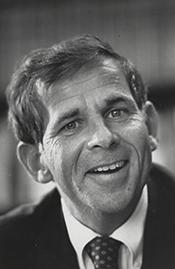
Historical · U.S. House · Michigan · District 6
James Dunn
Former U.S. Representative · Michigan District 6 · 1981–1983 · Republican
James Dunn represented Michigan's District 6 in the United States House of Representatives (1981–1983) for the Republican party. The page below collects sourced biographical facts, term history, committee roles, and provenance for Dunn.
Bioguide ID: D000548
Key facts
- Full name
- James Dunn
- State
- Michigan
- District
- District 6
- Party
- Republican
- House service
- 1981–1983
- First House term
- 1981
- Status
- Left office
- Current term ends
- —
- Born
- 1943
- Bioguide ID
- D000548
- Committee assignments
- —
- Dataset version
- 1.20260605
Biographical narrative
929 words · sourced from the Wikipedia REST extract
James Whitney Dunn, commonly known as Jim Dunn, is a former American politician and businessman who served as a U.S. Representative for Michigan's 6th congressional district from 1981 to 1983. A member of the Republican Party, Dunn's political career was marked by his tenure in the House of Representatives, where he focused on various issues relevant to his constituents and the broader political landscape of the time. Following his congressional service, Dunn sought further political office, including attempts to secure a Senate seat and a return to the House, but faced challenges in subsequent elections.
Early life and career
Jim Dunn was born on July 21, 1943, in Detroit, Michigan. He grew up in the city and attended local public schools, which provided him with a foundational education. After completing high school, Dunn pursued higher education at Michigan State University, where he earned a Bachelor of Arts degree in 1967. His academic background equipped him with the skills and knowledge that would later inform his career in both business and politics.
Following his graduation, Dunn entered the business world, where he became involved in real estate development. He served as president of Dunn & Fairmont, a company engaged in building and development projects. This experience in the private sector likely influenced his perspectives on economic issues and public policy during his time in office. Dunn's business acumen and leadership skills were instrumental in shaping his approach to governance.
In addition to his business activities, Dunn was active in the Republican Party at the state level. He participated as a delegate to the Michigan State Republican convention in 1982, which underscored his commitment to the party and its platform. His involvement in the party provided him with a network of connections and support that would prove beneficial as he sought public office.
Dunn's entry into politics came in the early 1980s, a time when the Republican Party was gaining momentum in various regions of the United States. In 1980, he successfully ran for the U.S. House of Representatives, defeating the incumbent Democrat Bob Carr. This victory marked the beginning of Dunn's congressional career, as he was elected to represent Michigan's 6th congressional district in the 97th Congress.
House tenure
Jim Dunn's term in the U.S. House of Representatives began on January 3, 1981, and concluded on January 3, 1983. During this period, he served as a Republican representative, contributing to the legislative process and engaging with constituents in his district. His election to Congress was significant, as it reflected a shift in political dynamics in Michigan, where Republican candidates were increasingly competitive against their Democratic counterparts.
Throughout his time in the House, Dunn participated in various legislative initiatives and discussions that were pertinent to his constituents and the national agenda. His background in business likely informed his views on economic policies, taxation, and development issues. Dunn's tenure coincided with a period of significant political and economic change in the United States, including discussions surrounding fiscal policy, government spending, and the role of the federal government in local affairs.
Despite his initial success in securing a seat in Congress, Dunn faced challenges in his bid for reelection. In 1982, he ran for a second term but was defeated by Bob Carr, the same Democrat he had unseated two years earlier. This loss marked the end of Dunn's first and only term in the House of Representatives, highlighting the competitive nature of electoral politics in the region.
Legislative focus and committees
During his time in Congress, Jim Dunn's legislative focus was shaped by his background in business and his commitment to the Republican Party's principles. While specific details about the bills he sponsored or the committees he served on are not provided, it can be inferred that his interests likely aligned with issues such as economic development, taxation, and regulatory reform. These areas are typically of significant concern to representatives from business backgrounds, as they directly impact the economic landscape and the livelihoods of constituents.
Dunn's experience as a businessman may have also influenced his approach to governance, emphasizing the importance of fiscal responsibility and the need for policies that support economic growth. His tenure occurred during a time when the nation was grappling with various economic challenges, including inflation and unemployment, which may have informed his legislative priorities.
After his congressional term ended, Dunn continued to seek political office. In 1984, he ran for a U.S. Senate seat held by Democrat Carl Levin but was unsuccessful in the Republican primary, losing to astronaut Jack R. Lousma. Dunn's political ambitions did not wane, as he attempted to return to the House in 1986, again facing Bob Carr in the general election, but was defeated once more.
In 1988, Dunn secured the Republican nomination for the U.S. Senate, defeating former U.S. Representative Robert J. Huber. However, he was ultimately unsuccessful in the general election, losing to the Democratic incumbent Donald W. Riegle, Jr. His final attempt at political office came in 1990 when he sought a seat in the U.S. House from Michigan's 10th congressional district but lost the Republican primary to Dave Camp, effectively concluding his electoral career.
Following his political endeavors, Dunn remained a resident of East Lansing, Michigan. His experiences in both business and politics reflect the complexities of public service and the challenges faced by individuals seeking to represent their constituents in the legislative process. Dunn's career serves as an example of the dynamic nature of American politics, where electoral success can be fleeting and the pursuit of public office often involves navigating a competitive landscape.
Notable legislation
Sponsored and co-sponsored legislation for James Dunn is pending operator curation. The biographical narrative above carries the same provenance trail until per-bill rows are written.
Sources
- [1]https://en.wikipedia.org/wiki/James_Whitney_DunnWikipedia · retrieved 2026-06-05
Notable quotes
Sourced quotes for James Dunn are pending operator curation. Narrative-scope provenance remains attached below.
Sources
- [1]https://en.wikipedia.org/wiki/James_Whitney_DunnWikipedia · retrieved 2026-06-05
Key positions
Curated policy positions for James Dunn are pending operator review. The biographical narrative above carries the same provenance trail until per-topic positions are written.
Sources
- [1]https://en.wikipedia.org/wiki/James_Whitney_DunnWikipedia · retrieved 2026-06-05
Terms served
- 1981–1983U.S. House · Term 1 · Republican
Sources & provenance
Every attributable claim above carries a per-section [N] marker that resolves to the corresponding URL below. Each entry records the upstream provider, the canonical URL, and the timestamp at which the source was retrieved by the ingest pipeline.
Key facts
- https://bioguide.congress.gov/search/bio/D000548bioguide · retrieved 2026-06-05
- https://www.govtrack.us/congress/members/403656govtrack · retrieved 2026-06-05
Biographical narrative
- https://en.wikipedia.org/wiki/James_Whitney_Dunnwikipedia · retrieved 2026-06-05
Find your representative
Every U.S. state elects representatives by district. Browse Michigan’s delegation, the full former-representative roster, or explore the role and term length.
Related on The Candidate
- Preceded by Charles ChamberlainEarlier holder of the Michigan District 6 House seat · Republican.Open
- Succeeded by Fred UptonLater holder of the Michigan District 6 House seat · Republican.Open
- Alexander BuelFormer U.S. Representative · Michigan District 1 · DemocraticOpen
- Alfred LuckingFormer U.S. Representative · Michigan District 1 · DemocraticOpen
- Alpheus WilliamsFormer U.S. Representative · Michigan District 1 · DemocraticOpen
- Bart StupakFormer U.S. Representative · Michigan District 1 · DemocraticOpen