
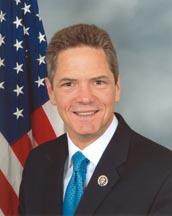
Historical · U.S. House · Michigan · District 7
Mark Schauer
Former U.S. Representative · Michigan District 7 · 2009–2011 · Democratic
Mark Schauer represented Michigan's District 7 in the United States House of Representatives (2009–2011) for the Democratic party. The page below collects sourced biographical facts, term history, committee roles, and provenance for Schauer.
Bioguide ID: S001178
Key facts
- Full name
- Mark Schauer
- State
- Michigan
- District
- District 7
- Party
- Democratic
- House service
- 2009–2011
- First House term
- 2009
- Status
- Left office
- Current term ends
- —
- Born
- 1961
- Bioguide ID
- S001178
- Committee assignments
- —
- Dataset version
- 1.20260605
Biographical narrative
1,012 words · sourced from the Wikipedia REST extract
Mark H. Schauer is a former American politician who served as a U.S. Representative for Michigan's 7th congressional district from 2009 to 2011. A member of the Democratic Party, Schauer's political career includes significant roles in both state and federal legislatures. Prior to his tenure in the U.S. House of Representatives, he was a member of the Michigan House of Representatives and the Michigan Senate, where he held leadership positions and focused on various legislative issues. Schauer's career has been marked by his commitment to public service, urban planning, and community development.
Early life and career
Mark H. Schauer was born on October 2, 1961, in Howell, Michigan. He was raised in a family that valued education and public service; his mother, Myra Trafton, was a registered nurse, and his father, Robert Schauer, was a high school science teacher. Schauer excelled academically, becoming the valedictorian of his class at Howell High School. He pursued higher education at Albion College, where he graduated summa cum laude in 1984. During his time at Albion, he was involved in various academic and social organizations, including Tau Kappa Epsilon, Phi Beta Kappa, and the Gerald R. Ford Institute for Public Policy.
Following his undergraduate studies, Schauer worked as an urban planner for the Calhoun County Planning Department from 1984 to 1987. He continued his education by earning a master's degree in public administration from Western Michigan University. Later, he obtained a master's degree in political science from Michigan State University in 1997. Schauer's early career included program development for the Community Action Agency in Battle Creek, Michigan, where he eventually became the director. Under his leadership, the agency provided essential services to the community, including food assistance and early childhood education programs.
In addition to his work in urban planning and community action, Schauer was a founding board member of Battle Creek Habitat for Humanity in 1988. His dedication to community service earned him recognition, and he was named the "2003 Public Official of the Year" by Habitat for Humanity of Michigan. Schauer has also been involved with the Food Bank of South Central Michigan and the Urban League of Battle Creek, further demonstrating his commitment to social issues and community welfare.
House tenure
Schauer's political career began in earnest when he was elected to the Michigan House of Representatives in 1996, representing the 62nd district. He won re-election in 1998 and 2000, securing a significant majority of the votes in each election. During his time in the Michigan House, he served as the Assistant Democratic Leader and chaired the House Education Subcommittee on Violence in the Schools.
In 2002, Schauer transitioned to the Michigan Senate, where he represented the 19th district. He won his initial election against Republican State Representative Mickey Mortimer and was re-elected in 2006. Schauer's leadership skills were recognized when he served as the Senate Minority Whip and later as the Senate Minority Leader. Throughout his tenure in the state legislature, he was involved in various legislative initiatives, including supporting reforms to the Michigan Catastrophic Claims Association.
In 2008, Schauer ran for the U.S. House of Representatives, challenging incumbent Republican Tim Walberg in Michigan's 7th congressional district. His campaign was bolstered by support from the Democratic Congressional Campaign Committee, and he won the Democratic primary decisively. In the general election, Schauer defeated Walberg, marking a significant victory as he became only the second Democrat to represent the district since World War I.
Schauer's time in the U.S. House of Representatives was characterized by his alignment with the Democratic Party on major legislative issues. He participated in the 111th Congress, where he voted in favor of several key pieces of legislation, including the Lily Ledbetter Fair Pay Act and the reauthorization of the State Children's Health Insurance Program. He also supported the repeal of the Don't Ask, Don't Tell policy, reflecting his commitment to social justice and equality.
Despite his initial success, Schauer faced a rematch with Tim Walberg in 2010. The election was highly competitive, with polling indicating a close race. Schauer received endorsements from various organizations and prominent figures, including a rally headlined by former President Bill Clinton. However, he was ultimately defeated in the election, concluding his term in the House on January 3, 2011.
Legislative focus and committees
During his time in the U.S. House of Representatives, Schauer focused on a range of legislative issues that aligned with his background in public service and community development. He was known for his support of initiatives aimed at improving healthcare access, promoting education, and advocating for social equity. His votes on significant legislation demonstrated a commitment to advancing the interests of his constituents and addressing broader societal challenges.
Schauer's legislative record included support for the American Recovery and Reinvestment Act, which aimed to stimulate the economy during a period of financial crisis. His backing of this legislation earned him recognition from various organizations, including the U.S. Chamber of Commerce. Schauer's approach to governance was characterized by a willingness to collaborate across party lines, particularly on issues that affected the well-being of his constituents.
In addition to his legislative work, Schauer was involved in various committees during his time in Congress, although specific committee assignments are not detailed in the available information. His experience in state government and urban planning likely informed his contributions to discussions on infrastructure, education, and community development.
After his congressional tenure, Schauer continued to engage in public service and political activities. He was the Democratic nominee for governor of Michigan in the 2014 election, where he campaigned on issues relevant to Michigan's economy and social policies. Although he was not successful in that election, Schauer remained active in political circles, later serving as chairman of PAC Advantage 2020, an organization aimed at supporting Democratic candidates in state legislative races.
Throughout his career, Mark H. Schauer has exemplified a commitment to public service, community development, and legislative advocacy. His experiences in both state and federal government reflect a dedication to addressing the needs of his constituents and contributing to the broader political landscape in Michigan.
Notable legislation
Sponsored and co-sponsored legislation for Mark Schauer is pending operator curation. The biographical narrative above carries the same provenance trail until per-bill rows are written.
Sources
- [1]https://en.wikipedia.org/wiki/Mark_SchauerWikipedia · retrieved 2026-06-05
Notable quotes
Sourced quotes for Mark Schauer are pending operator curation. Narrative-scope provenance remains attached below.
Sources
- [1]https://en.wikipedia.org/wiki/Mark_SchauerWikipedia · retrieved 2026-06-05
Key positions
Curated policy positions for Mark Schauer are pending operator review. The biographical narrative above carries the same provenance trail until per-topic positions are written.
Sources
- [1]https://en.wikipedia.org/wiki/Mark_SchauerWikipedia · retrieved 2026-06-05
Terms served
- 2009–2011U.S. House · Term 1 · Democratic
Sources & provenance
Every attributable claim above carries a per-section [N] marker that resolves to the corresponding URL below. Each entry records the upstream provider, the canonical URL, and the timestamp at which the source was retrieved by the ingest pipeline.
Key facts
- https://bioguide.congress.gov/search/bio/S001178bioguide · retrieved 2026-06-05
- http://schauer.house.govhouse.gov · retrieved 2026-06-05
Biographical narrative
- https://en.wikipedia.org/wiki/Mark_Schauerwikipedia · retrieved 2026-06-05
Find your representative
Every U.S. state elects representatives by district. Browse Michigan’s delegation, the full former-representative roster, or explore the role and term length.
Related on The Candidate
- Preceded by Joe SchwarzEarlier holder of the Michigan District 7 House seat · Republican.Open
- Alexander BuelFormer U.S. Representative · Michigan District 1 · DemocraticOpen
- Alfred LuckingFormer U.S. Representative · Michigan District 1 · DemocraticOpen
- Alpheus WilliamsFormer U.S. Representative · Michigan District 1 · DemocraticOpen
- Bart StupakFormer U.S. Representative · Michigan District 1 · DemocraticOpen
- Democratic PartyFederal candidates and office holders on the Democratic line.Open