
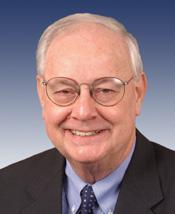
Historical · U.S. House · Michigan · District 7
Joe Schwarz
Former U.S. Representative · Michigan District 7 · 2005–2007 · Republican
Joe Schwarz represented Michigan's District 7 in the United States House of Representatives (2005–2007) for the Republican party. The page below collects sourced biographical facts, term history, committee roles, and provenance for Schwarz.
Bioguide ID: S001161
Key facts
- Full name
- Joe Schwarz
- State
- Michigan
- District
- District 7
- Party
- Republican
- House service
- 2005–2007
- First House term
- 2005
- Status
- Left office
- Current term ends
- —
- Born
- 1937
- Bioguide ID
- S001161
- Committee assignments
- —
- Dataset version
- 1.20260605
Biographical narrative
1,016 words · sourced from the Wikipedia REST extract
John J.H. "Joe" Schwarz was an American physician and politician who served as the U.S. Representative for Michigan's 7th congressional district from 2005 to 2007. A member of the Republican Party, Schwarz was known for his moderate stance on various issues, which ultimately influenced his political career and electoral outcomes. His tenure in Congress was marked by a focus on health care and social issues, reflecting his background as a medical professional. Despite his initial electoral success, he faced challenges in maintaining support within his party, leading to his defeat in the 2006 primary election.
Early life and career
Joe Schwarz was born on November 15, 1937, in Battle Creek, Michigan. His family relocated to the area in 1935 when his father began working as a physician at the Veterans Administration Hospital. Growing up in Battle Creek, Schwarz had two older siblings, Frank and Janet, and attended local schools, including Fremont Elementary School and W.K. Kellogg Junior High School. He graduated from Battle Creek Central High School, where he was active in sports, participating in baseball, swimming, and football.
After completing high school, Schwarz pursued higher education at the University of Michigan, Ann Arbor, where he earned a Bachelor of Arts degree in History in 1959. During his time at the university, he was also a member of the reserve football team as a center in 1956. Following his undergraduate studies, he attended Wayne State University Medical School, graduating in 1964. Schwarz then completed an internship at Los Angeles County Hospital before enlisting in the U.S. Navy.
Schwarz's military service included five years in Southeast Asia, where he served in Vietnam and worked as an assistant naval attaché in Indonesia. His role in the Navy also involved work with the Defense Intelligence Agency and the Central Intelligence Agency (CIA), where he was stationed in various locations, including Indonesia, Laos, and Vietnam. Notably, during his time in Indonesia, he interacted with Indonesian President Suharto and assisted in teaching him basic English phrases. After leaving the CIA in 1970, Schwarz returned to the United States to further his medical training at Harvard University, completing his residency in otolaryngology in 1973.
In 1974, Schwarz returned to Battle Creek, where he began practicing medicine. He became a well-respected physician in the community, serving patients at the Family Health Center, a federally qualified health center, until his later years. Throughout his medical career, he was recognized as a Fellow of the American College of Surgeons. Schwarz experienced personal loss when his first wife, Anne, passed away in 1990, and he later divorced his second wife. He had one daughter from his first marriage.
House tenure
Schwarz's political career began in local government when he was elected Mayor of Battle Creek in 1984. He subsequently served in the Michigan State Senate after being elected in 1986. In 1992, he sought a seat in the U.S. House of Representatives, running for Michigan's 7th congressional district after the retirement of incumbent Carl Pursell. However, he was defeated in the Republican primary by Nick Smith.
In 2002, Schwarz attempted to secure the Republican nomination for Governor of Michigan but faced a significant defeat in the primary against Dick Posthumus. His political fortunes changed in 2004 when he ran for the 7th congressional district again, following Smith's retirement. In a competitive primary with five other candidates, Schwarz emerged victorious with 28% of the vote, defeating his closest rival, Brad Smith, and subsequently won the general election against Democrat Sharon Renier.
Schwarz's time in Congress began in January 2005, and he served until January 2007. During his tenure, he was recognized as a moderate Republican, often taking positions that aligned with centrist views, particularly on social issues. His voting record included opposition to the Federal Marriage Amendment, which sought to ban same-sex marriage nationwide. Schwarz's moderate stance on issues such as abortion rights and embryonic stem cell research distinguished him from many of his Republican colleagues, particularly in a district that leaned conservative.
Despite his initial success, Schwarz faced challenges in maintaining support within his party. In the 2006 primary election, he was defeated by Tim Walberg, who garnered a significant portion of the vote. Following his defeat, Schwarz endorsed Democrat Mark Schauer in the 2008 election against Walberg, who ultimately lost to Walberg in a rematch in 2010.
Legislative focus and committees
During his time in the House of Representatives, Joe Schwarz focused on various issues, particularly those related to health care, reflecting his background as a physician. His experience in the medical field informed his legislative priorities, and he sought to address health care access and quality for his constituents. As a moderate Republican, he often found himself at odds with the more conservative elements of his party, especially concerning social issues.
Schwarz's committee assignments during his congressional tenure included roles that allowed him to engage with health care policy and other relevant areas. His moderate voting record, particularly on social issues, was a defining characteristic of his time in office. This approach, however, ultimately contributed to his electoral challenges, as the political landscape in his district shifted towards more conservative positions.
After leaving Congress, Schwarz remained active in public service and health policy. He was appointed to various panels and boards, including the Emergency Financial Advisory Panel under Governor Jennifer Granholm and an independent panel investigating conditions at Walter Reed Army Hospital. He also returned to academia, accepting a teaching position at the University of Michigan's Gerald R. Ford School of Public Policy.
In 2010, Schwarz contemplated a run for governor of Michigan as an independent candidate but later decided against it due to fundraising challenges. His involvement in civic and educational initiatives continued, and he served on the board of directors for the Michigan State Medical Society. Throughout his life, Schwarz maintained a commitment to public service and health care advocacy, reflecting the values that guided his career as both a physician and a politician.
Schwarz passed away on May 27, 2026, at the age of 88, leaving behind a legacy that intertwined his medical expertise with his political endeavors.
Notable legislation
Sponsored and co-sponsored legislation for Joe Schwarz is pending operator curation. The biographical narrative above carries the same provenance trail until per-bill rows are written.
Sources
- [1]https://en.wikipedia.org/wiki/Joe_SchwarzWikipedia · retrieved 2026-06-05
Notable quotes
Sourced quotes for Joe Schwarz are pending operator curation. Narrative-scope provenance remains attached below.
Sources
- [1]https://en.wikipedia.org/wiki/Joe_SchwarzWikipedia · retrieved 2026-06-05
Key positions
Curated policy positions for Joe Schwarz are pending operator review. The biographical narrative above carries the same provenance trail until per-topic positions are written.
Sources
- [1]https://en.wikipedia.org/wiki/Joe_SchwarzWikipedia · retrieved 2026-06-05
Terms served
- 2005–2007U.S. House · Term 1 · Republican
Sources & provenance
Every attributable claim above carries a per-section [N] marker that resolves to the corresponding URL below. Each entry records the upstream provider, the canonical URL, and the timestamp at which the source was retrieved by the ingest pipeline.
Key facts
- https://bioguide.congress.gov/search/bio/S001161bioguide · retrieved 2026-06-05
- https://www.govtrack.us/congress/members/400637govtrack · retrieved 2026-06-05
Biographical narrative
- https://en.wikipedia.org/wiki/Joe_Schwarzwikipedia · retrieved 2026-06-05
Find your representative
Every U.S. state elects representatives by district. Browse Michigan’s delegation, the full former-representative roster, or explore the role and term length.
Related on The Candidate
- Preceded by Nick SmithEarlier holder of the Michigan District 7 House seat · Republican.Open
- Succeeded by Mark SchauerLater holder of the Michigan District 7 House seat · Democratic.Open
- Alexander BuelFormer U.S. Representative · Michigan District 1 · DemocraticOpen
- Alfred LuckingFormer U.S. Representative · Michigan District 1 · DemocraticOpen
- Alpheus WilliamsFormer U.S. Representative · Michigan District 1 · DemocraticOpen
- Bart StupakFormer U.S. Representative · Michigan District 1 · DemocraticOpen