
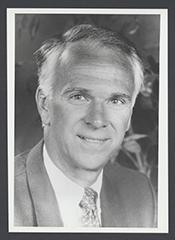
Historical · U.S. House · Michigan · District 8
Dick Chrysler
Former U.S. Representative · Michigan District 8 · 1995–1997 · Republican
Dick Chrysler represented Michigan's District 8 in the United States House of Representatives (1995–1997) for the Republican party. The page below collects sourced biographical facts, term history, committee roles, and provenance for Chrysler.
Bioguide ID: C000385
Key facts
- Full name
- Dick Chrysler
- State
- Michigan
- District
- District 8
- Party
- Republican
- House service
- 1995–1997
- First House term
- 1995
- Status
- Left office
- Current term ends
- —
- Born
- 1942
- Bioguide ID
- C000385
- Committee assignments
- —
- Dataset version
- 1.20260605
Biographical narrative
1,025 words · sourced from the Wikipedia REST extract
Richard R. Chrysler is a former U.S. Representative from Michigan, who served in the House of Representatives from 1995 to 1997. A member of the Republican Party, Chrysler represented Michigan's 8th congressional district and was involved in various legislative initiatives during his time in office. Before entering politics, he had a successful career in the automotive industry, where he held significant positions in several companies.
Early life and career
Richard R. Chrysler was born on April 29, 1942, in Saint Paul, Minnesota. He later moved to Michigan, where he graduated from Brighton High School in Brighton. Following his education, Chrysler embarked on a career in the automotive sector, eventually becoming a prominent businessman. He served as vice president of Hurst Performance, a well-known automotive company, and later founded and presided over Cars and Concepts, which acquired Hurst Performance. Additionally, he established Richard Chrysler Industries (RCI), further solidifying his influence in the automotive industry.
Chrysler's business acumen and leadership in the automotive field provided him with a platform for his later political aspirations. His experience in the industry likely informed his views on economic and regulatory issues, which would become relevant during his tenure in Congress. In 1986, he sought to enter the political arena by running for governor of Michigan as a Republican. However, he faced a challenging primary election against Wayne County Executive William Lucas and ultimately lost.
Despite this setback, Chrysler continued to pursue a political career. In 1992, he ran for a seat in the U.S. House of Representatives, competing in a highly contested race against incumbent Bob Carr. This election was notable for being one of the most expensive congressional races in Michigan that cycle. Chrysler was narrowly defeated, receiving a significant portion of the vote but falling short of victory.
Chrysler's persistence paid off in the following election cycle. After Carr decided to vacate his seat to pursue a Senate run, Chrysler entered the race for Michigan's 8th congressional district in 1994. His campaign was successful, and he was elected as a Republican representative to the 104th Congress.
House tenure
Chrysler's tenure in the U.S. House of Representatives began on January 3, 1995, and concluded on January 3, 1997. During his time in office, he was a member of the Amway caucus, a group of Republican lawmakers who were aligned with the interests of the Amway Corporation and its founders. Chrysler's legislative activities included sponsoring eight bills and co-sponsoring an additional 183 pieces of legislation. His involvement in various legislative initiatives reflected his commitment to addressing issues pertinent to his constituents and the broader national landscape.
One of the notable pieces of legislation that Chrysler co-sponsored was the Defense of Marriage Act, which defined marriage for federal purposes as the union between one man and one woman. This act was a significant and controversial piece of legislation during the 1990s, reflecting the social and political climate of the time. Chrysler's support for this act aligned with the views of many conservatives who sought to define marriage in traditional terms.
In addition to his co-sponsorship of the Defense of Marriage Act, Chrysler was an advocate for significant tax reform. He proposed a plan to replace the federal income tax and capital gains tax with a 15% sales tax, a move that aimed to simplify the tax code and stimulate economic growth. This proposal was part of a broader agenda that aligned with the Republican Party's emphasis on reducing the tax burden and promoting free-market principles.
Chrysler's time in Congress was marked by his alignment with the Contract with America, a legislative agenda put forth by House Republicans in 1994. This contract outlined a series of reforms aimed at reducing the size of government, promoting fiscal responsibility, and enhancing individual liberties. Chrysler's support for this agenda underscored his commitment to conservative principles and his desire to effect change within the federal government.
Despite his efforts and legislative initiatives, Chrysler faced challenges in the electoral arena. In the 1996 election for the 105th Congress, he was defeated by Democrat Debbie Stabenow. Stabenow garnered a significant portion of the vote, while Chrysler, despite being the incumbent, was unable to secure re-election. This defeat marked the end of his congressional career.
Legislative focus and committees
During his time in the House of Representatives, Chrysler's legislative focus encompassed a range of issues, primarily reflecting his background in business and his alignment with conservative values. His sponsorship of bills and co-sponsorship of numerous pieces of legislation demonstrated his active engagement in the legislative process. Chrysler's proposals often centered around economic issues, particularly tax reform and regulatory changes, which he believed were essential for fostering a conducive environment for business and economic growth.
Chrysler's support for the Defense of Marriage Act indicated his involvement in social issues, particularly those that resonated with his constituents and the broader Republican base. His legislative actions were indicative of the priorities of the Republican Party during the mid-1990s, a time when social conservatism was a significant aspect of the party's platform.
In addition to his legislative initiatives, Chrysler's participation in the Amway caucus highlighted his connection to the business community and his understanding of the challenges faced by entrepreneurs and companies in the United States. His background in the automotive industry likely influenced his perspectives on economic policies and regulations, which he sought to address through his legislative work.
After leaving Congress, Chrysler returned to the automotive industry, where he continued to explore advancements in technology, particularly in the realm of electric vehicles. His interest in battery technologies and the potential for electric vehicles reflected a forward-looking approach to the automotive sector, emphasizing innovation and adaptation to changing market demands.
In summary, Richard R. Chrysler's career as a U.S. Representative was characterized by his business background, legislative initiatives focused on tax reform and social issues, and his involvement in the Amway caucus. His tenure in Congress, though brief, was marked by active participation in the legislative process and a commitment to the principles of the Republican Party. Following his electoral defeat, Chrysler continued to engage with the automotive industry, demonstrating his ongoing interest in technological advancements and market trends.
Notable legislation
Sponsored and co-sponsored legislation for Dick Chrysler is pending operator curation. The biographical narrative above carries the same provenance trail until per-bill rows are written.
Sources
- [1]https://en.wikipedia.org/wiki/Dick_ChryslerWikipedia · retrieved 2026-06-05
Notable quotes
Sourced quotes for Dick Chrysler are pending operator curation. Narrative-scope provenance remains attached below.
Sources
- [1]https://en.wikipedia.org/wiki/Dick_ChryslerWikipedia · retrieved 2026-06-05
Key positions
Curated policy positions for Dick Chrysler are pending operator review. The biographical narrative above carries the same provenance trail until per-topic positions are written.
Sources
- [1]https://en.wikipedia.org/wiki/Dick_ChryslerWikipedia · retrieved 2026-06-05
Terms served
- 1995–1997U.S. House · Term 1 · Republican
Sources & provenance
Every attributable claim above carries a per-section [N] marker that resolves to the corresponding URL below. Each entry records the upstream provider, the canonical URL, and the timestamp at which the source was retrieved by the ingest pipeline.
Key facts
- https://bioguide.congress.gov/search/bio/C000385bioguide · retrieved 2026-06-05
- https://www.govtrack.us/congress/members/402524govtrack · retrieved 2026-06-05
Biographical narrative
- https://en.wikipedia.org/wiki/Dick_Chryslerwikipedia · retrieved 2026-06-05
Find your representative
Every U.S. state elects representatives by district. Browse Michigan’s delegation, the full former-representative roster, or explore the role and term length.
Related on The Candidate
- Preceded by Bob CarrEarlier holder of the Michigan District 8 House seat · Democratic.Open
- Succeeded by Mike RogersLater holder of the Michigan District 8 House seat · Republican.Open
- Alexander BuelFormer U.S. Representative · Michigan District 1 · DemocraticOpen
- Alfred LuckingFormer U.S. Representative · Michigan District 1 · DemocraticOpen
- Alpheus WilliamsFormer U.S. Representative · Michigan District 1 · DemocraticOpen
- Bart StupakFormer U.S. Representative · Michigan District 1 · DemocraticOpen