
Historical · U.S. House · Michigan · District 8
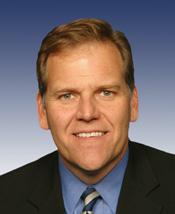
Mike Rogers
Former U.S. Representative · Michigan District 8 · 2001–2015 · Republican
Mike Rogers represented Michigan's District 8 in the United States House of Representatives (2001–2015) for the Republican party. The page below collects sourced biographical facts, term history, committee roles, and provenance for Rogers.
Bioguide ID: R000572
Key facts
- Full name
- Mike Rogers
- State
- Michigan
- District
- District 8
- Party
- Republican
- House service
- 2001–2015
- First House term
- 2001
- Status
- Left office
- Current term ends
- —
- Born
- 1963
- Bioguide ID
- R000572
- Committee assignments
- —
- Dataset version
- 1.20260605
Biographical narrative
913 words · sourced from the Wikipedia REST extract
Michael J. Rogers is a former U.S. Representative who served Michigan's 8th congressional district from 2001 until 2015. A member of the Republican Party, he held significant roles during his tenure, including chairing the United States House Permanent Select Committee on Intelligence from 2011 to 2015. Following his congressional career, Rogers transitioned into media, working as a national security commentator for CNN and producing related programming. He has also pursued political ambitions beyond Congress, including candidacies for the U.S. Senate.
Early life and career
Born on June 2, 1963, in Livonia, Michigan, Mike Rogers grew up in Redford Township before his family relocated to Brighton Township in Livingston County. He completed his secondary education at Howell High School, graduating in 1981. Rogers continued his education at Adrian College, where he earned a bachelor's degree in criminal justice and sociology in 1985. His commitment to public service began with his enlistment in the United States Army, where he served from 1985 to 1989.
Rogers's career in law enforcement commenced shortly after his military service when he joined the Federal Bureau of Investigation (FBI) as a special agent. He worked in the Chicago office from 1989 to 1994, focusing on organized crime and public corruption. His experience in the FBI contributed to his understanding of national security issues, which would later inform his legislative priorities. Rogers is a member of the Society of Former Special Agents of the FBI and was considered for the position of FBI director in 2017 following the dismissal of James Comey.
Before his tenure in the U.S. House, Rogers entered politics at the state level. He was first elected to the Michigan State Senate in 1994, representing the counties of Clinton, Livingston, and Shiawassee. He secured re-election in 1998 with a significant majority. During his time in the state legislature, he served as majority leader from 1999 to 2000 and was instrumental in creating the Michigan Education Savings Program, which aimed to facilitate educational funding for families.
House tenure
Rogers's entry into the U.S. House of Representatives came after a closely contested election in 2000, where he defeated Democratic State Senator Dianne Byrum by a narrow margin. This election was notable for its competitiveness, but subsequent redistricting in 2002 altered the demographics of the 8th district, making it more favorable for Republican candidates. The redistricting process shifted the district's boundaries, reducing its Democratic voter base and incorporating more Republican-leaning areas.
During his time in Congress, Rogers served a total of seven terms, during which he was involved in various legislative initiatives. One of his early accomplishments was the successful passage of a measure to exempt education savings plans from federal taxes, which was incorporated into broader tax legislation in 2003. Additionally, he championed a health savings account program aimed at assisting low-income families enrolled in Medicaid, which was signed into law in 2008.
Rogers was also the primary sponsor of the Respect for America's Fallen Heroes Act, which was enacted in 2006. This legislation addressed the respectful treatment of military funerals and memorial services. His legislative efforts included a focus on health care, particularly through his sponsorship of a bill designed to ease state requirements for Medical Loss Ratio waivers, although this proposal was projected to increase the federal deficit.
In the realm of national security, Rogers introduced the Cyber Intelligence Sharing and Protection Act (CISPA) in 2011, reflecting his commitment to enhancing cybersecurity measures. He also played a key role in the Intelligence Authorization Act for Fiscal Years 2014 and 2015, which authorized funding for various intelligence agencies.
Rogers announced in March 2014 that he would not seek an eighth term in Congress, concluding his legislative career on January 3, 2015. After leaving office, he engaged in media, launching a daily radio segment titled "Something to Think About" and serving as a national security commentator for CNN.
Legislative focus and committees
Throughout his congressional career, Rogers was a member of several key committees, which shaped his legislative focus. He served on the Committee on Energy and Commerce, where he participated in the Subcommittee on Communications and Technology and the Subcommittee on Health. His most prominent role was as chairman of the Permanent Select Committee on Intelligence, a position he held from 2011 until the end of his tenure in 2015. In this capacity, he oversaw intelligence-related legislation and appropriations, contributing to national security discussions and policy development.
Rogers's legislative priorities often reflected his background in law enforcement and national security. He advocated for measures that aimed to enhance the security of the United States, particularly in the context of cybersecurity and intelligence sharing. His work on the Intelligence Authorization Act underscored his commitment to ensuring that intelligence agencies received the necessary resources to operate effectively.
After his time in Congress, Rogers continued to be active in political discourse and public service. He announced his candidacy for the U.S. Senate in 2023, seeking to succeed retiring Democrat Debbie Stabenow. He won the Republican primary in 2024 but was narrowly defeated in the general election by Democrat Elissa Slotkin. Following this campaign, Rogers declared his intention to run for the Senate again in 2026, indicating his ongoing involvement in Michigan's political landscape.
In summary, Mike Rogers's career has spanned law enforcement, state politics, and federal legislative service, marked by a focus on national security and public service. His experiences have shaped his political positions and aspirations, reflecting a commitment to addressing the challenges facing Michigan and the nation.
Notable legislation
Sponsored and co-sponsored legislation for Mike Rogers is pending operator curation. The biographical narrative above carries the same provenance trail until per-bill rows are written.
Sources
- [1]https://en.wikipedia.org/wiki/Mike_Rogers_(Michigan_politician)Wikipedia · retrieved 2026-06-05
Notable quotes
Sourced quotes for Mike Rogers are pending operator curation. Narrative-scope provenance remains attached below.
Sources
- [1]https://en.wikipedia.org/wiki/Mike_Rogers_(Michigan_politician)Wikipedia · retrieved 2026-06-05
Key positions
Curated policy positions for Mike Rogers are pending operator review. The biographical narrative above carries the same provenance trail until per-topic positions are written.
Sources
- [1]https://en.wikipedia.org/wiki/Mike_Rogers_(Michigan_politician)Wikipedia · retrieved 2026-06-05
Terms served
- 2001–2003U.S. House · Term 1 · Republican
- 2003–2005U.S. House · Term 2 · Republican
- 2005–2007U.S. House · Term 3 · Republican
- 2007–2009U.S. House · Term 4 · Republican
- 2009–2011U.S. House · Term 5 · Republican
- 2011–2013U.S. House · Term 6 · Republican
- 2013–2015U.S. House · Term 7 · Republican
Sources & provenance
Every attributable claim above carries a per-section [N] marker that resolves to the corresponding URL below. Each entry records the upstream provider, the canonical URL, and the timestamp at which the source was retrieved by the ingest pipeline.
Key facts
- https://bioguide.congress.gov/search/bio/R000572bioguide · retrieved 2026-06-05
- http://mikerogers.house.govhouse.gov · retrieved 2026-06-05
Biographical narrative
- https://en.wikipedia.org/wiki/Mike_Rogers_(Michigan_politician)wikipedia · retrieved 2026-06-05
Find your representative
Every U.S. state elects representatives by district. Browse Michigan’s delegation, the full former-representative roster, or explore the role and term length.
Related on The Candidate
- Preceded by Dick ChryslerEarlier holder of the Michigan District 8 House seat · Republican.Open
- Succeeded by Mike BishopLater holder of the Michigan District 8 House seat · Republican.Open
- Alexander BuelFormer U.S. Representative · Michigan District 1 · DemocraticOpen
- Alfred LuckingFormer U.S. Representative · Michigan District 1 · DemocraticOpen
- Alpheus WilliamsFormer U.S. Representative · Michigan District 1 · DemocraticOpen
- Bart StupakFormer U.S. Representative · Michigan District 1 · DemocraticOpen