
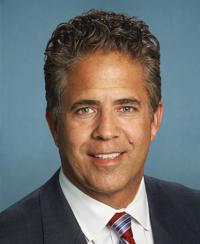
Historical · U.S. House · Michigan · District 8
Mike Bishop
Former U.S. Representative · Michigan District 8 · 2015–2019 · Republican
Mike Bishop represented Michigan's District 8 in the United States House of Representatives (2015–2019) for the Republican party. The page below collects sourced biographical facts, term history, committee roles, and provenance for Bishop.
Bioguide ID: B001293
Key facts
- Full name
- Mike Bishop
- State
- Michigan
- District
- District 8
- Party
- Republican
- House service
- 2015–2019
- First House term
- 2015
- Status
- Left office
- Current term ends
- —
- Born
- 1967
- Bioguide ID
- B001293
- Committee assignments
- —
- Dataset version
- 1.20260605
Biographical narrative
934 words · sourced from the Wikipedia REST extract
Michael Dean Bishop is an American attorney and politician who served as the U.S. Representative for Michigan's 8th congressional district from 2015 until 2019. A member of the Republican Party, he has a background in both state and federal legislative roles, having previously served in the Michigan House of Representatives and the Michigan State Senate. His political career includes significant leadership positions, including serving as the Majority Leader of the Michigan Senate. After two terms in the U.S. House, he lost his bid for re-election in 2018.
Early life and career
Born on March 18, 1967, Mike Bishop grew up in Rochester, Michigan. He completed his secondary education at Rochester Adams High School and went on to earn a Bachelor of Arts degree from the University of Michigan in 1989. Following his undergraduate studies, Bishop pursued a legal education at the Michigan State University College of Law, where he obtained his Juris Doctor degree.
Bishop began his professional career in law, working at the law firm of Booth Patterson until 2002. He later joined Simon, Galasso & Frantz as a senior attorney. In addition to his legal practice, Bishop is a licensed real estate broker and has owned two local real estate businesses: Freedom Realty, Inc. and Pro Management, Inc. His professional affiliations include membership in various legal and real estate organizations, such as the American Bar Association, the State Bar of Michigan, and the National Association of Realtors. He has also served on the Municipal Law and Business Law committees of the Oakland County Bar Association and is a member of the National Association of Sportsmen Legislators.
Bishop's political career began in earnest when he was elected to the Michigan House of Representatives, where he served from 1999 to 2002, representing the 45th District. This district encompassed much of the same area where his father, Donald Bishop, had previously served. During his tenure in the Michigan House, he held the position of vice chairman of the Commerce Committee. Following his time in the House, Bishop was elected to the Michigan State Senate in 2002, representing the 12th District, a seat that had also been held by his father. He served in the Senate until term limits prevented him from seeking re-election in 2010. During his time in the Senate, Bishop was appointed as chairman of the Banking and Financial Institutions Committee and vice chairman of both the Gaming and Casino Oversight Committee and the Judiciary Committee. He ultimately rose to the position of Senate Majority Leader from 2007 to 2010.
Bishop's political aspirations continued beyond his legislative roles in Michigan. In 2010, he sought the Republican nomination for state attorney general but was unsuccessful. He also ran for the position of Oakland County prosecutor in 2012 but lost to the Democratic incumbent.
House tenure
Bishop's congressional career began when he was elected to the U.S. House of Representatives in the 2014 elections, representing Michigan's 8th congressional district. He won the election on November 4, 2014, defeating Democratic challenger Eric Schertzing. Bishop was sworn into office on January 6, 2015. Shortly after taking office, he cast his vote for John Boehner as Speaker of the House.
In the 2016 elections, Bishop successfully ran for re-election, facing no opposition in the Republican primary. He encountered Democratic challengers in the general election, including actress Melissa Gilbert, who later withdrew from the race. Bishop ultimately faced Suzanna Shkreli as his opponent in the general election.
Bishop's tenure in the U.S. House concluded with the 2018 midterm elections, where he ran for re-election but lost to Democratic challenger Elissa Slotkin.
Legislative focus and committees
During his time in the U.S. House, Bishop served on several committees, which shaped his legislative focus. He was a member of the Committee on Education and the Workforce, where he participated in the Subcommittee on Early Childhood, Elementary and Secondary Education and the Subcommittee on Workforce Protections. Additionally, he served on the Committee on the Judiciary, contributing to the Subcommittee on Crime, Terrorism, Homeland Security and Investigations, as well as the Subcommittee on Regulatory Reform, Commercial and Antitrust Law. Bishop was also a member of the Committee on Ways and Means, where he served on the Subcommittee on Oversight and the Subcommittee on Human Resources.
Bishop was affiliated with various caucuses during his congressional tenure, including the Republican Study Committee, the House Baltic Caucus, and the Congressional NextGen 9-1-1 Caucus. His legislative positions reflected a conservative Republican ideology, particularly on issues such as abortion, healthcare, and gun rights. He voted to ban abortions after 20 weeks and co-sponsored legislation asserting that life begins at conception. Bishop expressed disapproval of the Affordable Care Act and voted for its repeal.
In terms of animal welfare, he advocated for the cessation of the killing of kittens used in research by the USDA. Bishop was a strong supporter of gun rights, receiving favorable ratings from the NRA Political Victory Fund.
Bishop's legislative decisions were also influenced by his previous experience in Michigan's state government. Notably, during his time as Majority Leader in the Michigan Senate, he was presented with a bill concerning the Gordie Howe International Bridge, which aimed to create a new crossing between the United States and Canada. Bishop opposed the bill, citing unresolved legal issues and the importance of the legislation, ultimately opting not to bring it to a vote. His opposition to the bridge continued into his congressional career, where he expressed intentions to block federal funding for related projects.
In his personal life, Bishop resides in Rochester, Michigan, with his spouse and three children. He identifies as a Congregationalist.
Notable legislation
Sponsored and co-sponsored legislation for Mike Bishop is pending operator curation. The biographical narrative above carries the same provenance trail until per-bill rows are written.
Sources
- [1]https://en.wikipedia.org/wiki/Mike_Bishop_(politician)Wikipedia · retrieved 2026-06-05
Notable quotes
Sourced quotes for Mike Bishop are pending operator curation. Narrative-scope provenance remains attached below.
Sources
- [1]https://en.wikipedia.org/wiki/Mike_Bishop_(politician)Wikipedia · retrieved 2026-06-05
Key positions
Curated policy positions for Mike Bishop are pending operator review. The biographical narrative above carries the same provenance trail until per-topic positions are written.
Sources
- [1]https://en.wikipedia.org/wiki/Mike_Bishop_(politician)Wikipedia · retrieved 2026-06-05
Terms served
- 2015–2017U.S. House · Term 1 · Republican
- 2017–2019U.S. House · Term 2 · Republican
Sources & provenance
Every attributable claim above carries a per-section [N] marker that resolves to the corresponding URL below. Each entry records the upstream provider, the canonical URL, and the timestamp at which the source was retrieved by the ingest pipeline.
Key facts
- https://bioguide.congress.gov/search/bio/B001293bioguide · retrieved 2026-06-05
- https://mikebishop.house.govhouse.gov · retrieved 2026-06-05
Biographical narrative
- https://en.wikipedia.org/wiki/Mike_Bishop_(politician)wikipedia · retrieved 2026-06-05
Find your representative
Every U.S. state elects representatives by district. Browse Michigan’s delegation, the full former-representative roster, or explore the role and term length.
Related on The Candidate
- Preceded by Mike RogersEarlier holder of the Michigan District 8 House seat · Republican.Open
- Alexander BuelFormer U.S. Representative · Michigan District 1 · DemocraticOpen
- Alfred LuckingFormer U.S. Representative · Michigan District 1 · DemocraticOpen
- Alpheus WilliamsFormer U.S. Representative · Michigan District 1 · DemocraticOpen
- Bart StupakFormer U.S. Representative · Michigan District 1 · DemocraticOpen
- Republican PartyFederal candidates and office holders on the Republican line.Open