
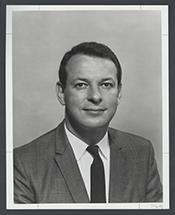
Historical · U.S. House · Minnesota · District 5
Donald Fraser
Former U.S. Representative · Minnesota District 5 · 1963–1979 · Democratic
Donald Fraser represented Minnesota's District 5 in the United States House of Representatives (1963–1979) for the Democratic party. The page below collects sourced biographical facts, term history, committee roles, and provenance for Fraser.
Bioguide ID: F000350
Key facts
- Full name
- Donald Fraser
- State
- Minnesota
- District
- District 5
- Party
- Democratic
- House service
- 1963–1979
- First House term
- 1963
- Status
- Left office
- Current term ends
- —
- Born
- 1924
- Bioguide ID
- F000350
- Committee assignments
- —
- Dataset version
- 1.20260605
Biographical narrative
904 words · sourced from the Wikipedia REST extract
Donald M. Fraser was an American politician who served as a U.S. Representative for Minnesota's 5th congressional district from 1963 to 1979. A member of the Democratic Party, Fraser was known for his commitment to human rights and international relations during his tenure in Congress. After leaving the House, he served as the mayor of Minneapolis from 1980 to 1994, making significant contributions to local governance and public policy.
Early life and career
Donald MacKay Fraser was born on February 20, 1924, in Minneapolis, Minnesota, to parents Everett and Lois (McKay) Fraser, who were immigrants from Canada. His father had a distinguished academic career, having studied law at Harvard University and later becoming the dean of the University of Minnesota Law School in 1920. Fraser graduated from University High School in 1941 and subsequently enrolled at the University of Minnesota, where he was an active member of the varsity swimming team.
In 1942, Fraser joined the Navy's Reserve Officers' Training Corps (NROTC) program, which led to his active duty placement in July 1942. He continued his studies at the university until February 1944, when he was commissioned as an officer after earning a bachelor's degree. Fraser served as a radar officer during World War II until the end of his service in 1946. Following his military service, he returned to Minneapolis to pursue a law degree at the University of Minnesota Law School.
While in law school, Fraser contributed to the Minnesota Law Review and authored an article addressing the illegality of racial covenants in real estate. This legal perspective was later affirmed by the U.S. Supreme Court in the landmark case Shelley v. Kraemer in 1948. Fraser completed his law degree that same year and was admitted to the bar. He joined a politically active law firm, Larson, Loevinger, Lindquist, Freeman, and Fraser, where he practiced general law and served as the municipal attorney for Brooklyn Center, Minnesota. In 1950, he married Arvonne Skelton, and they went on to have six children.
Fraser's political career began in 1954 when he was elected to the Minnesota Senate, where he served for eight years. His experience in state politics paved the way for his election to the U.S. House of Representatives in 1962, representing Minnesota's 5th congressional district.
House tenure
Fraser's congressional career spanned eight terms, beginning on January 3, 1963, and concluding on January 3, 1979. During his time in the House, he was an influential member, particularly noted for his leadership on human rights issues. He served on various committees, including as chair of the International Organizations and Movements subcommittee. In this role, he held hearings that focused on human rights violations in countries that were U.S. allies, significantly shaping the discourse around U.S. foreign policy.
From 1973 to 1976, Fraser played a pivotal role in drafting legislation aimed at reducing U.S. aid to nations with governments that engaged in gross violations of human rights. His advocacy in this area contributed to the establishment of a framework for the human rights agenda that was later adopted by the administration of President Jimmy Carter. This work transformed the operational procedures of the U.S. Department of State, mandating the preparation of annual reports on human rights conditions in various countries and ensuring that U.S. diplomatic efforts took human rights issues into account.
In 1978, following the passing of U.S. Senator Hubert Humphrey, Fraser opted to run for the vacant Senate seat rather than seek re-election to the House. Despite receiving the endorsement of the Democratic-Farmer-Labor Party (DFL), he was narrowly defeated by Bob Short, a conservative businessman. Short subsequently lost the general election to attorney David Durenberger.
Legislative focus and committees
Throughout his tenure in the House, Fraser's legislative focus was characterized by a commitment to human rights, international relations, and social justice. His leadership on the International Organizations and Movements subcommittee allowed him to address critical issues related to human rights abuses globally. Fraser's work in this area was instrumental in shaping U.S. policy and fostering a greater awareness of human rights violations, particularly in nations that received U.S. assistance.
In addition to his focus on human rights, Fraser was actively involved in various committees that addressed a range of issues, including environmental conservation and women's rights. His contributions to these areas reflected a broader commitment to progressive policies and reforms that aimed to improve the lives of individuals both domestically and internationally.
After leaving Congress, Fraser continued to engage in public service, being elected mayor of Minneapolis in 1979. He served as mayor from January 2, 1980, until January 3, 1994, and was recognized as the longest-serving mayor in the city's history. During his time in office, he focused on urban development, community engagement, and the promotion of democratic values.
Fraser's papers, which document his political career and contributions, are available for research and provide insights into his work on international relations, human rights, and Democratic Party policies during the 1960s and 1970s. He also endorsed the proposal for a United Nations Parliamentary Assembly in 2014, reflecting his ongoing commitment to international governance and reform.
Donald M. Fraser passed away on June 2, 2019, at the age of 95, leaving behind a legacy of public service and advocacy for human rights and social justice. His contributions to both local and national politics continue to be recognized and studied by those interested in the evolution of American political thought and practice.
Notable legislation
Sponsored and co-sponsored legislation for Donald Fraser is pending operator curation. The biographical narrative above carries the same provenance trail until per-bill rows are written.
Sources
- [1]https://en.wikipedia.org/wiki/Donald_M._FraserWikipedia · retrieved 2026-06-05
Notable quotes
Sourced quotes for Donald Fraser are pending operator curation. Narrative-scope provenance remains attached below.
Sources
- [1]https://en.wikipedia.org/wiki/Donald_M._FraserWikipedia · retrieved 2026-06-05
Key positions
Curated policy positions for Donald Fraser are pending operator review. The biographical narrative above carries the same provenance trail until per-topic positions are written.
Sources
- [1]https://en.wikipedia.org/wiki/Donald_M._FraserWikipedia · retrieved 2026-06-05
Terms served
- 1963–1965U.S. House · Term 1 · Democratic
- 1965–1967U.S. House · Term 2 · Democratic
- 1967–1969U.S. House · Term 3 · Democratic
- 1969–1971U.S. House · Term 4 · Democratic
- 1971–1973U.S. House · Term 5 · Democratic
- 1973–1975U.S. House · Term 6 · Democratic
- 1975–1977U.S. House · Term 7 · Democratic
- 1977–1979U.S. House · Term 8 · Democratic
Sources & provenance
Every attributable claim above carries a per-section [N] marker that resolves to the corresponding URL below. Each entry records the upstream provider, the canonical URL, and the timestamp at which the source was retrieved by the ingest pipeline.
Key facts
- https://bioguide.congress.gov/search/bio/F000350bioguide · retrieved 2026-06-05
- https://www.govtrack.us/congress/members/404297govtrack · retrieved 2026-06-05
Biographical narrative
- https://en.wikipedia.org/wiki/Donald_M._Fraserwikipedia · retrieved 2026-06-05
Find your representative
Every U.S. state elects representatives by district. Browse Minnesota’s delegation, the full former-representative roster, or explore the role and term length.
Related on The Candidate
- Preceded by Walter JuddEarlier holder of the Minnesota District 5 House seat · Republican.Open
- Succeeded by Martin SaboLater holder of the Minnesota District 5 House seat · Democratic.Open
- Albert QuieFormer U.S. Representative · Minnesota District 1 · RepublicanOpen
- Allen FurlowFormer U.S. Representative · Minnesota District 1 · RepublicanOpen
- Arlen ErdahlFormer U.S. Representative · Minnesota District 1 · RepublicanOpen
- August AndresenFormer U.S. Representative · Minnesota District 1 · RepublicanOpen