
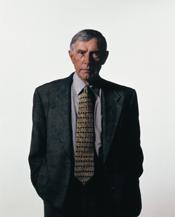
Historical · U.S. House · Minnesota · District 5
Martin Sabo
Former U.S. Representative · Minnesota District 5 · 1979–2007 · Democratic
Martin Sabo represented Minnesota's District 5 in the United States House of Representatives (1979–2007) for the Democratic party. The page below collects sourced biographical facts, term history, committee roles, and provenance for Sabo.
Bioguide ID: S000005
Key facts
- Full name
- Martin Sabo
- State
- Minnesota
- District
- District 5
- Party
- Democratic
- House service
- 1979–2007
- First House term
- 1979
- Status
- Left office
- Current term ends
- —
- Born
- 1938
- Bioguide ID
- S000005
- Committee assignments
- —
- Dataset version
- 1.20260605
Biographical narrative
907 words · sourced from the Wikipedia REST extract
Martin Olav Sabo was an American politician who served as a United States Representative for Minnesota's fifth congressional district, which encompasses the city of Minneapolis. A member of the Democratic-Farmer-Labor Party (DFL), Sabo had a lengthy and distinguished career in public service, spanning over four decades, including 28 years in Congress. He was known for his progressive political stance and played a significant role in various legislative initiatives, particularly in budgetary matters and transportation policy.
Early life and career
Martin Olav Sabo was born on February 28, 1938, in Crosby, North Dakota, to parents who were Lutheran immigrants from Norway. His upbringing in a family with immigrant roots influenced his later political perspectives and commitment to public service. Sabo pursued higher education at Augsburg College in Minneapolis, where he earned a Bachelor of Arts degree in 1959. He furthered his academic pursuits with graduate studies at the University of Minnesota, laying a foundation for his future career in politics.
Sabo's political career began at a young age when he was elected to the Minnesota House of Representatives in 1960, becoming one of the youngest members to serve in that capacity. His tenure in the state legislature was marked by significant leadership roles; he served as the minority leader from 1969 to 1972 and made history as the first Democrat to hold the position of House Speaker from 1973 to 1978. During his time in the Minnesota House, Sabo was active in national legislative organizations, serving as president of both the National Conference of State Legislatures and the National Legislative Conference. Additionally, he was appointed by the president to the National Advisory Commission on Intergovernmental Relations, further demonstrating his commitment to governance and intergovernmental cooperation.
House tenure
Sabo's transition to federal politics occurred when he became the Democratic candidate for Minnesota's fifth congressional district in 1978, following the decision of eight-term incumbent Donald M. Fraser to run for the U.S. Senate. Sabo won the election decisively, entering the U.S. House of Representatives at a time when the district was considered a stronghold for the Democratic-Farmer-Labor Party. Over the course of his career, he was reelected thirteen times, serving in multiple Congresses from the 96th to the 109th. His long tenure in the House was characterized by a lack of serious opposition in elections, reflecting his strong support within the district.
During the 103rd Congress, Sabo held the influential position of chairman of the House Budget Committee. In this role, he was instrumental in guiding the Omnibus Budget Reconciliation Act of 1993 through the House, a significant piece of legislation aimed at reducing the federal budget deficit. His leadership in this area contributed to the eventual elimination of the budget deficit by 1999, although it would later resurface. In the 109th Congress, Sabo served on the House Appropriations Committee, where he was the ranking member of the Homeland Security subcommittee, further solidifying his influence in federal budgetary matters.
Sabo's political career was marked by a commitment to progressive values, and he was recognized as one of the most liberal members of the Minnesota congressional delegation during his final term. His voting record reflected a strong alignment with progressive causes, earning him high marks from liberal advocacy groups while receiving low scores from conservative organizations.
Legislative focus and committees
Throughout his congressional career, Martin Sabo's legislative focus included a range of issues, with a particular emphasis on budgetary policy and transportation. As chairman of the House Budget Committee, he played a pivotal role in shaping fiscal policy and managing the federal budget. His work on the Omnibus Budget Reconciliation Act of 1993 was a defining moment in his career, showcasing his ability to navigate complex legislative processes and achieve significant policy outcomes.
In addition to his budgetary work, Sabo was deeply involved in transportation policy. He served as co-chair of the National Transportation Policy Project at the Bipartisan Policy Center, where he advocated for funding and support for various transportation initiatives. His efforts in this area were recognized through the naming of the Midtown Greenway bridge in Minneapolis as the Martin Olav Sabo Bridge, honoring his contributions to enhancing transportation infrastructure and promoting pedestrian and bicycling access.
Sabo's commitment to local governance and community issues was a hallmark of his political philosophy. He often identified as a "liberal decentrist," advocating for progressive policies while emphasizing the importance of local control over federal intervention. This approach resonated with constituents in his district, contributing to his long-standing electoral success.
In recognition of his service, the central Minneapolis post office was renamed the Martin Olav Sabo Post Office in 2022, reflecting his lasting impact on the community and his legacy as a public servant.
After announcing in 2006 that he would not seek reelection for the 110th Congress, Sabo concluded a remarkable 46-year career in elected office, which included 28 years in Congress. He endorsed his longtime chief of staff as his successor, although the primary was ultimately won by another progressive candidate. Sabo's contributions to Minnesota politics and his influence on national policy were significant, and he left a legacy that continues to be recognized by his peers and constituents.
Sabo passed away on March 13, 2016, in Minneapolis, Minnesota, at the age of 78. His death marked the end of a notable chapter in Minnesota's political history, and he is remembered for his dedication to public service and his commitment to the values he championed throughout his career.
Notable legislation
Sponsored and co-sponsored legislation for Martin Sabo is pending operator curation. The biographical narrative above carries the same provenance trail until per-bill rows are written.
Sources
- [1]https://en.wikipedia.org/wiki/Martin_Olav_SaboWikipedia · retrieved 2026-06-05
Notable quotes
Sourced quotes for Martin Sabo are pending operator curation. Narrative-scope provenance remains attached below.
Sources
- [1]https://en.wikipedia.org/wiki/Martin_Olav_SaboWikipedia · retrieved 2026-06-05
Key positions
Curated policy positions for Martin Sabo are pending operator review. The biographical narrative above carries the same provenance trail until per-topic positions are written.
Sources
- [1]https://en.wikipedia.org/wiki/Martin_Olav_SaboWikipedia · retrieved 2026-06-05
Terms served
- 1979–1981U.S. House · Term 1 · Democratic
- 1981–1983U.S. House · Term 2 · Democratic
- 1983–1985U.S. House · Term 3 · Democratic
- 1985–1987U.S. House · Term 4 · Democratic
- 1987–1989U.S. House · Term 5 · Democratic
- 1989–1991U.S. House · Term 6 · Democratic
- 1991–1993U.S. House · Term 7 · Democratic
- 1993–1995U.S. House · Term 8 · Democratic
- 1995–1997U.S. House · Term 9 · Democratic
- 1997–1999U.S. House · Term 10 · Democratic
- 1999–2001U.S. House · Term 11 · Democratic
- 2001–2003U.S. House · Term 12 · Democratic
- 2003–2005U.S. House · Term 13 · Democratic
- 2005–2007U.S. House · Term 14 · Democratic
Sources & provenance
Every attributable claim above carries a per-section [N] marker that resolves to the corresponding URL below. Each entry records the upstream provider, the canonical URL, and the timestamp at which the source was retrieved by the ingest pipeline.
Key facts
- https://bioguide.congress.gov/search/bio/S000005bioguide · retrieved 2026-06-05
- http://www.house.gov/sabohouse.gov · retrieved 2026-06-05
Biographical narrative
- https://en.wikipedia.org/wiki/Martin_Olav_Sabowikipedia · retrieved 2026-06-05
Find your representative
Every U.S. state elects representatives by district. Browse Minnesota’s delegation, the full former-representative roster, or explore the role and term length.
Related on The Candidate
- Preceded by Donald FraserEarlier holder of the Minnesota District 5 House seat · Democratic.Open
- Succeeded by Keith EllisonLater holder of the Minnesota District 5 House seat · Democratic.Open
- Albert QuieFormer U.S. Representative · Minnesota District 1 · RepublicanOpen
- Allen FurlowFormer U.S. Representative · Minnesota District 1 · RepublicanOpen
- Arlen ErdahlFormer U.S. Representative · Minnesota District 1 · RepublicanOpen
- August AndresenFormer U.S. Representative · Minnesota District 1 · RepublicanOpen