
Historical · U.S. House · Minnesota · District 6
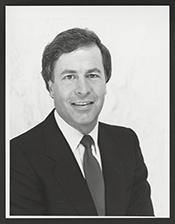
Gerald Sikorski
Former U.S. Representative · Minnesota District 6 · 1983–1993 · Democratic
Gerald Sikorski represented Minnesota's District 6 in the United States House of Representatives (1983–1993) for the Democratic party. The page below collects sourced biographical facts, term history, committee roles, and provenance for Sikorski.
Bioguide ID: S000407
Key facts
- Full name
- Gerald Sikorski
- State
- Minnesota
- District
- District 6
- Party
- Democratic
- House service
- 1983–1993
- First House term
- 1983
- Status
- Left office
- Current term ends
- —
- Born
- 1948
- Bioguide ID
- S000407
- Committee assignments
- —
- Dataset version
- 1.20260605
Biographical narrative
970 words · sourced from the Wikipedia REST extract
Gerald Edward Sikorski is a former American politician, lawyer, and lobbyist who served as a U.S. Representative for Minnesota's 6th congressional district from 1983 until 1993. A member of the Democratic-Farmer-Labor Party, Sikorski's political career spanned a decade in Congress, during which he was involved in various legislative efforts and held significant positions within the House. His tenure was marked by both electoral successes and challenges, culminating in his defeat in 1992.
Early life and career
Gerry E. Sikorski was born on April 26, 1948. He pursued higher education at the University of Minnesota, where he earned a Bachelor of Arts degree, graduating summa cum laude in 1970. Following this achievement, he continued his studies at the University of Minnesota Law School, obtaining his Juris Doctor in 1973. Upon completing his legal education, Sikorski was admitted to the Minnesota bar the same year and began his legal practice in Stillwater, Minnesota.
Sikorski's political career began in the Minnesota Senate, where he served from 1977 to 1982. His time in the state legislature provided him with valuable experience in governance and public policy, laying the groundwork for his future endeavors at the federal level. In 1978, he made his first attempt to enter Congress by running for the U.S. House of Representatives. However, he was unsuccessful in this bid, losing to the incumbent, Arlen Erdahl. This initial setback did not deter him; instead, it motivated him to continue pursuing a congressional seat.
The political landscape shifted following the 1980 census, which led to a reapportionment that moved Erdahl from Minnesota's 1st congressional district to the newly configured 6th congressional district. Sikorski seized this opportunity and challenged Erdahl again in 1982. This rematch proved to be a closely contested election, with Sikorski winning by a narrow margin of 51% to 49%. This victory marked the beginning of his five-term tenure in the U.S. House of Representatives.
House tenure
Sikorski's congressional career began in 1983, and he was re-elected four times, serving until January 3, 1993. His electoral success was notable; after his initial close victory, he consistently won re-election by significant margins, often exceeding 20 percentage points in subsequent elections held in 1984, 1986, 1988, and 1990. This trend reflected his growing popularity and the support he garnered from constituents in Minnesota's 6th district.
During his time in Congress, Sikorski held the position of Whip-at-Large, a role that involved assisting party leadership in managing legislative strategy and ensuring party discipline during votes. His responsibilities as Whip required him to communicate effectively with fellow party members and coordinate efforts to advance the Democratic agenda in the House. Additionally, he served on the Committee on Energy and Commerce, which oversees a wide range of issues, including energy policy, healthcare, and telecommunications. His involvement in this committee allowed him to influence significant legislation affecting both his constituents and the nation.
Sikorski was also a member of the Committee on the Post Office and Civil Service, where he engaged in discussions and decisions related to postal services and civil service regulations. His committee assignments provided him with platforms to advocate for policies that aligned with the interests of his district and the broader Democratic Party.
Despite his electoral successes, Sikorski's tenure was not without controversy. In 1992, he faced significant scrutiny due to his involvement in the House banking scandal. Reports indicated that he had accumulated a substantial number of overdrafts on the House Bank, which he attributed to issues with bookkeeping. This scandal had implications for his re-election campaign, as it raised questions about his financial management and accountability.
In the 1992 election, Sikorski was defeated by Rod Grams, a television news anchor, in a four-way race. He garnered only 33% of the vote, a stark contrast to his previous electoral performances. This defeat marked the end of his congressional career and highlighted the challenges faced by incumbents in the wake of scandals and changing voter sentiments.
Legislative focus and committees
Throughout his five terms in the U.S. House of Representatives, Sikorski's legislative focus encompassed a variety of issues, reflecting the interests and concerns of his constituents in Minnesota's 6th district. His work on the Committee on Energy and Commerce positioned him at the forefront of critical discussions regarding energy policy, healthcare reform, and telecommunications regulation. These areas were particularly relevant during the 1980s and early 1990s as the nation grappled with energy crises, healthcare costs, and the rapid advancement of technology.
Sikorski's role as Whip-at-Large also allowed him to play a significant part in shaping the legislative agenda of the Democratic Party. His responsibilities included rallying support for key initiatives and ensuring that party members were aligned on important votes. This position required a deep understanding of both policy and the political landscape, as he worked to navigate the complexities of legislative negotiations.
In addition to his committee work, Sikorski's legislative efforts were influenced by the broader political climate of the time. The late 1980s and early 1990s were characterized by significant shifts in public policy, including debates over healthcare reform and energy independence. Sikorski's contributions to these discussions were informed by his legal background and his commitment to addressing the needs of his constituents.
After leaving Congress, Sikorski transitioned into a career as an attorney and lobbyist in Washington, D.C. This shift allowed him to continue engaging in the political process, albeit from a different perspective. His experience in Congress provided him with valuable insights into the workings of government and the legislative process, which he utilized in his subsequent roles.
In summary, Gerry E. Sikorski's career as a U.S. Representative was marked by significant electoral victories, involvement in key legislative committees, and challenges that ultimately led to his defeat in 1992. His contributions to Congress reflected his commitment to public service and the interests of his constituents in Minnesota.
Notable legislation
Sponsored and co-sponsored legislation for Gerald Sikorski is pending operator curation. The biographical narrative above carries the same provenance trail until per-bill rows are written.
Sources
- [1]https://en.wikipedia.org/wiki/Gerry_SikorskiWikipedia · retrieved 2026-06-05
Notable quotes
Sourced quotes for Gerald Sikorski are pending operator curation. Narrative-scope provenance remains attached below.
Sources
- [1]https://en.wikipedia.org/wiki/Gerry_SikorskiWikipedia · retrieved 2026-06-05
Key positions
Curated policy positions for Gerald Sikorski are pending operator review. The biographical narrative above carries the same provenance trail until per-topic positions are written.
Sources
- [1]https://en.wikipedia.org/wiki/Gerry_SikorskiWikipedia · retrieved 2026-06-05
Terms served
- 1983–1985U.S. House · Term 1 · Democratic
- 1985–1987U.S. House · Term 2 · Democratic
- 1987–1989U.S. House · Term 3 · Democratic
- 1989–1991U.S. House · Term 4 · Democratic
- 1991–1993U.S. House · Term 5 · Democratic
Sources & provenance
Every attributable claim above carries a per-section [N] marker that resolves to the corresponding URL below. Each entry records the upstream provider, the canonical URL, and the timestamp at which the source was retrieved by the ingest pipeline.
Key facts
- https://bioguide.congress.gov/search/bio/S000407bioguide · retrieved 2026-06-05
- https://www.govtrack.us/congress/members/409901govtrack · retrieved 2026-06-05
Biographical narrative
- https://en.wikipedia.org/wiki/Gerry_Sikorskiwikipedia · retrieved 2026-06-05
Find your representative
Every U.S. state elects representatives by district. Browse Minnesota’s delegation, the full former-representative roster, or explore the role and term length.
Related on The Candidate
- Preceded by John ZwachEarlier holder of the Minnesota District 6 House seat · Republican.Open
- Succeeded by William LutherLater holder of the Minnesota District 6 House seat · Democratic.Open
- Albert QuieFormer U.S. Representative · Minnesota District 1 · RepublicanOpen
- Allen FurlowFormer U.S. Representative · Minnesota District 1 · RepublicanOpen
- Arlen ErdahlFormer U.S. Representative · Minnesota District 1 · RepublicanOpen
- August AndresenFormer U.S. Representative · Minnesota District 1 · RepublicanOpen