
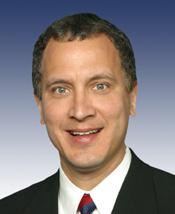
Historical · U.S. House · Minnesota · District 6
Mark Kennedy
Former U.S. Representative · Minnesota District 6 · 2001–2007 · Republican
Mark Kennedy represented Minnesota's District 6 in the United States House of Representatives (2001–2007) for the Republican party. The page below collects sourced biographical facts, term history, committee roles, and provenance for Kennedy.
Bioguide ID: K000358
Key facts
- Full name
- Mark Kennedy
- State
- Minnesota
- District
- District 6
- Party
- Republican
- House service
- 2001–2007
- First House term
- 2001
- Status
- Left office
- Current term ends
- —
- Born
- 1957
- Bioguide ID
- K000358
- Committee assignments
- —
- Dataset version
- 1.20260605
Biographical narrative
860 words · sourced from the Wikipedia REST extract
Mark R. Kennedy is a former American politician and businessman who served as a Republican member of the United States House of Representatives for Minnesota's 6th congressional district from 2001 until 2007. Following his tenure in Congress, Kennedy transitioned into academia and leadership roles within higher education institutions. His political career included notable electoral campaigns and legislative initiatives, particularly focusing on issues such as trade, healthcare, and education.
Early life and career
Mark R. Kennedy was born on April 11, 1957. He graduated from Pequot Lakes High School in 1975 and went on to earn a Bachelor’s degree from St. John's University in 1979. Following his undergraduate education, Kennedy began his professional career as a certified public accountant. He furthered his education by obtaining a Master of Business Administration (MBA) with distinction from the University of Michigan's Ross School of Business in 1983.
Kennedy's business career was marked by significant roles in various organizations. He worked for the Pillsbury Company, where he played a key role in its acquisition of Häagen-Dazs and facilitated financing for the company's international expansion efforts. Later, as a senior executive at Federated Department Stores, he contributed to the company's growth, which ultimately positioned it to become Macy's, a leading department store chain globally. His contributions to the business sector were recognized when he was featured in Institutional Investor Magazine in May 1992 as one of "America's top CFOs." Additionally, at ShopKo Stores, Kennedy was responsible for overseeing merchandising, marketing, and store management, further solidifying his reputation as a capable business leader.
House tenure
Kennedy entered politics in 2000 when he secured the Republican nomination for Minnesota's 2nd congressional district. This marked his first foray into political office, and he faced a challenging campaign against four-term Democratic incumbent David Minge. In a closely contested race, Kennedy won by a narrow margin of 155 votes, marking the beginning of his congressional career.
In the lead-up to the 2002 elections, Minnesota's congressional districts were redrawn, resulting in the dissolution of Kennedy's original district. The new 6th district, which included parts of the Twin Cities' northern suburbs, was more favorable to Republican candidates. Initially, Kennedy anticipated running against three-term Democratic incumbent Bill Luther, who ultimately chose to run in the reconfigured 2nd district. Instead, Kennedy faced Janet Robert, a lawyer and established Democratic activist. The campaign was one of the most expensive congressional races in Minnesota's history, but Kennedy emerged victorious, securing 57% of the vote.
In 2004, Kennedy ran for re-election against child safety advocate Patty Wetterling. He won this contest with 54% of the vote, further solidifying his position in Congress.
In 2006, Kennedy chose not to seek re-election to the House. Instead, he entered the race for the U.S. Senate seat being vacated by Democratic-Farmer-Labor incumbent Mark Dayton. In this election, he faced several opponents, including Amy Klobuchar, the Democratic-Farmer-Labor nominee, and others from different parties. Klobuchar won the election decisively, receiving 58% of the vote compared to Kennedy's 38%.
Legislative focus and committees
During his time in Congress, Kennedy's legislative focus encompassed a range of issues, with a particular emphasis on trade, healthcare, and education. He was a proponent of free trade and supported measures that granted the president fast-track authority, as well as the Central America Free Trade Agreement. His support for the Bush tax cuts and the Medicare Prescription Drug Plan highlighted his alignment with Republican fiscal policies.
Kennedy's record included co-sponsoring bipartisan legislation aimed at expanding stem cell research, reflecting his willingness to work across party lines. He introduced and partnered with Democratic colleagues on various bills, including the Teachers for Tomorrow's Careers Act, the Fair Care for the Uninsured Act, and the Rural Access to Emergency Services Act. His collaborative approach extended to other initiatives, such as the Clean Alternatives for Energy Independence Act and the Child Support Enforcement Act.
Kennedy identified as "100% pro-life" and supported legislation such as the Partial-Birth Abortion Ban Act and the Unborn Victims of Violence Act. He also voted to sustain President Bush's veto of the Stem Cell Research Enhancement Act of 2005 while co-sponsoring other bipartisan efforts to expand stem cell research.
Kennedy's tenure in the House was characterized by a commitment to bipartisanship, as he often collaborated with Democratic representatives on various legislative initiatives. His ability to engage with members across the aisle was evident in the co-sponsorship of numerous bills, which included contributions to public safety and health care reform.
Following his departure from Congress in 2007, Kennedy continued to engage in public service and leadership roles. He was appointed to the President's Advisory Committee on Trade Policy and Negotiation, where he contributed to discussions on national trade policy. His post-congressional career included significant positions in academia, including serving as the director of The Graduate School of Political Management at George Washington University and later as the president of the University of North Dakota and the University of Colorado system.
Kennedy's career reflects a blend of business acumen and public service, illustrating his contributions to both the private and public sectors. His legislative efforts and leadership roles have left a mark on the institutions and communities he has served.
Notable legislation
Sponsored and co-sponsored legislation for Mark Kennedy is pending operator curation. The biographical narrative above carries the same provenance trail until per-bill rows are written.
Sources
- [1]https://en.wikipedia.org/wiki/Mark_Kennedy_(politician)Wikipedia · retrieved 2026-06-05
Notable quotes
Sourced quotes for Mark Kennedy are pending operator curation. Narrative-scope provenance remains attached below.
Sources
- [1]https://en.wikipedia.org/wiki/Mark_Kennedy_(politician)Wikipedia · retrieved 2026-06-05
Key positions
Curated policy positions for Mark Kennedy are pending operator review. The biographical narrative above carries the same provenance trail until per-topic positions are written.
Sources
- [1]https://en.wikipedia.org/wiki/Mark_Kennedy_(politician)Wikipedia · retrieved 2026-06-05
Terms served
- 2001–2003U.S. House · Term 1 · Republican
- 2003–2005U.S. House · Term 2 · Republican
- 2005–2007U.S. House · Term 3 · Republican
Sources & provenance
Every attributable claim above carries a per-section [N] marker that resolves to the corresponding URL below. Each entry records the upstream provider, the canonical URL, and the timestamp at which the source was retrieved by the ingest pipeline.
Key facts
- https://bioguide.congress.gov/search/bio/K000358bioguide · retrieved 2026-06-05
- http://markkennedy.house.govhouse.gov · retrieved 2026-06-05
Biographical narrative
- https://en.wikipedia.org/wiki/Mark_Kennedy_(politician)wikipedia · retrieved 2026-06-05
Find your representative
Every U.S. state elects representatives by district. Browse Minnesota’s delegation, the full former-representative roster, or explore the role and term length.
Related on The Candidate
- Preceded by Gerald SikorskiEarlier holder of the Minnesota District 6 House seat · Democratic.Open
- Succeeded by Michele BachmannLater holder of the Minnesota District 6 House seat · Republican.Open
- Albert QuieFormer U.S. Representative · Minnesota District 1 · RepublicanOpen
- Allen FurlowFormer U.S. Representative · Minnesota District 1 · RepublicanOpen
- Arlen ErdahlFormer U.S. Representative · Minnesota District 1 · RepublicanOpen
- August AndresenFormer U.S. Representative · Minnesota District 1 · RepublicanOpen