
Historical · U.S. House · Minnesota · District 7
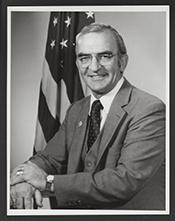
Arlan Stangeland
Former U.S. Representative · Minnesota District 7 · 1977–1991 · Republican
Arlan Stangeland represented Minnesota's District 7 in the United States House of Representatives (1977–1991) for the Republican party. The page below collects sourced biographical facts, term history, committee roles, and provenance for Stangeland.
Bioguide ID: S000795
Key facts
- Full name
- Arlan Stangeland
- State
- Minnesota
- District
- District 7
- Party
- Republican
- House service
- 1977–1991
- First House term
- 1977
- Status
- Left office
- Current term ends
- —
- Born
- 1930
- Bioguide ID
- S000795
- Committee assignments
- —
- Dataset version
- 1.20260605
Biographical narrative
840 words · sourced from the Wikipedia REST extract
Arlan Stangeland was an American politician who served as a U.S. Representative for Minnesota's 7th congressional district from 1977 until 1991. A member of the Republican Party, Stangeland's political career was marked by his deep roots in the agricultural community and his commitment to representing the interests of his constituents in a predominantly rural area. His tenure in Congress followed a significant career in local politics, where he held various positions, including serving in the Minnesota House of Representatives and on the Barnesville school board.
Early life and career
Arlan Inghart Stangeland was born on February 8, 1930. He spent his early years in Kragnes Township, Minnesota, where he attended Oak Mound School for his primary education before graduating from Moorhead High School in 1948. During his formative years, Stangeland was actively involved in community organizations, including the Oak Mound 4-H Club, the Oak Mound Parent-Teacher Association, and the Oak Mound Community Club, which fostered his connection to the local community.
Following his high school graduation, Stangeland pursued a career in agriculture, becoming a farmer who specialized in raising Purebred Shorthorns. His dedication to farming and family life was evident as he married Virginia Trowbridge and together they raised seven children, comprising two daughters and five sons. Stangeland was also a long-time member of Our Savior's Lutheran Church, which reflected his commitment to both his faith and community.
Stangeland's political involvement began in earnest in the 1960s when he became a delegate to the Minnesota State Republican conventions from 1964 to 1968. His early political career included serving as a member of the Minnesota House of Representatives from 1966 to 1975, where he gained experience in legislative processes and constituent representation. Following his time in the state legislature, he served on the Barnesville school board from 1976 to 1977, further solidifying his reputation as a dedicated public servant.
House tenure
Stangeland's congressional career began when he was elected to the U.S. House of Representatives in a special election held on February 22, 1977. This election was necessitated by the resignation of Robert Bergland, a Democrat who left to serve as U.S. Secretary of Agriculture. Stangeland emerged victorious in the Republican primary on February 8, 1977, defeating Richard Franson with a significant majority of the vote.
In the general election, Stangeland faced Democratic-Farmer-Labor Party nominee Michael J. Sullivan, who had previously served as an aide to Walter Mondale. Stangeland's campaign focused on the need for a representative with agricultural roots, similar to Bergland, emphasizing the importance of having a farmer's perspective in Congress for a district that was largely rural. Despite facing challenges, including opposition from local religious leaders, Stangeland won the election with a notable margin, securing 71,251 votes against Sullivan's 43,467.
Stangeland's victory was considered a political upset, as it was attributed to his strong local ties, agricultural background, and identification with the predominantly Protestant community. Over the course of his seven terms in Congress, Stangeland worked on various issues pertinent to his constituents, particularly those related to agriculture and rural development.
However, Stangeland's political career faced challenges in the late 1980s. In January 1990, reports surfaced regarding his use of a state-issued credit card for personal long-distance calls to a female lobbyist. Although he acknowledged making the calls, he denied any romantic involvement. This controversy led to a decline in his popularity, ultimately resulting in his defeat in the 1990 election to Democratic State Senator Collin Peterson, who had previously challenged him in earlier elections.
Legislative focus and committees
During his time in the U.S. House of Representatives, Stangeland was known for his focus on issues that directly affected the agricultural community and rural constituents. His background as a farmer provided him with firsthand knowledge of the challenges faced by those in the agricultural sector, and he sought to advocate for policies that would benefit farmers and rural communities.
Stangeland's legislative priorities included agricultural policy, rural development, and issues related to the economy and infrastructure in rural areas. He served on various committees during his tenure, which allowed him to influence legislation that aligned with the interests of his constituents. His experience in local government and the Minnesota House of Representatives equipped him with the skills necessary to navigate the complexities of federal legislation and advocate effectively for his district.
Throughout his congressional career, Stangeland maintained a strong connection to his constituents, often emphasizing the importance of grassroots support and community involvement in the political process. His commitment to representing the interests of rural Minnesota was a defining characteristic of his time in office.
After serving seven terms in the U.S. House of Representatives, Stangeland's political career came to an end when he was defeated in the 1990 election. Following his departure from Congress, he continued to reside in Minnesota, where he remained active in his community until his passing on July 2, 2013, at his home on Lake Lizzie, near Detroit Lakes. Stangeland's legacy as a representative of Minnesota's 7th congressional district reflects his dedication to public service and the agricultural community he represented.
Notable legislation
Sponsored and co-sponsored legislation for Arlan Stangeland is pending operator curation. The biographical narrative above carries the same provenance trail until per-bill rows are written.
Sources
- [1]https://en.wikipedia.org/wiki/Arlan_StangelandWikipedia · retrieved 2026-06-05
Notable quotes
Sourced quotes for Arlan Stangeland are pending operator curation. Narrative-scope provenance remains attached below.
Sources
- [1]https://en.wikipedia.org/wiki/Arlan_StangelandWikipedia · retrieved 2026-06-05
Key positions
Curated policy positions for Arlan Stangeland are pending operator review. The biographical narrative above carries the same provenance trail until per-topic positions are written.
Sources
- [1]https://en.wikipedia.org/wiki/Arlan_StangelandWikipedia · retrieved 2026-06-05
Terms served
- 1977–1979U.S. House · Term 1 · Republican
- 1979–1981U.S. House · Term 2 · Republican
- 1981–1983U.S. House · Term 3 · Republican
- 1983–1985U.S. House · Term 4 · Republican
- 1985–1987U.S. House · Term 5 · Republican
- 1987–1989U.S. House · Term 6 · Republican
- 1989–1991U.S. House · Term 7 · Republican
Sources & provenance
Every attributable claim above carries a per-section [N] marker that resolves to the corresponding URL below. Each entry records the upstream provider, the canonical URL, and the timestamp at which the source was retrieved by the ingest pipeline.
Key facts
- https://bioguide.congress.gov/search/bio/S000795bioguide · retrieved 2026-06-05
- https://www.govtrack.us/congress/members/410261govtrack · retrieved 2026-06-05
Biographical narrative
- https://en.wikipedia.org/wiki/Arlan_Stangelandwikipedia · retrieved 2026-06-05
Find your representative
Every U.S. state elects representatives by district. Browse Minnesota’s delegation, the full former-representative roster, or explore the role and term length.
Related on The Candidate
- Preceded by Odin LangenEarlier holder of the Minnesota District 7 House seat · Republican.Open
- Succeeded by Collin PetersonLater holder of the Minnesota District 7 House seat · Democratic.Open
- Albert QuieFormer U.S. Representative · Minnesota District 1 · RepublicanOpen
- Allen FurlowFormer U.S. Representative · Minnesota District 1 · RepublicanOpen
- Arlen ErdahlFormer U.S. Representative · Minnesota District 1 · RepublicanOpen
- August AndresenFormer U.S. Representative · Minnesota District 1 · RepublicanOpen