
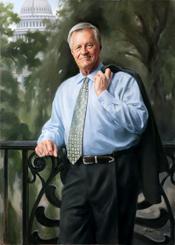
Historical · U.S. House · Minnesota · District 7
Collin Peterson
Former U.S. Representative · Minnesota District 7 · 1991–2021 · Democratic
Collin Peterson represented Minnesota's District 7 in the United States House of Representatives (1991–2021) for the Democratic party. The page below collects sourced biographical facts, term history, committee roles, and provenance for Peterson.
Bioguide ID: P000258
Key facts
- Full name
- Collin Peterson
- State
- Minnesota
- District
- District 7
- Party
- Democratic
- House service
- 1991–2021
- First House term
- 1991
- Status
- Left office
- Current term ends
- —
- Born
- 1944
- Bioguide ID
- P000258
- Committee assignments
- —
- Dataset version
- 1.20260604
Biographical narrative
988 words · sourced from the Wikipedia REST extract
Collin C. Peterson is a former U.S. Representative who served Minnesota's 7th congressional district from 1991 until 2021. A member of the Democratic Party, specifically the Minnesota Democratic–Farmer–Labor Party, Peterson was known for his long tenure in Congress, where he held significant leadership roles, including chairmanship of the House Committee on Agriculture. His political career spanned over three decades, during which he became a prominent figure in Minnesota politics and was recognized for his influence in agricultural policy. After losing his seat in the 2020 elections, Peterson transitioned to a role as a lobbyist.
Early life and career
Collin Peterson was born on June 29, 1944, in Fargo, North Dakota. He grew up on a farm in Baker, Minnesota, which provided him with firsthand experience of rural life and agricultural issues that would later inform his political career. Peterson pursued higher education at Minnesota State University Moorhead, where he earned a Bachelor of Arts degree.
Before entering the U.S. House of Representatives, Peterson served in the Minnesota Senate from 1977 to 1986. During this time, he represented a district in northwestern Minnesota as a member of the Democratic–Farmer–Labor Party. His initial foray into politics was marked by a successful campaign in 1976, where he defeated Republican candidate Frank DeGroat by a margin of 10 percentage points. Peterson faced a more challenging political landscape in subsequent elections, narrowly winning re-election in 1982 against state representative Cal Larson by only 200 votes, a margin of just 0.8%. These early experiences in state politics helped to shape his understanding of the legislative process and the needs of his constituents.
House tenure
Collin Peterson's tenure in the U.S. House of Representatives began in 1991 when he won a hard-fought election for Minnesota's 7th congressional district. This district had previously been held by Republican Arlan Stangeland, whom Peterson defeated in a significant upset during the 1990 election. Peterson's victory was attributed to a combination of factors, including Stangeland's declining popularity following revelations about his misuse of a House credit card. Peterson secured 54% of the vote in that election, marking the beginning of a lengthy congressional career.
Throughout the 1990s, Peterson faced various electoral challenges but managed to maintain his seat. He won re-election in 1992 by a narrow margin of 50% to 49% against former state representative Bernie Omann and again in 1994, despite the Republican Revolution, by a slightly larger margin of 51% to 49%. His electoral success continued through the late 1990s, culminating in a 68% victory in 1996 and a 72% win in 1998, demonstrating his growing support within the district.
In the following decades, Peterson's re-election campaigns became less contentious. He consistently received substantial support from voters, often winning with over two-thirds of the vote. His political standing was bolstered by his focus on local issues and his ability to connect with constituents. In 2000, he was considered a potential candidate for the U.S. Senate but ultimately chose to run for re-election, winning with 69% of the vote. His popularity remained strong, as evidenced by his victories in the subsequent elections, where he garnered 65% in 2002, 66% in 2004, 70% in 2006, and 72% in 2008.
However, the political landscape began to shift in the 2010s, with increasing pressure from Republican challengers. In 2010, Peterson faced a Republican wave election but still managed to defeat Lee Byberg with 55% of the vote, marking his worst electoral performance since 1994. The following elections saw him maintain a solid lead, winning 60% of the vote in 2012 and defeating Byberg again in 2014 by 54% to 46%. Despite being targeted by national Republican groups, Peterson's resilience in the face of opposition was notable.
In the 2020 general election, Peterson's long tenure came to an end when he was defeated by Republican Michelle Fischbach. This election was significant, as it highlighted the shifting political dynamics in the region, with Donald Trump carrying the district by a substantial margin. Peterson lost to Fischbach by a 14-point margin, marking the largest defeat for any House incumbent that year. Notably, even in defeat, Peterson outperformed Democratic presidential nominee Joe Biden in the district by 16 points, illustrating his continued appeal among constituents despite the broader political trends.
Legislative focus and committees
During his time in the House of Representatives, Collin Peterson was particularly focused on agricultural issues, reflecting the interests of his rural constituents. His expertise in this area was recognized through his leadership roles within the House Committee on Agriculture. Peterson served as chairman of this committee from 2019 to 2021, having previously held the position from 2007 to 2011. His tenure as chairman allowed him to influence key agricultural policies and advocate for the needs of farmers and rural communities.
In addition to his chairmanship, Peterson also served as the ranking member of the Agriculture Committee during various periods, which further solidified his role as a key figure in agricultural legislation. His work on the committee involved addressing a range of issues, including farm subsidies, rural development, and food safety. Peterson's deep understanding of agricultural policy, combined with his long-standing relationships with stakeholders in the farming community, positioned him as a prominent advocate for rural interests in Congress.
Following his departure from Congress, Peterson transitioned to a new role as a federal lobbyist, establishing a consulting firm under his name. This move marked a shift in his career as he continued to engage with the political landscape from a different vantage point. Peterson's extensive experience in public service and his deep knowledge of agricultural issues are expected to inform his work in this new capacity.
Collin Peterson's political career is characterized by his commitment to representing the interests of his constituents in Minnesota's 7th congressional district. His long tenure in the U.S. House of Representatives, marked by significant leadership roles and a focus on agricultural policy, has left a lasting impact on the region and the legislative process.
Notable legislation
Sponsored and co-sponsored legislation for Collin Peterson is pending operator curation. The biographical narrative above carries the same provenance trail until per-bill rows are written.
Sources
- [1]https://en.wikipedia.org/wiki/Collin_PetersonWikipedia · retrieved 2026-06-04
Notable quotes
Sourced quotes for Collin Peterson are pending operator curation. Narrative-scope provenance remains attached below.
Sources
- [1]https://en.wikipedia.org/wiki/Collin_PetersonWikipedia · retrieved 2026-06-04
Key positions
Curated policy positions for Collin Peterson are pending operator review. The biographical narrative above carries the same provenance trail until per-topic positions are written.
Sources
- [1]https://en.wikipedia.org/wiki/Collin_PetersonWikipedia · retrieved 2026-06-04
Terms served
- 1991–1993U.S. House · Term 1 · Democratic
- 1993–1995U.S. House · Term 2 · Democratic
- 1995–1997U.S. House · Term 3 · Democratic
- 1997–1999U.S. House · Term 4 · Democratic
- 1999–2001U.S. House · Term 5 · Democratic
- 2001–2003U.S. House · Term 6 · Democratic
- 2003–2005U.S. House · Term 7 · Democratic
- 2005–2007U.S. House · Term 8 · Democratic
- 2007–2009U.S. House · Term 9 · Democratic
- 2009–2011U.S. House · Term 10 · Democratic
- 2011–2013U.S. House · Term 11 · Democratic
- 2013–2015U.S. House · Term 12 · Democratic
- 2015–2017U.S. House · Term 13 · Democratic
- 2017–2019U.S. House · Term 14 · Democratic
- 2019–2021U.S. House · Term 15 · Democratic
Sources & provenance
Every attributable claim above carries a per-section [N] marker that resolves to the corresponding URL below. Each entry records the upstream provider, the canonical URL, and the timestamp at which the source was retrieved by the ingest pipeline.
Key facts
- https://bioguide.congress.gov/search/bio/P000258bioguide · retrieved 2026-06-04
- https://collinpeterson.house.govhouse.gov · retrieved 2026-06-04
Biographical narrative
- https://en.wikipedia.org/wiki/Collin_Petersonwikipedia · retrieved 2026-06-04
Find your representative
Every U.S. state elects representatives by district. Browse Minnesota’s delegation, the full former-representative roster, or explore the role and term length.
Related on The Candidate
- Preceded by Arlan StangelandEarlier holder of the Minnesota District 7 House seat · Republican.Open
- Albert QuieFormer U.S. Representative · Minnesota District 1 · RepublicanOpen
- Allen FurlowFormer U.S. Representative · Minnesota District 1 · RepublicanOpen
- Arlen ErdahlFormer U.S. Representative · Minnesota District 1 · RepublicanOpen
- August AndresenFormer U.S. Representative · Minnesota District 1 · RepublicanOpen
- Democratic PartyFederal candidates and office holders on the Democratic line.Open