
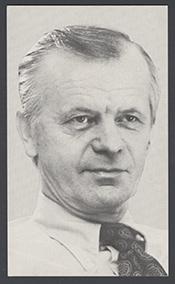
Historical · U.S. House · Minnesota · District 7
Robert Bergland
Former U.S. Representative · Minnesota District 7 · 1971–1979 · Democratic
Robert Bergland represented Minnesota's District 7 in the United States House of Representatives (1971–1979) for the Democratic party. The page below collects sourced biographical facts, term history, committee roles, and provenance for Bergland.
Bioguide ID: B000408
Key facts
- Full name
- Robert Bergland
- State
- Minnesota
- District
- District 7
- Party
- Democratic
- House service
- 1971–1979
- First House term
- 1971
- Status
- Left office
- Current term ends
- —
- Born
- 1928
- Bioguide ID
- B000408
- Committee assignments
- —
- Dataset version
- 1.20260605
Biographical narrative
813 words · sourced from the Wikipedia REST extract
Robert Selmer Bergland was an American politician who served as a U.S. Representative for Minnesota's 7th congressional district from 1971 to 1977. A member of the Democratic-Farmer-Labor Party, he was known for his work in agricultural policy and later served as U.S. Secretary of Agriculture during the Carter administration from 1977 to 1981. Bergland's career spanned several decades, during which he contributed to various agricultural initiatives and policies that impacted rural communities in Minnesota and beyond.
Early life and career
Bergland was born on July 22, 1928, near Roseau, Minnesota, to Mabel Evans and Selmer Bennett Bergland, who worked as a garage mechanic. Growing up in a rural environment, he developed a strong connection to agriculture early in life. He pursued his education at the University of Minnesota, where he completed a two-year program focused on agriculture. This academic background laid the foundation for his future endeavors in the agricultural sector.
Before entering politics, Bergland worked as a farmer, which provided him with firsthand experience of the challenges and opportunities faced by those in the agricultural community. His professional journey in public service began when he became an official with the Agricultural Stabilization and Conservation Service, a division of the U.S. Department of Agriculture, where he served from 1963 to 1968. This role allowed him to engage directly with agricultural policies and programs, further informing his understanding of the needs of farmers and rural constituents.
House tenure
Bergland's political career took a significant turn in 1970 when he successfully ran for the U.S. House of Representatives, defeating the incumbent Republican representative, Odin Langen. His election marked the beginning of his four terms in Congress, during which he served from 1971 until 1977. Throughout his time in the House, Bergland was a member of the Democratic-Farmer-Labor Party, which is affiliated with the national Democratic Party. He was elected to the 92nd, 93rd, 94th, and 95th Congresses.
During his tenure in the House, Bergland was actively involved in various committees, particularly focusing on agricultural issues. He served on the House Committee on Agriculture, where he participated in subcommittees dedicated to Conservation and Credit, as well as Livestock, Grains, Dairy, and Poultry. His work on these committees allowed him to advocate for policies that supported farmers, addressed conservation efforts, and promoted the interests of rural communities. Bergland's background in agriculture and his experience working with the Agricultural Stabilization and Conservation Service positioned him as a knowledgeable voice on issues affecting the agricultural sector.
In January 1977, shortly after the beginning of a new congressional term, Bergland resigned from the House of Representatives. His departure was prompted by his appointment as Secretary of Agriculture by President Jimmy Carter. This transition marked a significant step in his political career, allowing him to influence agricultural policy on a national level.
Legislative focus and committees
As a member of the House of Representatives, Bergland's legislative focus was primarily centered on agriculture and rural development. His experience as a farmer and his previous work with the Department of Agriculture informed his approach to policymaking. He was particularly concerned with issues related to conservation, agricultural credit, and the welfare of livestock and dairy farmers. His involvement in the House Committee on Agriculture and its subcommittees allowed him to contribute to discussions and legislation that aimed to enhance the agricultural sector's viability and sustainability.
Bergland's tenure in Congress was characterized by his commitment to representing the interests of his constituents in Minnesota's 7th congressional district. He understood the unique challenges faced by rural communities and worked to ensure that their voices were heard in the legislative process. His advocacy for agricultural policies was aimed at supporting farmers, promoting conservation practices, and addressing the economic needs of rural areas.
Following his resignation from the House, Bergland continued to influence agricultural policy as Secretary of Agriculture under President Carter. His time in this role further solidified his legacy in the field of agriculture, as he navigated various challenges and initiatives during his tenure. After leaving the Secretary position in 1981, Bergland remained active in the agricultural sector, taking on leadership roles in organizations that focused on rural electric cooperatives and trade.
Bergland's career reflects a deep commitment to public service and a dedication to improving the lives of those in the agricultural community. His legislative efforts and leadership roles have left a lasting impact on agricultural policy and rural development in the United States. After retiring from public life, he continued to engage with agricultural issues, serving on the University of Minnesota Board of Regents and managing his own farm in Minnesota.
Bergland passed away on December 9, 2018, at the age of 90, leaving behind a legacy of service and dedication to the agricultural sector and the communities he represented. His contributions to public policy and his advocacy for farmers and rural residents remain a significant part of his life's work.
Notable legislation
Sponsored and co-sponsored legislation for Robert Bergland is pending operator curation. The biographical narrative above carries the same provenance trail until per-bill rows are written.
Sources
- [1]https://en.wikipedia.org/wiki/Robert_BerglandWikipedia · retrieved 2026-06-05
Notable quotes
Sourced quotes for Robert Bergland are pending operator curation. Narrative-scope provenance remains attached below.
Sources
- [1]https://en.wikipedia.org/wiki/Robert_BerglandWikipedia · retrieved 2026-06-05
Key positions
Curated policy positions for Robert Bergland are pending operator review. The biographical narrative above carries the same provenance trail until per-topic positions are written.
Sources
- [1]https://en.wikipedia.org/wiki/Robert_BerglandWikipedia · retrieved 2026-06-05
Terms served
- 1971–1973U.S. House · Term 1 · Democratic
- 1973–1975U.S. House · Term 2 · Democratic
- 1975–1977U.S. House · Term 3 · Democratic
- 1977–1979U.S. House · Term 4 · Democratic
Sources & provenance
Every attributable claim above carries a per-section [N] marker that resolves to the corresponding URL below. Each entry records the upstream provider, the canonical URL, and the timestamp at which the source was retrieved by the ingest pipeline.
Key facts
- https://bioguide.congress.gov/search/bio/B000408bioguide · retrieved 2026-06-05
- https://www.govtrack.us/congress/members/401396govtrack · retrieved 2026-06-05
Biographical narrative
- https://en.wikipedia.org/wiki/Robert_Berglandwikipedia · retrieved 2026-06-05
Find your representative
Every U.S. state elects representatives by district. Browse Minnesota’s delegation, the full former-representative roster, or explore the role and term length.
Related on The Candidate
- Preceded by Odin LangenEarlier holder of the Minnesota District 7 House seat · Republican.Open
- Succeeded by Collin PetersonLater holder of the Minnesota District 7 House seat · Democratic.Open
- Albert QuieFormer U.S. Representative · Minnesota District 1 · RepublicanOpen
- Allen FurlowFormer U.S. Representative · Minnesota District 1 · RepublicanOpen
- Arlen ErdahlFormer U.S. Representative · Minnesota District 1 · RepublicanOpen
- August AndresenFormer U.S. Representative · Minnesota District 1 · RepublicanOpen