
Historical · U.S. House · Minnesota · District 8
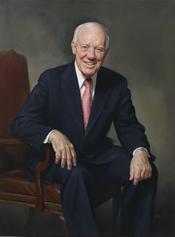
James Oberstar
Former U.S. Representative · Minnesota District 8 · 1975–2011 · Democratic
James Oberstar represented Minnesota's District 8 in the United States House of Representatives (1975–2011) for the Democratic party. The page below collects sourced biographical facts, term history, committee roles, and provenance for Oberstar.
Bioguide ID: O000006
Key facts
- Full name
- James Oberstar
- State
- Minnesota
- District
- District 8
- Party
- Democratic
- House service
- 1975–2011
- First House term
- 1975
- Status
- Left office
- Current term ends
- —
- Born
- 1934
- Bioguide ID
- O000006
- Committee assignments
- —
- Dataset version
- 1.20260605
Biographical narrative
1,027 words · sourced from the Wikipedia REST extract
James L. Oberstar was a prominent American politician who served as a U.S. Representative for Minnesota's 8th congressional district from 1975 until 2011. A member of the Democratic Party, Oberstar's tenure in Congress spanned 18 terms, making him the longest-serving Congressman from Minnesota. He was known for his expertise in transportation and infrastructure issues, having chaired the House Transportation and Infrastructure Committee during his later years in office. Oberstar's legislative efforts were characterized by a focus on aviation safety, transportation funding, and economic development, reflecting his deep commitment to the needs of his constituents in the northeastern part of Minnesota.
Early life and career
James Louis Oberstar was born on September 10, 1934, in Chisholm, Minnesota. He grew up in a family with a strong connection to the local mining industry; his father, Louis Oberstar, was an iron ore miner and a pioneering member of the United Steelworkers union on the Iron Range. Oberstar's heritage included both German and Slovenian ancestry, which influenced his upbringing in a culturally rich community.
Oberstar completed his high school education at Chisholm High School in 1952. He then pursued higher education at the College of St. Thomas, now known as the University of St. Thomas, in St. Paul, Minnesota, where he earned a Bachelor of Arts degree in 1956. Following his undergraduate studies, he continued his education in Europe, obtaining a master's degree in European Studies from the College of Europe in Bruges, Belgium, in 1957. His academic pursuits also included further studies at Université Laval in Quebec, Canada, and Georgetown University in Washington, D.C.
Before entering politics, Oberstar served in the United States Marine Corps as a civilian language instructor. His role involved teaching English to Haitian military personnel and French to American Marine officers and noncommissioned officers. This experience contributed to his communication skills and understanding of international relations.
Oberstar's political career began in earnest when he joined the staff of Minnesota's 8th District U.S. Representative John Blatnik in 1963. He spent 12 years in this role, ultimately rising to the position of chief of staff. His tenure in Blatnik's office provided him with valuable insights into the workings of Congress and the legislative process. Additionally, he served as the administrator of the Committee on Public Works for the U.S. House of Representatives from 1971 to 1974, further solidifying his expertise in infrastructure-related matters.
House tenure
Oberstar was first elected to the U.S. House of Representatives in 1974, beginning his first term in 1975. Throughout his nearly four-decade-long career in Congress, he became an internationally recognized authority on aviation and transportation safety. He served on the Transportation and Infrastructure Committee for his entire time in office, a continuation of his predecessor's legacy, as Blatnik had chaired the committee during his last two terms. Oberstar's extensive knowledge in this area allowed him to play a significant role in shaping national transportation policy.
One of Oberstar's notable contributions was his involvement in the creation of the Economic Development Administration in 1965, which aimed to foster job creation and retention in economically distressed regions of the United States. His commitment to economic development continued throughout his congressional career, particularly in advocating for the needs of his constituents in Minnesota's Iron Range.
Oberstar was instrumental in supporting the Duluth-based aircraft manufacturer Cirrus Aircraft, helping to facilitate the company's relocation to Minnesota in 1994. His advocacy for the aviation industry included the passage of the General Aviation Revitalization Act, which was credited with revitalizing the general aviation sector across the country.
In addition to his focus on aviation, Oberstar was an avid cyclist and championed the development of trails for cycling and hiking. He authored and co-sponsored the SAFETEA-LU act in 2005, a comprehensive transportation bill that allocated significant funding for infrastructure projects, including highways, bridges, and public transportation systems. This legislation also included provisions for the Safe Routes to Schools program, promoting safe travel for children.
Oberstar's legislative efforts extended beyond transportation. He was involved in various initiatives related to public safety, environmental sustainability, and economic security. He held leadership positions within the House Democratic Caucus, serving as the House Democratic At-Large Whip and participating in multiple task forces and caucuses focused on issues ranging from homeland security to renewable energy.
Despite his long and distinguished career, Oberstar faced electoral challenges. In November 2010, he was defeated by Republican candidate Chip Cravaack, marking the end of his 18 terms in office. The election was closely contested, with Oberstar losing by a margin of just over 4,400 votes.
Legislative focus and committees
Throughout his time in Congress, Oberstar's legislative focus was primarily centered on transportation, infrastructure, and economic development. His expertise in these areas was recognized nationally, and he played a pivotal role in numerous transportation-related initiatives. He was a strong advocate for enhancing aviation safety and was involved in various efforts to improve the nation's transportation infrastructure.
Oberstar's commitment to public safety was evident in his response to the I-35W Mississippi River bridge collapse in 2007. Following the tragedy, he quickly introduced legislation to allocate $250 million for the construction of a replacement bridge, demonstrating his dedication to addressing urgent infrastructure needs.
In addition to his work on transportation, Oberstar was known for his positions on social issues. He identified as an anti-abortion Democrat, advocating for restrictions on abortion services and sponsoring constitutional amendments aimed at enshrining a right to life provision.
Oberstar's involvement in various caucuses and task forces reflected his broad interests and commitment to diverse issues. He co-chaired the Great Lakes Task Force and was a member of several other caucuses, including those focused on sustainable development, global road safety, and human rights. His participation in these groups underscored his dedication to addressing a wide range of concerns affecting his constituents and the nation as a whole.
In summary, James L. Oberstar's long and impactful career in the U.S. House of Representatives was marked by his expertise in transportation and infrastructure, his commitment to economic development, and his engagement in various social and environmental issues. His legacy includes significant contributions to national transportation policy and a deep commitment to serving the needs of his constituents in Minnesota.
Notable legislation
Sponsored and co-sponsored legislation for James Oberstar is pending operator curation. The biographical narrative above carries the same provenance trail until per-bill rows are written.
Sources
- [1]https://en.wikipedia.org/wiki/Jim_OberstarWikipedia · retrieved 2026-06-05
Notable quotes
Sourced quotes for James Oberstar are pending operator curation. Narrative-scope provenance remains attached below.
Sources
- [1]https://en.wikipedia.org/wiki/Jim_OberstarWikipedia · retrieved 2026-06-05
Key positions
Curated policy positions for James Oberstar are pending operator review. The biographical narrative above carries the same provenance trail until per-topic positions are written.
Sources
- [1]https://en.wikipedia.org/wiki/Jim_OberstarWikipedia · retrieved 2026-06-05
Terms served
- 1975–1977U.S. House · Term 1 · Democratic
- 1977–1979U.S. House · Term 2 · Democratic
- 1979–1981U.S. House · Term 3 · Democratic
- 1981–1983U.S. House · Term 4 · Democratic
- 1983–1985U.S. House · Term 5 · Democratic
- 1985–1987U.S. House · Term 6 · Democratic
- 1987–1989U.S. House · Term 7 · Democratic
- 1989–1991U.S. House · Term 8 · Democratic
- 1991–1993U.S. House · Term 9 · Democratic
- 1993–1995U.S. House · Term 10 · Democratic
- 1995–1997U.S. House · Term 11 · Democratic
- 1997–1999U.S. House · Term 12 · Democratic
- 1999–2001U.S. House · Term 13 · Democratic
- 2001–2003U.S. House · Term 14 · Democratic
- 2003–2005U.S. House · Term 15 · Democratic
- 2005–2007U.S. House · Term 16 · Democratic
- 2007–2009U.S. House · Term 17 · Democratic
- 2009–2011U.S. House · Term 18 · Democratic
Sources & provenance
Every attributable claim above carries a per-section [N] marker that resolves to the corresponding URL below. Each entry records the upstream provider, the canonical URL, and the timestamp at which the source was retrieved by the ingest pipeline.
Key facts
- https://bioguide.congress.gov/search/bio/O000006bioguide · retrieved 2026-06-05
- http://oberstar.house.govhouse.gov · retrieved 2026-06-05
Biographical narrative
- https://en.wikipedia.org/wiki/Jim_Oberstarwikipedia · retrieved 2026-06-05
Find your representative
Every U.S. state elects representatives by district. Browse Minnesota’s delegation, the full former-representative roster, or explore the role and term length.
Related on The Candidate
- Preceded by John BlatnikEarlier holder of the Minnesota District 8 House seat · Democratic.Open
- Succeeded by Chip CravaackLater holder of the Minnesota District 8 House seat · Republican.Open
- Albert QuieFormer U.S. Representative · Minnesota District 1 · RepublicanOpen
- Allen FurlowFormer U.S. Representative · Minnesota District 1 · RepublicanOpen
- Arlen ErdahlFormer U.S. Representative · Minnesota District 1 · RepublicanOpen
- August AndresenFormer U.S. Representative · Minnesota District 1 · RepublicanOpen