
Historical · U.S. House · Minnesota · District 8
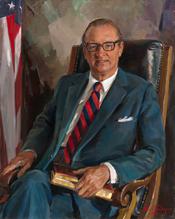
John Blatnik
Former U.S. Representative · Minnesota District 8 · 1947–1975 · Democratic
John Blatnik represented Minnesota's District 8 in the United States House of Representatives (1947–1975) for the Democratic party. The page below collects sourced biographical facts, term history, committee roles, and provenance for Blatnik.
Bioguide ID: B000550
Key facts
- Full name
- John Blatnik
- State
- Minnesota
- District
- District 8
- Party
- Democratic
- House service
- 1947–1975
- First House term
- 1947
- Status
- Left office
- Current term ends
- —
- Born
- 1911
- Bioguide ID
- B000550
- Committee assignments
- —
- Dataset version
- 1.20260605
Biographical narrative
902 words · sourced from the Wikipedia REST extract
John Anton Blatnik was a prominent United States Congressman who represented Minnesota's 8th Congressional District from 1947 until 1975. A member of the Democratic-Farmer-Labor Party, which is affiliated with the Democratic Party, Blatnik was known for his long tenure in the House of Representatives, where he served a total of 14 terms. His legislative efforts were particularly focused on public works and environmental issues, and he played a significant role in various key pieces of legislation during his time in office.
Early life and career
John Anton Blatnik was born on August 17, 1911, in Chisholm, Minnesota, to Slovene immigrant parents. His early life was shaped by his family's immigrant background, which instilled in him a strong work ethic and a commitment to public service. Blatnik pursued higher education at Winona State Teachers College, where he earned a degree that prepared him for a career in education. Following his graduation, he worked as a chemistry teacher in Chisholm, contributing to the local community through education.
Blatnik's political career began in the Minnesota State Senate, where he served from 1940 to 1944. His involvement in state politics laid the groundwork for his future endeavors at the federal level. In 1942, he volunteered for military service during World War II, joining the United States Army Air Corps. His military service included a significant role as chief of the Office of Strategic Services's mission with Tito's Yugoslav partisans, where he served for nearly a year. This experience not only shaped his leadership skills but also provided him with a broader perspective on international relations and the importance of strategic alliances.
After returning from military service, Blatnik transitioned into national politics. In 1946, he was elected to the United States Congress, representing Minnesota's 8th District. His election was notable as he ran on a unified ticket of the Minnesota Democratic-Farmer-Labor Party, defeating a four-term incumbent from the Republican Party in a year that favored Republicans. This victory marked the beginning of a lengthy congressional career that would span nearly three decades.
House tenure
Blatnik's congressional career began on January 3, 1947, and he served continuously until January 3, 1975. Throughout his tenure, he was re-elected 13 times, often without significant opposition. His ability to maintain support from his constituents was indicative of his effective representation and responsiveness to the needs of the district.
During his time in the House, Blatnik served in multiple congresses, including the 80th through the 93rd Congresses. His leadership capabilities were recognized when he was appointed chair of the Public Works Committee during the 92nd Congress. This position allowed him to influence significant legislation related to infrastructure and environmental policy. However, his health began to decline during this period, as he experienced two mild heart attacks in 1972. Despite these health challenges, he continued to fulfill his responsibilities in Congress until his retirement.
Blatnik's legislative efforts were marked by a commitment to public works and environmental issues. He was an early advocate for the Saint Lawrence Seaway, contributing to the original legislation that aimed to enhance trade and transportation routes in North America. His focus on infrastructure was not only about improving transportation but also about stimulating economic growth in his district and beyond.
Legislative focus and committees
Throughout his congressional career, Blatnik was involved in a variety of legislative initiatives, with a particular emphasis on public works and environmental protection. He was a key supporter of the Civil Rights Act of 1964, demonstrating his commitment to social justice and equality. In 1963, he introduced a bill to establish Leif Erikson Day as a nationwide observance, which Congress adopted unanimously the following year. This initiative reflected his interest in recognizing cultural heritage and promoting awareness of historical figures.
As chair of the Public Works Committee, Blatnik played a pivotal role in the passage of the Federal Water Pollution Control Act, commonly known as the Clean Water Act, in 1972. This legislation was a significant milestone in environmental policy, addressing the critical issue of water pollution and its impact on public health and ecosystems. Blatnik's long-standing advocacy for clean water underscored his dedication to improving the quality of life for his constituents and protecting natural resources.
In addition to his focus on public works, Blatnik was among the first members of Congress to address smoking as a health concern, despite being a smoker himself. His recognition of the health implications of smoking illustrated his awareness of emerging public health issues and his willingness to engage in discussions that would shape future health policies.
Upon his retirement from Congress, Blatnik endorsed his long-time administrative assistant, Jim Oberstar, as his successor. Oberstar won the subsequent election in 1974, continuing the legacy of representation for Minnesota's 8th District. Blatnik's influence in Congress extended beyond his tenure, as he remained engaged in various public service activities, including attending the state funeral of Josip Tito in Belgrade in 1980 as part of the American delegation.
John Anton Blatnik passed away on December 17, 1991, in Forest Heights, Maryland. He was survived by his wife, Evelyn Castiglioni, and their three children. His contributions to public service and his commitment to the people of Minnesota are remembered, and the bridge for Interstate 535 crossing the Superior Bay and the Saint Louis Bay was renamed the John A. Blatnik Bridge in his honor in 1971, serving as a lasting tribute to his legacy in infrastructure and public works.
Notable legislation
Sponsored and co-sponsored legislation for John Blatnik is pending operator curation. The biographical narrative above carries the same provenance trail until per-bill rows are written.
Sources
- [1]https://en.wikipedia.org/wiki/John_BlatnikWikipedia · retrieved 2026-06-05
Notable quotes
Sourced quotes for John Blatnik are pending operator curation. Narrative-scope provenance remains attached below.
Sources
- [1]https://en.wikipedia.org/wiki/John_BlatnikWikipedia · retrieved 2026-06-05
Key positions
Curated policy positions for John Blatnik are pending operator review. The biographical narrative above carries the same provenance trail until per-topic positions are written.
Sources
- [1]https://en.wikipedia.org/wiki/John_BlatnikWikipedia · retrieved 2026-06-05
Terms served
- 1947–1949U.S. House · Term 1 · Democratic
- 1949–1951U.S. House · Term 2 · Democratic
- 1951–1953U.S. House · Term 3 · Democratic
- 1953–1955U.S. House · Term 4 · Democratic
- 1955–1957U.S. House · Term 5 · Democratic
- 1957–1959U.S. House · Term 6 · Democratic
- 1959–1961U.S. House · Term 7 · Democratic
- 1961–1963U.S. House · Term 8 · Democratic
- 1963–1965U.S. House · Term 9 · Democratic
- 1965–1967U.S. House · Term 10 · Democratic
- 1967–1969U.S. House · Term 11 · Democratic
- 1969–1971U.S. House · Term 12 · Democratic
- 1971–1973U.S. House · Term 13 · Democratic
- 1973–1975U.S. House · Term 14 · Democratic
Sources & provenance
Every attributable claim above carries a per-section [N] marker that resolves to the corresponding URL below. Each entry records the upstream provider, the canonical URL, and the timestamp at which the source was retrieved by the ingest pipeline.
Key facts
- https://bioguide.congress.gov/search/bio/B000550bioguide · retrieved 2026-06-05
- https://www.govtrack.us/congress/members/401525govtrack · retrieved 2026-06-05
Biographical narrative
- https://en.wikipedia.org/wiki/John_Blatnikwikipedia · retrieved 2026-06-05
Find your representative
Every U.S. state elects representatives by district. Browse Minnesota’s delegation, the full former-representative roster, or explore the role and term length.
Related on The Candidate
- Preceded by William PittengerEarlier holder of the Minnesota District 8 House seat · Republican.Open
- Succeeded by James OberstarLater holder of the Minnesota District 8 House seat · Democratic.Open
- Albert QuieFormer U.S. Representative · Minnesota District 1 · RepublicanOpen
- Allen FurlowFormer U.S. Representative · Minnesota District 1 · RepublicanOpen
- Arlen ErdahlFormer U.S. Representative · Minnesota District 1 · RepublicanOpen
- August AndresenFormer U.S. Representative · Minnesota District 1 · RepublicanOpen