
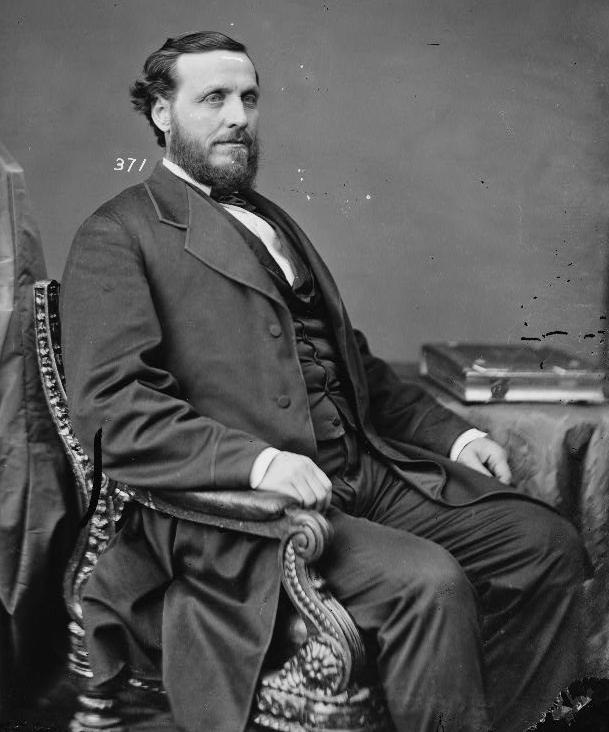
Historical · U.S. House · Missouri · District 1
William Pile
Former U.S. Representative · Missouri District 1 · 1867–1869 · Republican
William Pile represented Missouri's District 1 in the United States House of Representatives (1867–1869) for the Republican party. The page below collects sourced biographical facts, term history, committee roles, and provenance for Pile.
Bioguide ID: P000350
Key facts
- Full name
- William Pile
- State
- Missouri
- District
- District 1
- Party
- Republican
- House service
- 1867–1869
- First House term
- 1867
- Status
- Left office
- Current term ends
- —
- Born
- 1829
- Bioguide ID
- P000350
- Committee assignments
- —
- Dataset version
- 1.20260606
Biographical narrative
947 words · sourced from the Wikipedia REST extract
William Pile was a prominent figure in 19th-century American politics, serving as a U.S. Representative for Missouri's 1st congressional district. A member of the Republican Party, Pile's political career was marked by his involvement in significant national events, including the American Civil War, where he served as a general in the Union Army. Following his tenure in the House of Representatives, he held various governmental positions, including governor of the New Mexico Territory and U.S. Ambassador to Venezuela. His life was characterized by a blend of military service, political engagement, and a commitment to public service.
Early life and career
William Pile was born on February 11, 1829, near Indianapolis, Indiana. He was the son of Jacob Pile and Comfort Williams. Pile's early education included preparatory studies, after which he pursued theological training. He became a minister in the Methodist Episcopal Church and was affiliated with the Missouri Conference. His background in theology and ministry would later influence his leadership style and public service philosophy.
As the nation approached the Civil War, Pile's commitment to the Union led him to enlist in the Union Army. In 1861, he began his military career as a chaplain for the 1st Missouri Light Artillery Regiment, serving under Colonel Clinton B. Fisk. His military service quickly progressed; he was promoted to captain of Battery I, 1st Missouri Light Artillery, in March 1862. By September 1862, he had risen to the rank of lieutenant colonel of the 33rd Missouri Volunteer Infantry, and shortly thereafter, he was promoted to colonel in December of the same year.
Throughout the Civil War, Pile demonstrated leadership and strategic acumen. He was appointed brigadier general of volunteers in 1863, a rank that underscored his contributions to the Union effort. His command included significant posts, such as the Post of Port Hudson and the District of Baton Rouge and Port Hudson in the Department of the Gulf. His military engagements included key battles and operations, including those at Corinth, Mississippi, and Mobile, Alabama. Pile's leadership during the attack on Fort Blakely earned him a brevet promotion to major general in 1865, marking the culmination of his military career.
After the war, Pile transitioned from military service to a political career, reflecting the common trajectory of many Civil War veterans who sought to influence the reconstruction and governance of the nation.
House tenure
William Pile's political career in the U.S. House of Representatives began when he was elected as a Republican to represent Missouri's 1st congressional district. His term in the House commenced in 1867 and concluded in 1869. During this period, he was involved in the legislative processes of the post-Civil War era, a time characterized by significant political and social change in the United States.
In Congress, Pile served as the chairman of the Committee on Expenditures in the Post Office Department from 1867 to 1869. This role placed him at the center of discussions regarding government spending and oversight, particularly in the context of the expanding postal service, which was crucial for communication and commerce in the post-war United States. His tenure in the House was marked by the challenges of reconciling the nation after the Civil War and addressing the needs of a rapidly changing society.
Despite his contributions, Pile was unsuccessful in his bid for re-election in 1868. His single term in the House reflected both the opportunities and challenges faced by politicians during a tumultuous period in American history. Following his departure from Congress, Pile continued to engage in public service, reflecting his ongoing commitment to governance and leadership.
Legislative focus and committees
William Pile's legislative focus during his time in the House of Representatives was shaped by the broader context of post-Civil War America. As a member of the Republican Party, he aligned with the party's goals of reconstruction and the integration of formerly enslaved individuals into society. His role as chairman of the Committee on Expenditures in the Post Office Department indicated a focus on fiscal responsibility and the efficient management of government resources. The post office was a vital institution during this era, and Pile's oversight would have been critical in ensuring its effective operation.
After his congressional tenure, Pile was nominated for a diplomatic position by President Ulysses S. Grant. Initially considered for the role of Ambassador to Venezuela and Brazil in 1869, his nomination was withdrawn. Instead, he was appointed as the Territorial Governor of New Mexico, a position he held from 1869 to 1871. This role allowed him to influence the governance of a territory that was undergoing significant development and change during the post-war period.
In 1871, Pile was successfully appointed as the U.S. Ambassador to Venezuela, a position he held until 1874. His diplomatic service in Venezuela further exemplified his commitment to public service and international relations, as he navigated the complexities of U.S. foreign policy in Latin America during a time of growing American influence in the region.
After his diplomatic career, Pile moved to Monrovia, California, in 1886, where he engaged in agriculture, specifically grape cultivation. He commissioned the construction of a residence known as "Idlewild," designed by notable architects of the time. His later years included a brief tenure as mayor of Monrovia, reflecting his continued involvement in local governance.
William Pile passed away on July 7, 1889, in Monrovia, California. He was buried in Live Oak Cemetery alongside his son. His life and career reflect the complexities of American society in the 19th century, marked by military service, political engagement, and a commitment to public welfare. Through his various roles, Pile contributed to the shaping of both local and national policies during a transformative period in American history.
Notable legislation
Sponsored and co-sponsored legislation for William Pile is pending operator curation. The biographical narrative above carries the same provenance trail until per-bill rows are written.
Sources
- [1]https://en.wikipedia.org/wiki/William_A._PileWikipedia · retrieved 2026-06-06
Notable quotes
Sourced quotes for William Pile are pending operator curation. Narrative-scope provenance remains attached below.
Sources
- [1]https://en.wikipedia.org/wiki/William_A._PileWikipedia · retrieved 2026-06-06
Key positions
Curated policy positions for William Pile are pending operator review. The biographical narrative above carries the same provenance trail until per-topic positions are written.
Sources
- [1]https://en.wikipedia.org/wiki/William_A._PileWikipedia · retrieved 2026-06-06
Terms served
- 1867–1869U.S. House · Term 1 · Republican
Sources & provenance
Every attributable claim above carries a per-section [N] marker that resolves to the corresponding URL below. Each entry records the upstream provider, the canonical URL, and the timestamp at which the source was retrieved by the ingest pipeline.
Key facts
- https://bioguide.congress.gov/search/bio/P000350bioguide · retrieved 2026-06-06
- https://www.govtrack.us/congress/members/408747govtrack · retrieved 2026-06-06
Biographical narrative
- https://en.wikipedia.org/wiki/William_A._Pilewikipedia · retrieved 2026-06-06
Find your representative
Every U.S. state elects representatives by district. Browse Missouri’s delegation, the full former-representative roster, or explore the role and term length.
Related on The Candidate
- Preceded by John HoganEarlier holder of the Missouri District 1 House seat · Democratic.Open
- Succeeded by Edwin StanardLater holder of the Missouri District 1 House seat · Republican.Open
- Anthony IttnerFormer U.S. Representative · Missouri District 1 · RepublicanOpen
- Bill Clay Sr.Former U.S. Representative · Missouri District 1 · DemocraticOpen
- Charles ClarkFormer U.S. Representative · Missouri District 1 · RepublicanOpen
- Clare MageeFormer U.S. Representative · Missouri District 1 · DemocraticOpen