
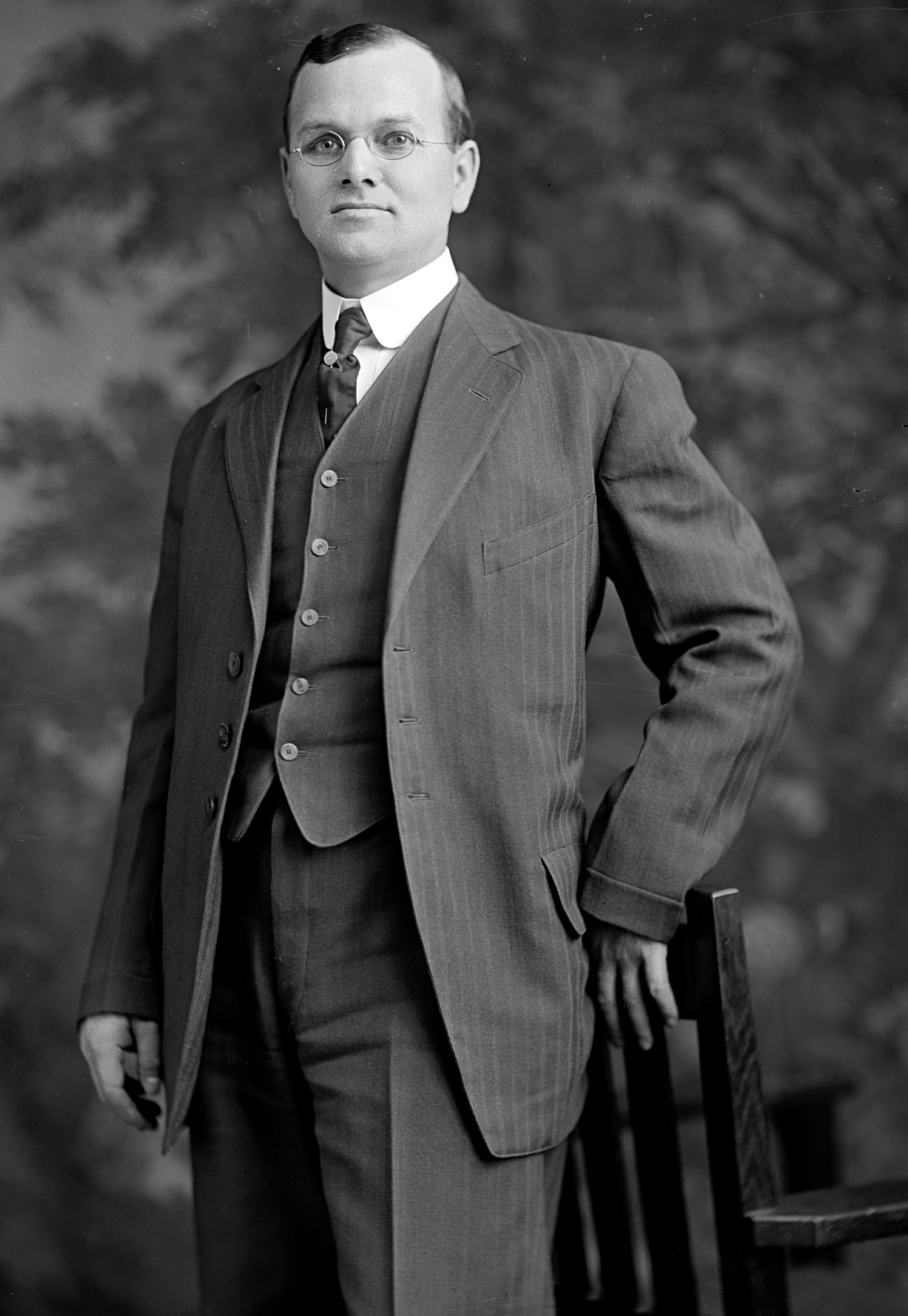
Historical · U.S. House · Missouri · District 14
Charles Crow
Former U.S. Representative · Missouri District 14 · 1909–1911 · Republican
Charles Crow represented Missouri's District 14 in the United States House of Representatives (1909–1911) for the Republican party. The page below collects sourced biographical facts, term history, committee roles, and provenance for Crow.
Bioguide ID: C000937
Key facts
- Full name
- Charles Crow
- State
- Missouri
- District
- District 14
- Party
- Republican
- House service
- 1909–1911
- First House term
- 1909
- Status
- Left office
- Current term ends
- —
- Born
- 1873
- Bioguide ID
- C000937
- Committee assignments
- —
- Dataset version
- 1.20260606
Biographical narrative
889 words · sourced from the Wikipedia REST extract
Charles Crow was a U.S. Representative from Missouri, serving in the House of Representatives as a member of the Republican Party. His political career was marked by a single term in the Sixty-first Congress, which lasted from 1909 to 1911. Born in 1873, Crow's life spanned a period of significant change in American society, and his professional journey included various roles in agriculture, real estate, and public service. He passed away in 1938 and was interred in Woodlawn Cemetery.
Early life and career
Charles Augustus Crow was born on March 31, 1873, on a farm located near Sikeston, Missouri. His early education was conducted in common schools, which were typical for rural communities during that era. The formative years of his life were spent in an agricultural setting, which likely influenced his later pursuits in farming and related industries.
In August 1896, Crow transitioned to a farm near Bernie, Missouri. This move marked the beginning of his engagement in agricultural activities, a field that would remain significant throughout his life. Farming was a vital part of the economy in Missouri, and Crow's experiences during this time would have provided him with a deep understanding of the challenges and opportunities faced by those in the agricultural sector.
In 1901, Crow relocated to Caruthersville, a city in Pemiscot County, where he shifted his focus from farming to the real estate and insurance business. This transition reflects a common trend of the time, as many individuals sought to diversify their income sources beyond agriculture. Crow's involvement in real estate and insurance likely provided him with valuable insights into the economic landscape of his community, as well as the needs of its residents.
In addition to his business ventures, Crow served as the postmaster of Caruthersville from May 19, 1902, until January 14, 1909. This role placed him in a position of public service and responsibility, allowing him to engage with the community in a meaningful way. As postmaster, he would have been responsible for overseeing mail delivery and managing postal operations, which were essential services for the residents of Caruthersville and the surrounding areas.
House tenure
Crow's political career took a significant turn when he was elected as a Republican to the Sixty-first Congress, which convened on March 4, 1909. His election to the House of Representatives marked the culmination of his earlier public service and business experience, providing him with a platform to influence legislation and represent the interests of his constituents in Missouri's 14th congressional district.
During his time in Congress, Crow participated in the legislative process, contributing to discussions and decisions that would shape national policy. However, his tenure was relatively brief, as he was unable to secure reelection in 1910 for the Sixty-second Congress. The reasons for his defeat are not detailed in the available records, but it was not uncommon for representatives to face challenges in subsequent elections, especially in a political landscape that was often competitive and dynamic.
Following the conclusion of his congressional term on March 3, 1911, Crow returned to Missouri, specifically moving to Campbell, where he resumed his agricultural pursuits. This return to farming indicates a desire to reconnect with his roots and the agricultural community that had shaped his early life.
Legislative focus and committees
While specific details regarding the legislative focus and committee assignments during Crow's time in the House of Representatives are not provided in the available records, it can be inferred that his background in agriculture and business would have influenced his areas of interest. Representatives often draw upon their professional experiences when engaging with legislation, and Crow's involvement in farming, real estate, and insurance likely informed his perspectives on issues related to these sectors.
Given the era in which Crow served, the legislative agenda of the Sixty-first Congress included a variety of topics, such as economic policy, infrastructure development, and social issues. Crow's insights as a businessman and farmer may have contributed to discussions on agricultural policy, land use, and economic development initiatives aimed at supporting rural communities.
After leaving Congress, Crow continued to engage in the real estate and insurance business, indicating that he remained active in the economic life of his community. His professional endeavors after his congressional service suggest a commitment to contributing to the local economy and supporting the needs of residents in his area.
Charles Crow passed away on March 20, 1938, in Campbell, Missouri, at the age of 64. His life and career reflect the experiences of many individuals who navigated the complexities of early 20th-century America, balancing agricultural pursuits with public service and business interests. He was interred in Woodlawn Cemetery, leaving behind a legacy that includes his connection to the community he served and his role in the political landscape of Missouri.
In summary, Charles Crow's life encompassed a range of experiences that shaped his contributions as a U.S. Representative. His early years on a farm, followed by his involvement in business and public service, provided a foundation for his political career. Although his time in Congress was limited to a single term, his engagement with the agricultural community and local economy continued to define his post-political life. Crow's legacy is further enriched by his familial connections, including being one of the great-grandfathers of singer Sheryl Crow, illustrating the enduring impact of his life on subsequent generations.
Notable legislation
Sponsored and co-sponsored legislation for Charles Crow is pending operator curation. The biographical narrative above carries the same provenance trail until per-bill rows are written.
Sources
- [1]https://en.wikipedia.org/wiki/Charles_A._CrowWikipedia · retrieved 2026-06-06
Notable quotes
Sourced quotes for Charles Crow are pending operator curation. Narrative-scope provenance remains attached below.
Sources
- [1]https://en.wikipedia.org/wiki/Charles_A._CrowWikipedia · retrieved 2026-06-06
Key positions
Curated policy positions for Charles Crow are pending operator review. The biographical narrative above carries the same provenance trail until per-topic positions are written.
Sources
- [1]https://en.wikipedia.org/wiki/Charles_A._CrowWikipedia · retrieved 2026-06-06
Terms served
- 1909–1911U.S. House · Term 1 · Republican
Sources & provenance
Every attributable claim above carries a per-section [N] marker that resolves to the corresponding URL below. Each entry records the upstream provider, the canonical URL, and the timestamp at which the source was retrieved by the ingest pipeline.
Key facts
- https://bioguide.congress.gov/search/bio/C000937bioguide · retrieved 2026-06-06
- https://www.govtrack.us/congress/members/403049govtrack · retrieved 2026-06-06
Biographical narrative
- https://en.wikipedia.org/wiki/Charles_A._Crowwikipedia · retrieved 2026-06-06
Find your representative
Every U.S. state elects representatives by district. Browse Missouri’s delegation, the full former-representative roster, or explore the role and term length.
Related on The Candidate
- Preceded by William TyndallEarlier holder of the Missouri District 14 House seat · Republican.Open
- Succeeded by Edward HaysLater holder of the Missouri District 14 House seat · Republican.Open
- Anthony IttnerFormer U.S. Representative · Missouri District 1 · RepublicanOpen
- Bill Clay Sr.Former U.S. Representative · Missouri District 1 · DemocraticOpen
- Charles ClarkFormer U.S. Representative · Missouri District 1 · RepublicanOpen
- Clare MageeFormer U.S. Representative · Missouri District 1 · DemocraticOpen