
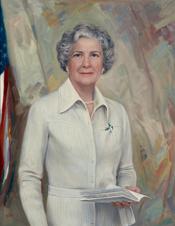
Historical · U.S. House · Missouri · District 3
Leonor Sullivan
Former U.S. Representative · Missouri District 3 · 1953–1977 · Democratic
Leonor Sullivan represented Missouri's District 3 in the United States House of Representatives (1953–1977) for the Democratic party. The page below collects sourced biographical facts, term history, committee roles, and provenance for Sullivan.
Bioguide ID: S001057
Key facts
- Full name
- Leonor Sullivan
- State
- Missouri
- District
- District 3
- Party
- Democratic
- House service
- 1953–1977
- First House term
- 1953
- Status
- Left office
- Current term ends
- —
- Born
- 1902
- Bioguide ID
- S001057
- Committee assignments
- —
- Dataset version
- 1.20260605
Biographical narrative
938 words · sourced from the Wikipedia REST extract
Leonor K. Sullivan was an American politician who served as a U.S. Representative from Missouri's 3rd congressional district from 1953 until 1977. A member of the Democratic Party, she was notable for being the first woman elected to Congress from Missouri. Throughout her twelve terms in office, Sullivan was involved in significant legislative efforts and played a prominent role in the House Democratic Caucus.
Early life and career
Leonor Kretzer Sullivan was born on August 21, 1902, in St. Louis, Missouri. She was raised in a family with German immigrant roots, which contributed to her understanding of the diverse cultural landscape of her home state. Sullivan pursued higher education at Washington University in St. Louis, where she developed a foundation that would later support her career in public service. Before entering politics, she worked as a teacher and served as the director at the St. Louis Comptometer School, where she honed her leadership and organizational skills.
Sullivan's political journey began in earnest following her marriage to John B. Sullivan, who was also a politician and served four terms in Congress. During her husband's tenure, she worked as his administrative aide, gaining firsthand experience in the legislative process and the workings of Congress. This role provided her with valuable insights into the responsibilities and challenges faced by elected officials. After the death of her husband in 1951, Sullivan continued her political involvement by serving as an aide to Congressman Leonard Irving. This experience further solidified her commitment to public service and prepared her for her own run for office.
In 1952, Sullivan decided to pursue her own political ambitions and ran for Congress. Her campaign was successful, and she was elected to represent Missouri's 3rd congressional district, marking the beginning of a long and impactful career in the U.S. House of Representatives.
House tenure
Sullivan's congressional career began in 1953 and lasted until January 3, 1977. Over the course of her twelve terms, she was re-elected eleven times, demonstrating her ability to connect with her constituents and maintain their support. During her time in office, she served in various capacities, including a significant role as Secretary of the House Democratic Caucus, where she contributed to the organization and strategy of the Democratic Party in the House.
Throughout her tenure, Sullivan was involved in numerous legislative initiatives. One of her notable contributions was her role in the establishment of the food stamp program, which aimed to alleviate hunger and improve nutrition among low-income families. This program faced opposition from some quarters, including Agriculture Secretary Ezra Taft Benson, but ultimately became law during the administrations of Presidents John F. Kennedy and Lyndon B. Johnson in the 1960s.
Sullivan's legislative record also reflects her commitment to civil rights. She did not sign the 1956 Southern Manifesto, a document that opposed desegregation, and she voted in favor of several key civil rights measures, including the Civil Rights Acts of 1957, 1960, 1964, and 1968. Additionally, she supported the 24th Amendment to the U.S. Constitution, which prohibited poll taxes in federal elections, and the Voting Rights Act of 1965, which aimed to eliminate barriers to voting for African Americans.
Despite her support for many progressive causes, Sullivan took a controversial stance on the Equal Rights Amendment (ERA) for women. She was one of the few members of Congress, and notably the only woman member at the time, to vote against the ERA in the early 1970s. Her opposition to abortion was another defining aspect of her legislative focus, as she advocated for the passage of the Human Life Amendment, which sought to establish legal protections for unborn children.
Sullivan chose not to seek re-election in 1976, concluding her long tenure in Congress. She was succeeded by Dick Gephardt, who would go on to have a significant political career of his own.
Legislative focus and committees
Throughout her time in the House, Sullivan's legislative focus encompassed a range of issues, reflecting her commitment to social welfare, civil rights, and women's issues. Her involvement in the creation of the food stamp program highlighted her dedication to addressing poverty and food insecurity, which were pressing concerns during her time in office.
Sullivan's civil rights advocacy was a significant aspect of her legislative work. By supporting key civil rights legislation, she demonstrated a commitment to promoting equality and justice for marginalized communities. Her votes in favor of landmark civil rights laws positioned her as a supporter of the movement for racial equality during a transformative period in American history.
In addition to her legislative achievements, Sullivan's role as Secretary of the House Democratic Caucus allowed her to influence party strategy and cohesion. This position enabled her to work closely with other Democratic leaders and contribute to the development of policies that aligned with the party's goals.
Sullivan's legacy extends beyond her legislative accomplishments. In 1979, she was featured in the Supersisters trading card set, which celebrated notable women in history, further solidifying her place in the narrative of women's contributions to American politics. Following her death on September 1, 1988, she was laid to rest at Calvary Cemetery in St. Louis. In recognition of her contributions to the city and her role as a pioneering female politician, a section of Wharf Street in front of the Gateway Arch was renamed Leonor K. Sullivan Boulevard.
Leonor K. Sullivan's career in the U.S. House of Representatives marked a significant chapter in the history of Missouri politics and the representation of women in Congress. Her dedication to public service and her involvement in key legislative initiatives left a lasting impact on her constituents and the broader political landscape.
Notable legislation
Sponsored and co-sponsored legislation for Leonor Sullivan is pending operator curation. The biographical narrative above carries the same provenance trail until per-bill rows are written.
Sources
- [1]https://en.wikipedia.org/wiki/Leonor_SullivanWikipedia · retrieved 2026-06-05
Notable quotes
Sourced quotes for Leonor Sullivan are pending operator curation. Narrative-scope provenance remains attached below.
Sources
- [1]https://en.wikipedia.org/wiki/Leonor_SullivanWikipedia · retrieved 2026-06-05
Key positions
Curated policy positions for Leonor Sullivan are pending operator review. The biographical narrative above carries the same provenance trail until per-topic positions are written.
Sources
- [1]https://en.wikipedia.org/wiki/Leonor_SullivanWikipedia · retrieved 2026-06-05
Terms served
- 1953–1955U.S. House · Term 1 · Democratic
- 1955–1957U.S. House · Term 2 · Democratic
- 1957–1959U.S. House · Term 3 · Democratic
- 1959–1961U.S. House · Term 4 · Democratic
- 1961–1963U.S. House · Term 5 · Democratic
- 1963–1965U.S. House · Term 6 · Democratic
- 1965–1967U.S. House · Term 7 · Democratic
- 1967–1969U.S. House · Term 8 · Democratic
- 1969–1971U.S. House · Term 9 · Democratic
- 1971–1973U.S. House · Term 10 · Democratic
- 1973–1975U.S. House · Term 11 · Democratic
- 1975–1977U.S. House · Term 12 · Democratic
Sources & provenance
Every attributable claim above carries a per-section [N] marker that resolves to the corresponding URL below. Each entry records the upstream provider, the canonical URL, and the timestamp at which the source was retrieved by the ingest pipeline.
Key facts
- https://bioguide.congress.gov/search/bio/S001057bioguide · retrieved 2026-06-05
- https://www.govtrack.us/congress/members/410511govtrack · retrieved 2026-06-05
Biographical narrative
- https://en.wikipedia.org/wiki/Leonor_Sullivanwikipedia · retrieved 2026-06-05
Find your representative
Every U.S. state elects representatives by district. Browse Missouri’s delegation, the full former-representative roster, or explore the role and term length.
Related on The Candidate
- Preceded by Philip WelchEarlier holder of the Missouri District 3 House seat · Democratic.Open
- Succeeded by Dick GephardtLater holder of the Missouri District 3 House seat · Democratic.Open
- Anthony IttnerFormer U.S. Representative · Missouri District 1 · RepublicanOpen
- Bill Clay Sr.Former U.S. Representative · Missouri District 1 · DemocraticOpen
- Charles ClarkFormer U.S. Representative · Missouri District 1 · RepublicanOpen
- Clare MageeFormer U.S. Representative · Missouri District 1 · DemocraticOpen