
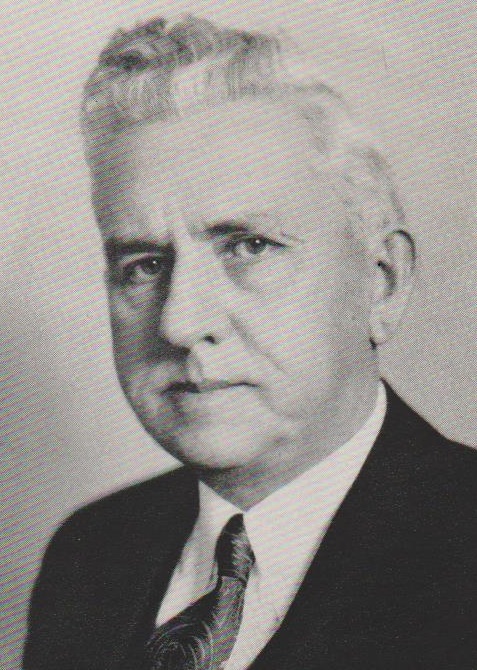
Historical · U.S. House · Missouri · District 6
Philip Bennett
Former U.S. Representative · Missouri District 6 · 1941–1943 · Republican
Philip Bennett represented Missouri's District 6 in the United States House of Representatives (1941–1943) for the Republican party. The page below collects sourced biographical facts, term history, committee roles, and provenance for Bennett.
Bioguide ID: B000380
Key facts
- Full name
- Philip Bennett
- State
- Missouri
- District
- District 6
- Party
- Republican
- House service
- 1941–1943
- First House term
- 1941
- Status
- Left office
- Current term ends
- —
- Born
- 1881
- Bioguide ID
- B000380
- Committee assignments
- —
- Dataset version
- 1.20260605
Biographical narrative
931 words · sourced from the Wikipedia REST extract
Philip Bennett was a Republican politician who served as a member of the United States House of Representatives for Missouri's 6th congressional district during the 77th Congress. His political career included significant roles at both the state and national levels, including serving as the 31st Lieutenant Governor of Missouri. Bennett's life spanned a period of considerable change in American politics, and his contributions to public service were marked by various roles in education, journalism, and governance.
Early life and career
Philip Allen Bennett was born on March 5, 1881, near Buffalo, Missouri, into a large family as the eighth of fourteen children. His parents, Marion F. Bennett and Mary Jane O'Bannon, instilled in him the values of hard work and community service. After completing his education at Buffalo High School, Bennett pursued further studies at Springfield Normal and Business College, which is now known as Missouri State University. He graduated in 1902, marking the beginning of his professional journey.
Following his graduation, Bennett entered the field of education, teaching in public schools in Missouri for two years. This experience likely shaped his understanding of the educational needs of his community and the importance of public service. After his teaching career, he transitioned to the railroad industry, working for the Frisco Railroad, which was a significant employer in the region. However, his aspirations led him to the world of journalism when he purchased the Buffalo Reflex newspaper in 1904. As the editor and publisher, Bennett played a crucial role in shaping public opinion and engaging with local issues until 1921, when he decided to focus on a full-time political career.
Bennett's political involvement began to take shape when he served as a delegate to the 1912 Republican National Convention, an experience that likely deepened his connections within the party and provided him with insights into the national political landscape. In 1920, he was elected to the Missouri Senate, where he served a single term. His tenure in the state legislature provided him with valuable experience in governance and policy-making. In 1924, Bennett successfully ran for the office of Lieutenant Governor of Missouri, becoming the 31st person to hold that position. His time as lieutenant governor allowed him to further establish his political credentials and engage with a broader range of issues affecting the state.
Despite his political successes, Bennett faced challenges in his career. He ran for the position of Governor of Missouri in 1928 but was unsuccessful. Following this setback, he returned to the private sector, where he continued to contribute to his community and build his professional reputation. His political ambitions did not wane, and in 1938, he made an attempt to secure a seat in the U.S. House of Representatives but was defeated. However, his persistence paid off when he ran again in 1940 and was elected to represent Missouri's 6th congressional district.
House tenure
Bennett's congressional career began in 1941 when he took office as a U.S. Representative. He served during the 77th Congress, a period marked by significant events in American history, including the lead-up to and the aftermath of World War II. His election to Congress was a culmination of years of political involvement and a reflection of his commitment to public service. During his time in the House, Bennett was involved in various legislative discussions and initiatives, although specific details regarding the bills he supported or opposed are not documented in the available records.
Bennett's tenure in the House of Representatives was relatively brief, as he served only one term. He was reelected in November 1942, demonstrating the support he had garnered from his constituents. However, his time in office was cut short by his untimely death on December 7, 1942, in Washington, D.C. This event occurred shortly before he was set to begin his second term, marking a tragic end to his political career. Following his passing, his son, Marion T. Bennett, who had also pursued a career in politics, completed the term in Congress, indicating a continuation of the family's involvement in public service.
Legislative focus and committees
While specific details about Philip Bennett's legislative focus and committee assignments during his time in the House are not extensively documented, it is evident that his background in education, journalism, and state governance would have influenced his priorities as a legislator. Given the historical context of his service, it is likely that he engaged with issues pertinent to his constituents in Missouri, including economic development, education, and infrastructure.
Bennett's experience as a former lieutenant governor and state senator would have provided him with a comprehensive understanding of both state and national issues. His role as a newspaper publisher may have also equipped him with insights into the media's role in politics and public discourse, potentially informing his approach to communication and constituent engagement.
In the broader context of the 77th Congress, which convened during a time of global conflict and domestic challenges, Bennett's contributions would have been part of the larger legislative efforts to address the needs of the nation. The period was characterized by discussions around military preparedness, economic recovery, and social welfare, all of which were critical issues as the United States navigated the complexities of World War II.
In summary, Philip Bennett's life and career reflect a commitment to public service that spanned education, journalism, and politics. His tenure in the U.S. House of Representatives, although brief, was a testament to his dedication to his constituents and the state of Missouri. His legacy continued through his family, particularly his son, who followed in his footsteps in the political arena.
Notable legislation
Sponsored and co-sponsored legislation for Philip Bennett is pending operator curation. The biographical narrative above carries the same provenance trail until per-bill rows are written.
Sources
- [1]https://en.wikipedia.org/wiki/Philip_A._BennettWikipedia · retrieved 2026-06-05
Notable quotes
Sourced quotes for Philip Bennett are pending operator curation. Narrative-scope provenance remains attached below.
Sources
- [1]https://en.wikipedia.org/wiki/Philip_A._BennettWikipedia · retrieved 2026-06-05
Key positions
Curated policy positions for Philip Bennett are pending operator review. The biographical narrative above carries the same provenance trail until per-topic positions are written.
Sources
- [1]https://en.wikipedia.org/wiki/Philip_A._BennettWikipedia · retrieved 2026-06-05
Terms served
- 1941–1943U.S. House · Term 1 · Republican
Sources & provenance
Every attributable claim above carries a per-section [N] marker that resolves to the corresponding URL below. Each entry records the upstream provider, the canonical URL, and the timestamp at which the source was retrieved by the ingest pipeline.
Key facts
- https://bioguide.congress.gov/search/bio/B000380bioguide · retrieved 2026-06-05
- https://www.govtrack.us/congress/members/401372govtrack · retrieved 2026-06-05
Biographical narrative
- https://en.wikipedia.org/wiki/Philip_A._Bennettwikipedia · retrieved 2026-06-05
Find your representative
Every U.S. state elects representatives by district. Browse Missouri’s delegation, the full former-representative roster, or explore the role and term length.
Related on The Candidate
- Preceded by Reuben WoodEarlier holder of the Missouri District 6 House seat · Democratic.Open
- Succeeded by Marion BennettLater holder of the Missouri District 6 House seat · Republican.Open
- Anthony IttnerFormer U.S. Representative · Missouri District 1 · RepublicanOpen
- Bill Clay Sr.Former U.S. Representative · Missouri District 1 · DemocraticOpen
- Charles ClarkFormer U.S. Representative · Missouri District 1 · RepublicanOpen
- Clare MageeFormer U.S. Representative · Missouri District 1 · DemocraticOpen