
Historical · U.S. House · Missouri · District 6
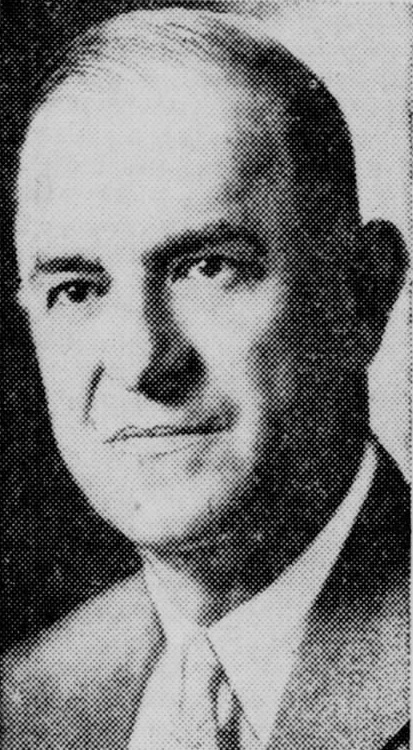
Reuben Wood
Former U.S. Representative · Missouri District 6 · 1933–1941 · Democratic
Reuben Wood represented Missouri's District 6 in the United States House of Representatives (1933–1941) for the Democratic party. The page below collects sourced biographical facts, term history, committee roles, and provenance for Wood.
Bioguide ID: W000702
Key facts
- Full name
- Reuben Wood
- State
- Missouri
- District
- District 6
- Party
- Democratic
- House service
- 1933–1941
- First House term
- 1933
- Status
- Left office
- Current term ends
- —
- Born
- 1884
- Bioguide ID
- W000702
- Committee assignments
- —
- Dataset version
- 1.20260605
Biographical narrative
875 words · sourced from the Wikipedia REST extract
Reuben Wood was an American politician and trade unionist who served as a Democratic member of the United States House of Representatives for Missouri's 6th congressional district from 1933 until 1941. Born on August 7, 1884, in a rural area near Springfield, Missouri, Wood's early life and career were deeply intertwined with labor movements and political activism. His tenure in Congress coincided with the New Deal era, during which he was involved in various legislative efforts and maintained a significant role in labor organizations, even while serving in office.
Early life and career
Reuben Wood was born to H. N. B. Wood, an educator, and grew up on a farm near Springfield, Missouri. His formative years were spent in the local public school system, which laid the groundwork for his future endeavors. At the age of eighteen, Wood began his career as a cigar maker, a profession that would introduce him to the labor movement. His early involvement in trade unionism began in 1902 when he became an organizer for the Springfield Central Labor Council, a position he held until 1912. This early engagement with labor issues would shape his political ideology and career trajectory.
From 1912 to 1932, Wood served as the president of the Missouri branch of the American Federation of Labor (AFL), a significant role that highlighted his commitment to labor rights and workers' advocacy. His leadership in this capacity was notable, as he was one of the few individuals to lead a state trade union while simultaneously serving in Congress. This dual role underscored his dedication to labor issues and his influence within the trade union movement. His tenure with the AFL was characterized by efforts to improve working conditions, wages, and labor rights for workers across Missouri.
Wood's political career began to take shape as he transitioned from labor leadership to elected office. He was a member of the Democratic Party and, in 1932, he was elected to the United States House of Representatives. His election came during a period of significant political change in the United States, as the nation grappled with the effects of the Great Depression and sought new solutions through the New Deal.
House tenure
Reuben Wood's congressional career began on March 4, 1933, when he was elected to represent Missouri's 6th congressional district. His election was part of a broader Democratic wave that swept through Congress during the early years of Franklin D. Roosevelt's presidency. Wood served four terms in the House, where he was involved in various legislative initiatives aimed at addressing the economic challenges of the time.
During his time in Congress, Wood was a member of the House Committee on War Claims during the 76th Congress. This committee was responsible for addressing claims related to damages incurred by U.S. soldiers, reflecting Wood's engagement with issues of national importance. His legislative work was largely influenced by the New Deal policies, which sought to provide relief and recovery to Americans affected by the economic downturn.
In 1940, Wood's political career faced a significant challenge when he sought re-election. Despite his previous successes, he lost his bid for a fifth term to Philip A. Bennett. This defeat marked the end of his tenure in the House, which concluded on January 3, 1941. Following his departure from Congress, Wood continued to be active in political and labor circles, attending the 1944 Missouri Constitutional Convention, where he contributed to discussions on state governance.
Legislative focus and committees
Throughout his time in the House of Representatives, Reuben Wood's legislative focus was closely aligned with his background in labor and trade unionism. His work on the House Committee on War Claims exemplified his commitment to addressing the needs of those affected by military actions, as well as his broader interest in social justice and workers' rights.
Wood's association with the labor movement was a defining aspect of his political identity. His leadership in the Missouri AFL allowed him to advocate for policies that benefitted workers, and his connection to trade unions influenced his legislative priorities. Although he faced accusations of socialist affiliations due to his labor activism, Wood maintained that he was not a member of the Socialist Party of America. Nevertheless, his interactions with socialists and labor leaders were significant, as they shaped his approach to policy and governance.
In 1940, the Missouri Central Labor Union suggested that President Franklin D. Roosevelt nominate Wood for the position of United States Secretary of Labor, indicating the respect he garnered within labor circles. However, his defeat in the 1940 election prevented him from pursuing this opportunity.
After leaving Congress, Wood returned to his role as president of the Missouri branch of the AFL-CIO, where he continued to advocate for labor rights until his retirement in May 1953. His long-standing commitment to labor issues and his influence within the trade union movement left a lasting impact on the political landscape of Missouri.
Reuben Wood passed away on July 16, 1955, at the age of 70, from a myocardial infarction. He was laid to rest in Greenlawn Cemetery in Springfield, Missouri. His contributions to labor and politics were recognized posthumously, with honors from the Missouri CIO, reflecting his enduring legacy in the realm of labor advocacy and public service.
Notable legislation
Sponsored and co-sponsored legislation for Reuben Wood is pending operator curation. The biographical narrative above carries the same provenance trail until per-bill rows are written.
Sources
- [1]https://en.wikipedia.org/wiki/Reuben_T._WoodWikipedia · retrieved 2026-06-05
Notable quotes
Sourced quotes for Reuben Wood are pending operator curation. Narrative-scope provenance remains attached below.
Sources
- [1]https://en.wikipedia.org/wiki/Reuben_T._WoodWikipedia · retrieved 2026-06-05
Key positions
Curated policy positions for Reuben Wood are pending operator review. The biographical narrative above carries the same provenance trail until per-topic positions are written.
Sources
- [1]https://en.wikipedia.org/wiki/Reuben_T._WoodWikipedia · retrieved 2026-06-05
Terms served
- 1933–1935U.S. House · Term 1 · Democratic
- 1935–1937U.S. House · Term 2 · Democratic
- 1937–1939U.S. House · Term 3 · Democratic
- 1939–1941U.S. House · Term 4 · Democratic
Sources & provenance
Every attributable claim above carries a per-section [N] marker that resolves to the corresponding URL below. Each entry records the upstream provider, the canonical URL, and the timestamp at which the source was retrieved by the ingest pipeline.
Key facts
- https://bioguide.congress.gov/search/bio/W000702bioguide · retrieved 2026-06-05
- https://www.govtrack.us/congress/members/411854govtrack · retrieved 2026-06-05
Biographical narrative
- https://en.wikipedia.org/wiki/Reuben_T._Woodwikipedia · retrieved 2026-06-05
Find your representative
Every U.S. state elects representatives by district. Browse Missouri’s delegation, the full former-representative roster, or explore the role and term length.
Related on The Candidate
- Preceded by Thomas HalseyEarlier holder of the Missouri District 6 House seat · Republican.Open
- Succeeded by Philip BennettLater holder of the Missouri District 6 House seat · Republican.Open
- Anthony IttnerFormer U.S. Representative · Missouri District 1 · RepublicanOpen
- Bill Clay Sr.Former U.S. Representative · Missouri District 1 · DemocraticOpen
- Charles ClarkFormer U.S. Representative · Missouri District 1 · RepublicanOpen
- Clare MageeFormer U.S. Representative · Missouri District 1 · DemocraticOpen