
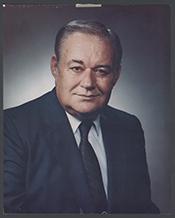
Historical · U.S. House · Missouri · District 7
Gene Taylor
Former U.S. Representative · Missouri District 7 · 1973–1989 · Republican
Gene Taylor represented Missouri's District 7 in the United States House of Representatives (1973–1989) for the Republican party. The page below collects sourced biographical facts, term history, committee roles, and provenance for Taylor.
Bioguide ID: T000075
Key facts
- Full name
- Gene Taylor
- State
- Missouri
- District
- District 7
- Party
- Republican
- House service
- 1973–1989
- First House term
- 1973
- Status
- Left office
- Current term ends
- —
- Born
- 1928
- Bioguide ID
- T000075
- Committee assignments
- —
- Dataset version
- 1.20260605
Biographical narrative
945 words · sourced from the Wikipedia REST extract
G. Taylor was a Republican politician who served as a U.S. Representative for Missouri's 7th congressional district. His tenure in the House of Representatives spanned from 1973 until 1989, during which he participated in various legislative activities and represented the interests of his constituents. Taylor's political career was marked by his involvement in local governance and his contributions to the Republican Party at both state and national levels.
Early life and career
G. Taylor was born on February 10, 1928, near Sarcoxie, Missouri. He grew up in a rural setting and attended local public schools, where he received his foundational education. After completing his secondary education, Taylor pursued higher education at Southwest Missouri State College in Springfield from 1945 to 1947. His time at the college was relatively brief, as he transitioned into military service shortly thereafter.
Following his college years, Taylor served in the One Hundred and Eighth Cavalry of the Missouri National Guard from 1948 to 1949. This experience in the military likely influenced his later political career, as many politicians draw on their service to connect with constituents who value military service and national defense.
Upon completing his military service, Taylor returned to his hometown and began establishing his career in business and public service. He entered the automotive industry and opened an automobile dealership, which he operated until 1973. This entrepreneurial experience provided him with insights into the business community and economic issues, which would later inform his legislative priorities.
In addition to his business endeavors, Taylor became actively involved in local politics. He served as the mayor of Sarcoxie from 1954 to 1960, during which time he gained valuable experience in governance and community leadership. His role as mayor allowed him to address local issues and develop a reputation as a public servant.
Taylor's political engagement extended beyond local governance. He participated as a delegate to Republican National Conventions from 1960 to 1968, contributing to the party's platform and candidate selection processes. His involvement at the state level included serving as a delegate to Missouri State Republican conventions in 1960, 1964, 1968, and 1972. Furthermore, he held the position of Republican national committeeman from 1966 to 1972, which placed him in a significant role within the party's national structure. These experiences helped him build a network of political connections and establish his credentials as a Republican leader.
House tenure
G. Taylor's congressional career began when he was elected to the U.S. House of Representatives in 1972. He won the Republican primary against future U.S. Attorney General John Ashcroft, a significant political achievement that marked the start of his long tenure in Congress. Taylor's election was part of a broader trend of Republican gains during the early 1970s, as the party sought to expand its influence in various regions of the country.
Taylor served a total of eight terms in the House, representing Missouri's 7th congressional district. His first term commenced in 1973, and he was re-elected in subsequent elections, demonstrating a degree of electoral support from his constituents. However, his political journey was not without challenges. He faced close contests in the elections of 1974 and 1982, indicating that while he maintained a loyal base, he also encountered significant opposition during his time in office.
Throughout his tenure, Taylor was involved in various legislative initiatives and discussions that shaped the policies of the time. His service in the House concluded on January 3, 1989, when he chose not to seek renomination for the 101st Congress. This decision marked the end of an era in his political career, as he transitioned away from public office.
After leaving Congress, Taylor continued to be remembered for his contributions to the community and his service in the House. He passed away on October 27, 1998, in Springfield, Missouri. In recognition of his legacy, the main post office in Springfield was named the Gene Taylor Building, honoring his service and commitment to the region.
Legislative focus and committees
During his time in the U.S. House of Representatives, G. Taylor was involved in a range of legislative issues that reflected the interests and concerns of his constituents. While specific details of his legislative accomplishments are not provided, it is typical for members of Congress to focus on areas such as economic development, healthcare, education, and infrastructure, among others. Given his background in business and local governance, it is likely that Taylor prioritized issues related to economic growth and support for local businesses.
As a member of the Republican Party, Taylor would have aligned with the party's broader policy goals, which often included promoting free enterprise, reducing government regulation, and advocating for fiscal responsibility. His experience as a businessman may have informed his perspectives on economic policy and the importance of creating a favorable environment for entrepreneurship and job creation.
In addition to his legislative focus, Taylor's participation in various committees would have played a crucial role in shaping his contributions to the House. Committees are essential for reviewing legislation, conducting hearings, and overseeing government functions. The specific committees on which Taylor served are not detailed, but members typically engage in committees that align with their interests and expertise, allowing them to influence policy in meaningful ways.
Overall, G. Taylor's career in the U.S. House of Representatives was characterized by his commitment to representing the interests of his constituents in Missouri's 7th district. His background in local governance and business, combined with his active participation in the Republican Party, positioned him as a significant figure in Missouri politics during his time in office. His legacy continues to be recognized in the community he served, reflecting the impact of his public service on the region.
Notable legislation
Sponsored and co-sponsored legislation for Gene Taylor is pending operator curation. The biographical narrative above carries the same provenance trail until per-bill rows are written.
Sources
- [1]https://en.wikipedia.org/wiki/Gene_Taylor_(Missouri_politician)Wikipedia · retrieved 2026-06-05
Notable quotes
Sourced quotes for Gene Taylor are pending operator curation. Narrative-scope provenance remains attached below.
Sources
- [1]https://en.wikipedia.org/wiki/Gene_Taylor_(Missouri_politician)Wikipedia · retrieved 2026-06-05
Key positions
Curated policy positions for Gene Taylor are pending operator review. The biographical narrative above carries the same provenance trail until per-topic positions are written.
Sources
- [1]https://en.wikipedia.org/wiki/Gene_Taylor_(Missouri_politician)Wikipedia · retrieved 2026-06-05
Terms served
- 1973–1975U.S. House · Term 1 · Republican
- 1975–1977U.S. House · Term 2 · Republican
- 1977–1979U.S. House · Term 3 · Republican
- 1979–1981U.S. House · Term 4 · Republican
- 1981–1983U.S. House · Term 5 · Republican
- 1983–1985U.S. House · Term 6 · Republican
- 1985–1987U.S. House · Term 7 · Republican
- 1987–1989U.S. House · Term 8 · Republican
Sources & provenance
Every attributable claim above carries a per-section [N] marker that resolves to the corresponding URL below. Each entry records the upstream provider, the canonical URL, and the timestamp at which the source was retrieved by the ingest pipeline.
Key facts
- https://bioguide.congress.gov/search/bio/T000075bioguide · retrieved 2026-06-05
- https://www.govtrack.us/congress/members/410659govtrack · retrieved 2026-06-05
Biographical narrative
- https://en.wikipedia.org/wiki/Gene_Taylor_(Missouri_politician)wikipedia · retrieved 2026-06-05
Find your representative
Every U.S. state elects representatives by district. Browse Missouri’s delegation, the full former-representative roster, or explore the role and term length.
Related on The Candidate
- Preceded by Durward HallEarlier holder of the Missouri District 7 House seat · Republican.Open
- Succeeded by Mel HancockLater holder of the Missouri District 7 House seat · Republican.Open
- Anthony IttnerFormer U.S. Representative · Missouri District 1 · RepublicanOpen
- Bill Clay Sr.Former U.S. Representative · Missouri District 1 · DemocraticOpen
- Charles ClarkFormer U.S. Representative · Missouri District 1 · RepublicanOpen
- Clare MageeFormer U.S. Representative · Missouri District 1 · DemocraticOpen