
Historical · U.S. House · Missouri · District 7
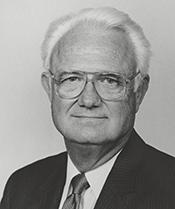
Mel Hancock
Former U.S. Representative · Missouri District 7 · 1989–1997 · Republican
Mel Hancock represented Missouri's District 7 in the United States House of Representatives (1989–1997) for the Republican party. The page below collects sourced biographical facts, term history, committee roles, and provenance for Hancock.
Bioguide ID: H000151
Key facts
- Full name
- Mel Hancock
- State
- Missouri
- District
- District 7
- Party
- Republican
- House service
- 1989–1997
- First House term
- 1989
- Status
- Left office
- Current term ends
- —
- Born
- 1929
- Bioguide ID
- H000151
- Committee assignments
- —
- Dataset version
- 1.20260605
Biographical narrative
928 words · sourced from the Wikipedia REST extract
Mel Hancock was a Republican politician who served as a member of the United States House of Representatives, representing Missouri's 7th congressional district from 1989 until 1997. Known for his advocacy of tax limitation measures, Hancock played a significant role in shaping fiscal policy in Missouri and contributed to national discussions on tax reform during his tenure in Congress.
Early life and career
Mel Hancock was born on September 14, 1929, in Cape Fair, Missouri. His early education began in Carthage, Missouri, in 1936, and he continued his schooling in Springfield, Missouri, until 1941. During World War II, he attended schools in various locations, including Amarillo, Texas; Topeka, Kansas; and Sioux City, Iowa, before returning to Springfield to complete his high school education, graduating in 1947. Following high school, Hancock pursued higher education at Southwest Missouri State University, where he earned a Bachelor of Science degree in 1951.
In August 1951, Hancock enlisted in the United States Air Force, where he demonstrated leadership potential and was awarded the American Spirit Honor Medal during basic training. He attended the United States Air Force Officer Candidate School and achieved the rank of second lieutenant by March 1953. Although he was relieved from active duty later that year, he remained in the United States Air Force Inactive Reserve until 1965, ultimately being discharged at the rank of first lieutenant.
Hancock's professional career began while he was still in college, as he worked both full-time and part-time for the International Harvester Company from 1947 until 1951. After his military service, he returned to Springfield in 1959 to enter the insurance business, where he worked until 1969. In that year, he co-founded Federal Protection, Inc., a company specializing in bank security equipment leasing.
In 1977, Hancock founded The Taxpayer Survival Association, a non-profit organization aimed at educating the public about constitutional tax limitations. He became a prominent figure in advocating for tax reform in Missouri, leading to the creation of the Hancock Amendment. This amendment, which was passed by Missouri voters in 1980, established limits on state revenues and expenditures based on personal income levels. It also mandated that any new local taxes, licenses, or fees must receive voter approval. The Hancock Amendment was one of the first of its kind in the United States and has remained a significant element of Missouri's fiscal policy, influencing state budgeting and taxation practices.
Hancock's political ambitions extended beyond state-level initiatives. He sought the Republican nomination for the United States Senate in 1982, challenging incumbent Republican John Danforth. Additionally, he ran for the nomination as Lieutenant Governor of Missouri in 1984 but was unsuccessful against Democrat Harriett Woods.
House tenure
Mel Hancock was elected to the United States House of Representatives in 1988, beginning his first term on January 3, 1989. He served in the 101st, 102nd, 103rd, and 104th Congresses, completing his final term on January 3, 1997. Throughout his congressional career, Hancock focused on issues related to taxation and fiscal responsibility, drawing on his background in tax limitation advocacy.
During his time in the House, Hancock participated in various legislative initiatives and discussions that aligned with his commitment to reducing the tax burden on citizens and ensuring government accountability in fiscal matters. His experience in state-level tax reform provided him with a unique perspective on national tax policies, which he sought to influence during his tenure in Congress.
Hancock chose not to seek re-election for the 105th Congress, concluding his time in the House after four terms. His decision marked the end of a legislative career characterized by a focus on fiscal conservatism and taxpayer rights.
Legislative focus and committees
Throughout his time in the House of Representatives, Mel Hancock's legislative focus was primarily centered on tax policy and fiscal responsibility. He was a strong advocate for limiting government spending and ensuring that tax increases were subject to voter approval, principles that he had championed at the state level with the Hancock Amendment.
Hancock's work in Congress included participation in various committees that aligned with his interests in economic policy and government accountability. While specific committee assignments during his tenure are not detailed in the available records, it is common for members of Congress to serve on committees that oversee budgetary matters, taxation, and other fiscal issues. His background in advocating for tax limitations likely influenced his contributions to discussions surrounding federal budgetary policies and tax legislation.
In addition to his legislative work, Hancock's advocacy for taxpayer rights extended beyond the confines of Congress. He was actively involved in promoting constitutional amendments aimed at limiting government taxation and spending at the national level. His efforts to educate the public on these issues reflected a broader commitment to fiscal conservatism and the belief that taxpayers should have a say in governmental financial decisions.
Hancock's legacy includes his role in shaping Missouri's tax policy through the Hancock Amendment, which continues to influence state governance. His contributions to the national dialogue on tax reform and fiscal responsibility remain part of his enduring impact on both state and federal levels of government.
Following his departure from Congress, Hancock continued to be recognized for his contributions to public policy and fiscal reform. He passed away on November 6, 2011, leaving behind a legacy marked by his commitment to taxpayer rights and government accountability. In December 2014, he was inducted into the Hall of Famous Missourians, honoring his significant contributions to the state and its governance. His bronze bust is displayed in the Missouri State Capitol, serving as a reminder of his influence on Missouri's fiscal landscape.
Notable legislation
Sponsored and co-sponsored legislation for Mel Hancock is pending operator curation. The biographical narrative above carries the same provenance trail until per-bill rows are written.
Sources
- [1]https://en.wikipedia.org/wiki/Mel_HancockWikipedia · retrieved 2026-06-05
Notable quotes
Sourced quotes for Mel Hancock are pending operator curation. Narrative-scope provenance remains attached below.
Sources
- [1]https://en.wikipedia.org/wiki/Mel_HancockWikipedia · retrieved 2026-06-05
Key positions
Curated policy positions for Mel Hancock are pending operator review. The biographical narrative above carries the same provenance trail until per-topic positions are written.
Sources
- [1]https://en.wikipedia.org/wiki/Mel_HancockWikipedia · retrieved 2026-06-05
Terms served
- 1989–1991U.S. House · Term 1 · Republican
- 1991–1993U.S. House · Term 2 · Republican
- 1993–1995U.S. House · Term 3 · Republican
- 1995–1997U.S. House · Term 4 · Republican
Sources & provenance
Every attributable claim above carries a per-section [N] marker that resolves to the corresponding URL below. Each entry records the upstream provider, the canonical URL, and the timestamp at which the source was retrieved by the ingest pipeline.
Key facts
- https://bioguide.congress.gov/search/bio/H000151bioguide · retrieved 2026-06-05
- https://www.govtrack.us/congress/members/405033govtrack · retrieved 2026-06-05
Biographical narrative
- https://en.wikipedia.org/wiki/Mel_Hancockwikipedia · retrieved 2026-06-05
Find your representative
Every U.S. state elects representatives by district. Browse Missouri’s delegation, the full former-representative roster, or explore the role and term length.
Related on The Candidate
- Preceded by Gene TaylorEarlier holder of the Missouri District 7 House seat · Republican.Open
- Succeeded by Billy LongLater holder of the Missouri District 7 House seat · Republican.Open
- Anthony IttnerFormer U.S. Representative · Missouri District 1 · RepublicanOpen
- Bill Clay Sr.Former U.S. Representative · Missouri District 1 · DemocraticOpen
- Charles ClarkFormer U.S. Representative · Missouri District 1 · RepublicanOpen
- Clare MageeFormer U.S. Representative · Missouri District 1 · DemocraticOpen