
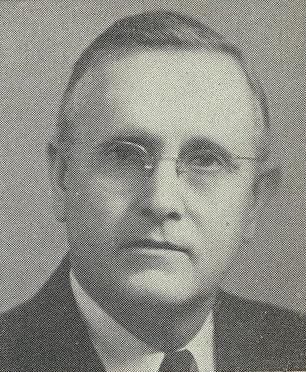
Historical · U.S. House · Missouri · District 8
Albert Carnahan
Former U.S. Representative · Missouri District 8 · 1945–1961 · Democratic
Albert Carnahan represented Missouri's District 8 in the United States House of Representatives (1945–1961) for the Democratic party. The page below collects sourced biographical facts, term history, committee roles, and provenance for Carnahan.
Bioguide ID: C000162
Key facts
- Full name
- Albert Carnahan
- State
- Missouri
- District
- District 8
- Party
- Democratic
- House service
- 1945–1961
- First House term
- 1945
- Status
- Left office
- Current term ends
- —
- Born
- 1897
- Bioguide ID
- C000162
- Committee assignments
- —
- Dataset version
- 1.20260605
Biographical narrative
964 words · sourced from the Wikipedia REST extract
Albert Carnahan was a prominent American educator and politician who served as a Democratic U.S. Representative for Missouri's 8th Congressional District from 1945 until 1961. Over the course of his fourteen years in Congress, he became known for his involvement in significant legislation and his role in international diplomacy. Carnahan was also a key figure in the political landscape of Missouri, being part of a family that has maintained a lasting presence in the state's politics.
Early life and career
Albert Sidney Johnson Carnahan was born on January 9, 1897, on a farm near Ellsinore, Missouri. He was the youngest of ten children in his family and was named after the Confederate General Albert Sidney Johnston. His early education took place at Crommertown School, a one-room schoolhouse in Carter County. At the age of 17, in 1914, Carnahan began his career in education, teaching at various schools in the area, including Crommertown, Hogan Hollow, and Ellsinore.
During World War I, Carnahan served in the United States Navy, specifically in an aviation unit stationed in Ireland. After his military service, he completed his high school education at College High School in Cape Girardeau, Missouri. He pursued higher education at the Missouri State Teachers College in Cape Girardeau, where he earned a bachelor's degree in education in 1926. Following this, he continued to teach in southeastern Missouri for several years before enrolling at the University of Missouri in Columbia, where he obtained a master's degree in 1932.
In the years that followed, Carnahan took on administrative roles in education, serving as a high school administrator in Carter, Reynolds, and Shannon counties. He eventually rose to the position of superintendent of schools in Ellsinore. His personal life included marriage to Kathel Schupp, with whom he raised two sons, Robert E. and Melvin E. This foundation in education and community service would later inform his political career.
House tenure
Carnahan's political career began in earnest when he was elected to the U.S. House of Representatives in 1944, representing Missouri's 8th Congressional District as a member of the Democratic Party. His first term commenced in 1945; however, he faced defeat in the 1946 elections. Undeterred, he ran again in 1948 and successfully regained his seat. Following this victory, he served an additional six consecutive terms in the House, demonstrating resilience and commitment to his constituents.
Throughout his tenure, Carnahan was actively involved in various legislative matters and served on the House Committee on Foreign Affairs from the beginning of his congressional career. By the time he retired, he held the position of ranking member of this influential committee. His leadership extended to chairing the Subcommittee on International Organizations and Movements, as well as the Subcommittee on Africa, where he played a vital role in shaping U.S. foreign policy.
Carnahan's legislative contributions included involvement in significant pieces of legislation such as the GI Bill, the Marshall Plan, the Area Development Act, and revisions to Social Security statutes. His commitment to international diplomacy was further exemplified by his participation as a delegate at the 12th General Assembly of the United Nations in 1957 and his role as a Congressional Advisor to the U.S. Delegation at the Second International Conference on Peaceful Uses of Atomic Energy in Geneva in 1958.
In matters of civil rights, Carnahan did not sign the 1956 Southern Manifesto, which opposed desegregation, and he voted in favor of the Civil Rights Acts of 1957 and 1960. His legislative actions reflected a commitment to advancing civil rights and addressing the needs of a changing America.
Carnahan's congressional career came to an end when he was unable to secure the Democratic Party's nomination for his seat in 1960. His departure from the House marked the conclusion of a significant chapter in his political life, but it was not the end of his public service.
Legislative focus and committees
During his time in the House of Representatives, Albert Carnahan focused on a range of issues, particularly those related to foreign affairs and education. His long-standing involvement with the House Committee on Foreign Affairs allowed him to engage with international issues that were increasingly relevant in the post-World War II era. As the ranking member of this committee at the time of his retirement, he had substantial influence over U.S. foreign policy decisions.
Carnahan's leadership of the Subcommittee on International Organizations and Movements and the Subcommittee on Africa underscored his commitment to international cooperation and development. His work on the GI Bill and the Marshall Plan demonstrated his dedication to supporting veterans and rebuilding war-torn nations, respectively. These initiatives were pivotal in shaping post-war America and fostering international alliances.
In addition to his legislative achievements, Carnahan's role as a delegate to the United Nations and as a Congressional Advisor at international conferences highlighted his engagement with global issues. His participation in these forums reflected a broader understanding of the importance of diplomacy and international relations in the context of U.S. policy.
After leaving Congress, Carnahan continued to contribute to international service and education. He was appointed by President John F. Kennedy as the first United States Ambassador to Sierra Leone, serving from 1961 until 1963. Following his retirement from diplomatic service, he returned to Ellsinore, where he remained active in community service, including his involvement with the Rotary Club of Poplar Bluff, where he initiated programs to support education in Sierra Leone.
Albert Carnahan passed away on March 24, 1968, at the Mayo Clinic in Rochester, Minnesota. His legacy endures through his family's continued involvement in Missouri politics and the impact of his legislative work on both domestic and international fronts. The Carnahan family has remained a significant presence in Missouri's political landscape, with multiple generations holding public office, thereby solidifying Albert Carnahan's role in the state's political history.
Notable legislation
Sponsored and co-sponsored legislation for Albert Carnahan is pending operator curation. The biographical narrative above carries the same provenance trail until per-bill rows are written.
Sources
- [1]https://en.wikipedia.org/wiki/A._S._J._CarnahanWikipedia · retrieved 2026-06-05
Notable quotes
Sourced quotes for Albert Carnahan are pending operator curation. Narrative-scope provenance remains attached below.
Sources
- [1]https://en.wikipedia.org/wiki/A._S._J._CarnahanWikipedia · retrieved 2026-06-05
Key positions
Curated policy positions for Albert Carnahan are pending operator review. The biographical narrative above carries the same provenance trail until per-topic positions are written.
Sources
- [1]https://en.wikipedia.org/wiki/A._S._J._CarnahanWikipedia · retrieved 2026-06-05
Terms served
- 1945–1947U.S. House · Term 1 · Democratic
- 1949–1951U.S. House · Term 2 · Democratic
- 1951–1953U.S. House · Term 3 · Democratic
- 1953–1955U.S. House · Term 4 · Democratic
- 1955–1957U.S. House · Term 5 · Democratic
- 1957–1959U.S. House · Term 6 · Democratic
- 1959–1961U.S. House · Term 7 · Democratic
Sources & provenance
Every attributable claim above carries a per-section [N] marker that resolves to the corresponding URL below. Each entry records the upstream provider, the canonical URL, and the timestamp at which the source was retrieved by the ingest pipeline.
Key facts
- https://bioguide.congress.gov/search/bio/C000162bioguide · retrieved 2026-06-05
- https://www.govtrack.us/congress/members/402310govtrack · retrieved 2026-06-05
Biographical narrative
- https://en.wikipedia.org/wiki/A._S._J._Carnahanwikipedia · retrieved 2026-06-05
Find your representative
Every U.S. state elects representatives by district. Browse Missouri’s delegation, the full former-representative roster, or explore the role and term length.
Related on The Candidate
- Preceded by William ElmerEarlier holder of the Missouri District 8 House seat · Republican.Open
- Succeeded by Richard Ichord IILater holder of the Missouri District 8 House seat · Democratic.Open
- Anthony IttnerFormer U.S. Representative · Missouri District 1 · RepublicanOpen
- Bill Clay Sr.Former U.S. Representative · Missouri District 1 · DemocraticOpen
- Charles ClarkFormer U.S. Representative · Missouri District 1 · RepublicanOpen
- Clare MageeFormer U.S. Representative · Missouri District 1 · DemocraticOpen