
Historical · U.S. House · Missouri · District 8
William Elmer
Former U.S. Representative · Missouri District 8 · 1943–1945 · Republican
William Elmer represented Missouri's District 8 in the United States House of Representatives (1943–1945) for the Republican party. The page below collects sourced biographical facts, term history, committee roles, and provenance for Elmer.
Bioguide ID: E000157
Key facts
- Full name
- William Elmer
- State
- Missouri
- District
- District 8
- Party
- Republican
- House service
- 1943–1945
- First House term
- 1943
- Status
- Left office
- Current term ends
- —
- Born
- 1871
- Bioguide ID
- E000157
- Committee assignments
- —
- Dataset version
- 1.20260605
Biographical narrative
835 words · sourced from the Wikipedia REST extract
William Elmer was a U.S. Representative from Missouri, serving as a member of the Republican Party. His congressional career was marked by a single term in the U.S. House of Representatives, which began in 1943 and concluded in early 1945. Prior to his time in Congress, Elmer had an extensive career in law and local politics, which included various roles in the Missouri State House of Representatives and as a prosecuting attorney. His life spanned from March 2, 1871, when he was born, until May 11, 1956, when he passed away in Salem, Missouri.
Early life and career
William Elmer was born in Robertsville, Missouri, to William J. Elmer and Sarah Wagoner Elmer. In 1875, when he was just four years old, the family relocated to Salem, Missouri, where Elmer would spend much of his life. He received his education in the local public schools before attending Wingo Law School in Salem. After completing his legal education, he was admitted to the bar in 1892, marking the beginning of his legal career in Salem, which is the county seat of Dent County.
Elmer's early professional life included a significant role in local government. He served as the prosecuting attorney for Dent County during two separate terms in the mid-1890s and again in the early 1900s. His involvement in politics deepened when he was elected to the Missouri State House of Representatives, where he served multiple non-consecutive terms in the early 20th century. His legislative service included stints in 1903, 1904, 1921, 1922, and from 1929 to 1933. During his time in the State House, he held leadership positions, including that of temporary speaker and floor leader in 1929.
In addition to his legislative work, Elmer served as city attorney of Salem from 1920 to 1930. His political engagement extended beyond local governance; he was a delegate or alternate to the Republican National Conventions in several years, including 1904, 1908, 1912, and 1920. He also held the position of chairman of the Republican county committee from 1908 until 1944 and was involved in a commission to revise Missouri laws in 1929. Despite his extensive political experience, he faced challenges in his electoral pursuits, including an unsuccessful bid for the position of Lieutenant Governor in 1940.
House tenure
William Elmer was elected to the U.S. House of Representatives as a Republican, representing Missouri's 8th congressional district. His term in Congress began on January 3, 1943, during the 78th Congress, and lasted until January 3, 1945. His election came during a period of significant national and global upheaval, as the United States was deeply involved in World War II.
During his time in the House, Elmer participated in various legislative discussions and debates, contributing to the political discourse of the era. However, his congressional career was relatively brief, as he was not successful in his bid for re-election in 1944 to the 79th Congress. Following his departure from Congress, he continued to engage in legal practice and remained active in his community.
In 1946, Elmer sought the Republican nomination for a seat in the U.S. Senate but was again unsuccessful. After his political career, he returned to practicing law and took on additional roles, including serving as a director of the First National Bank of Salem. His involvement in education and community affairs continued as he was appointed to the board of curators of the University of Missouri, where he served from 1949 until 1955.
Legislative focus and committees
While specific details regarding the committees on which William Elmer served during his congressional tenure are not documented, his legislative focus can be inferred from the context of his time in office. As a member of the Republican Party during World War II, Elmer's legislative priorities likely aligned with the national interests of the United States, which included issues related to the war effort, economic stability, and post-war planning.
Elmer's participation in debates, such as those surrounding the Chinese Exclusion Repeal Act, indicates that he was engaged in discussions about immigration and civil rights, reflecting the complex social dynamics of the time. His remarks during these debates suggest a perspective shaped by the historical context of Jewish persecution in Europe, which was a significant issue during the war years.
Despite the brevity of his congressional career, Elmer's involvement in state and local politics, as well as his legal practice, contributed to his understanding of the legislative process and the needs of his constituents. His long-standing commitment to public service is evident through his various roles in local government, the legal profession, and his participation in national political conventions.
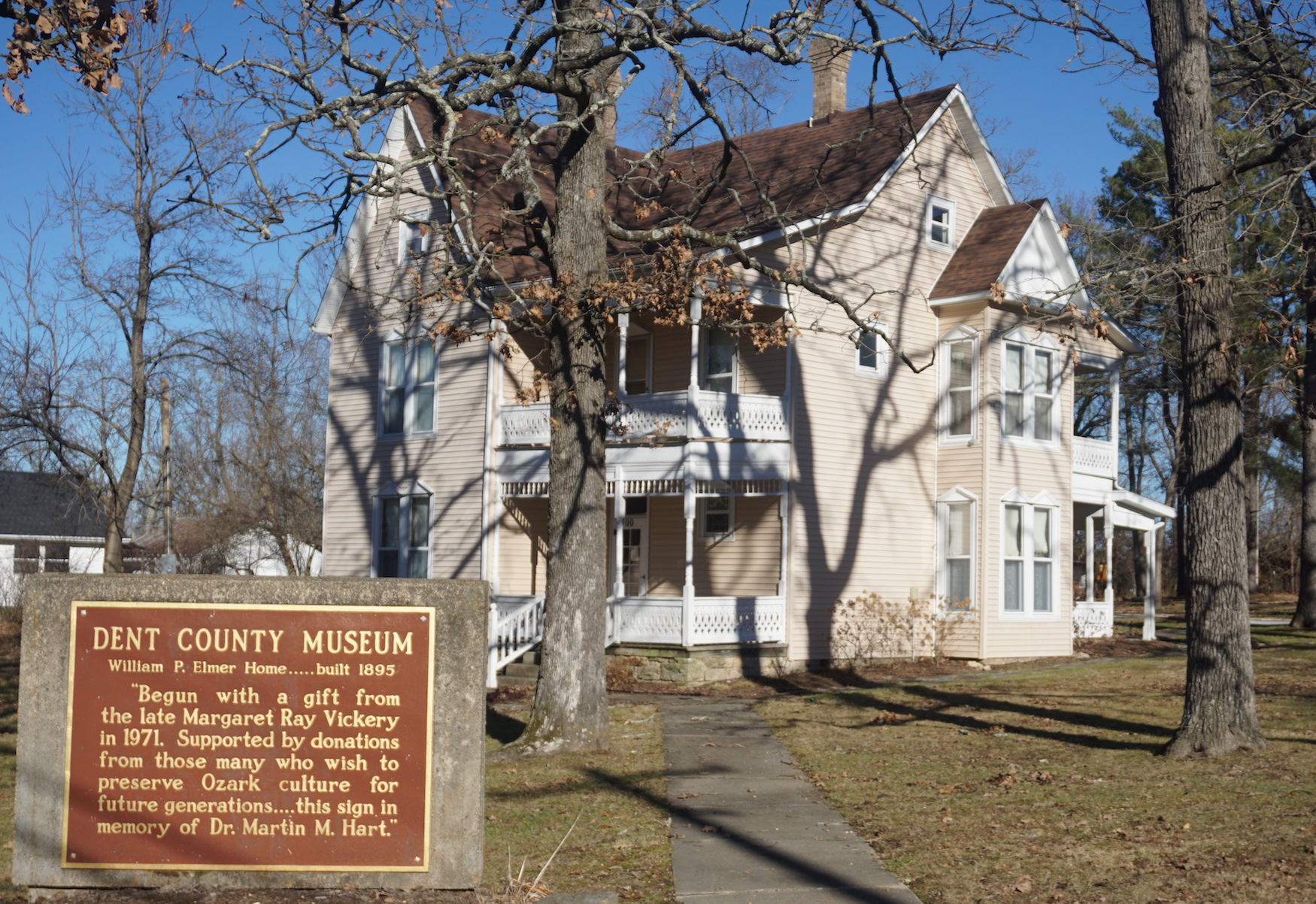
William Elmer's life came to a close on May 11, 1956, in Salem, Missouri, where he was interred in Cedar Grove Cemetery. His home, which he occupied from 1906 until his death, has since been converted into the Dent County Museum, serving as a testament to his legacy in the community. Elmer's contributions to Missouri politics and law reflect a career dedicated to public service and civic engagement.
Notable legislation
Sponsored and co-sponsored legislation for William Elmer is pending operator curation. The biographical narrative above carries the same provenance trail until per-bill rows are written.
Sources
- [1]https://en.wikipedia.org/wiki/William_P._ElmerWikipedia · retrieved 2026-06-05
Notable quotes
Sourced quotes for William Elmer are pending operator curation. Narrative-scope provenance remains attached below.
Sources
- [1]https://en.wikipedia.org/wiki/William_P._ElmerWikipedia · retrieved 2026-06-05
Key positions
Curated policy positions for William Elmer are pending operator review. The biographical narrative above carries the same provenance trail until per-topic positions are written.
Sources
- [1]https://en.wikipedia.org/wiki/William_P._ElmerWikipedia · retrieved 2026-06-05
Terms served
- 1943–1945U.S. House · Term 1 · Republican
Sources & provenance
Every attributable claim above carries a per-section [N] marker that resolves to the corresponding URL below. Each entry records the upstream provider, the canonical URL, and the timestamp at which the source was retrieved by the ingest pipeline.
Key facts
- https://bioguide.congress.gov/search/bio/E000157bioguide · retrieved 2026-06-05
- https://www.govtrack.us/congress/members/403848govtrack · retrieved 2026-06-05
Biographical narrative
- https://en.wikipedia.org/wiki/William_P._Elmerwikipedia · retrieved 2026-06-05
Find your representative
Every U.S. state elects representatives by district. Browse Missouri’s delegation, the full former-representative roster, or explore the role and term length.
Related on The Candidate
- Preceded by Clyde WilliamsEarlier holder of the Missouri District 8 House seat · Democratic.Open
- Succeeded by Albert CarnahanLater holder of the Missouri District 8 House seat · Democratic.Open
- Anthony IttnerFormer U.S. Representative · Missouri District 1 · RepublicanOpen
- Bill Clay Sr.Former U.S. Representative · Missouri District 1 · DemocraticOpen
- Charles ClarkFormer U.S. Representative · Missouri District 1 · RepublicanOpen
- Clare MageeFormer U.S. Representative · Missouri District 1 · DemocraticOpen