
Historical · U.S. House · Missouri · District 9
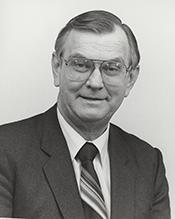
Harold Volkmer
Former U.S. Representative · Missouri District 9 · 1977–1997 · Democratic
Harold Volkmer represented Missouri's District 9 in the United States House of Representatives (1977–1997) for the Democratic party. The page below collects sourced biographical facts, term history, committee roles, and provenance for Volkmer.
Bioguide ID: V000112
Key facts
- Full name
- Harold Volkmer
- State
- Missouri
- District
- District 9
- Party
- Democratic
- House service
- 1977–1997
- First House term
- 1977
- Status
- Left office
- Current term ends
- —
- Born
- 1931
- Bioguide ID
- V000112
- Committee assignments
- —
- Dataset version
- 1.20260605
Biographical narrative
1,022 words · sourced from the Wikipedia REST extract
Harold L. Volkmer was an American politician who served as a Democratic U.S. Representative for Missouri's 9th congressional district from 1977 until 1997. Over his two decades in Congress, he was known for his involvement in agricultural policy, civil rights, and environmental legislation. Volkmer's political career was marked by a blend of conservative and progressive positions, reflecting the complexities of his constituency and the evolving political landscape of the time.
Early life and career
Harold Lee Volkmer was born on April 4, 1931, in Jefferson City, Missouri. He spent his formative years in this capital city, where he first engaged with the political process by assisting his mother in campaigning for the re-election of President Franklin D. Roosevelt. This early exposure to politics likely influenced his later career. Volkmer pursued higher education at Jefferson City Junior College and later attended Saint Louis University. He earned his law degree from the University of Missouri, passing the bar exam prior to his graduation.
In 1955, Volkmer married Shirley Ruth Braskett, with whom he had three children: two sons and a daughter. His family life was an important aspect of his identity, and he remained married to Shirley until her passing in 1995. Volkmer served in the United States Army from 1955 to 1957, an experience that contributed to his understanding of national issues and public service.
Before entering the political arena, Volkmer established a private law practice in Hannibal, Missouri. His legal career began in public service as an Assistant Attorney General for the State of Missouri. He was elected as the Prosecuting Attorney for Marion County in 1960, a position that allowed him to gain valuable experience in the legal and political systems. In 1966, he was elected to the Missouri House of Representatives, where he would serve for a decade, being re-elected four times. During his tenure in the state legislature, Volkmer earned a reputation as an energetic and straightforward advocate for various legislative initiatives, including a significant reorganization of the executive branch of state government. He also served as Chairman of the Missouri House Judiciary Committee, where he played a key role in the approval of the Equal Rights Amendment by the Missouri House.
House tenure
In 1976, Volkmer was elected to the United States House of Representatives, marking the beginning of a lengthy congressional career that would last until 1997. Throughout his ten terms in office, he represented a predominantly rural area comprising 21 counties in northeastern Missouri. His constituents often relied on him for advocacy on agricultural issues, and he became a member of the House Agriculture Committee, where he was instrumental in shaping five major farm bills.
Volkmer's political style was characterized by a blend of conservative and progressive views, which sometimes put him at odds with the prevailing Democratic Party positions. He was known for his opposition to gun control measures, abortion, and gay rights, which contributed to his identification as a conservative Democrat. However, he also championed progressive causes, particularly in the realms of civil rights, environmental protection, and education policy. His support for the extension of the Voting Rights Act in 1982 and the expansion of the Fair Housing Act in 1988 highlighted his commitment to civil rights. Additionally, he advocated for the strengthening of various environmental laws, including the Superfund program, the Clean Water Act, and the Clean Air Act.
Volkmer's legislative achievements included support for the Panama Canal Treaty Enabling Legislation in 1978 and the modernization of U.S. bankruptcy laws the same year. He was a primary sponsor of the McClure-Volkmer Act, commonly known as the Firearm Owners Protection Act, which amended the Gun Control Act to create a more comprehensive framework for compliance inspections of gun shops. This legislation was significant in enhancing the protections of constitutional rights related to gun ownership.
During most of his tenure, Volkmer faced relatively few electoral challenges, with only one close race occurring between 1978 and 1990. However, in 1992, he narrowly survived a tough contest against Republican Rick Hardy, winning by a slim margin. The following election cycle in 1994 was similarly competitive, with Volkmer securing just over half of the votes against Republican Kenny Hulshof. Ultimately, he lost his seat in a rematch with Hulshof in 1996 by a narrow margin, marking the end of his congressional career.
Legislative focus and committees
Throughout his time in Congress, Volkmer's legislative focus was primarily on issues that resonated with his constituents, particularly those related to agriculture, civil rights, and environmental policy. His role on the House Agriculture Committee allowed him to advocate for the interests of farmers and rural communities, which were vital to the economy of his district. He worked on multiple farm bills, which aimed to address the needs of the agricultural sector and ensure the sustainability of farming practices in the region.
In addition to his agricultural work, Volkmer's commitment to civil rights and environmental issues was evident in his legislative actions. He supported measures aimed at extending and strengthening civil rights protections, including those related to housing and voting. His advocacy for environmental legislation reflected a broader concern for public health and the preservation of natural resources, aligning with the growing environmental movement of the time.
Volkmer's participation in various committees, including the House Judiciary Committee during his early terms, further showcased his legal expertise and commitment to justice. His involvement in these committees allowed him to influence significant legislation and engage in debates on critical national issues.
After leaving Congress in 1997, Volkmer continued to be active in public service. He served as chairman of the National Commission on Small Farms, where he focused on issues affecting small-scale agriculture. Additionally, he was elected to the Board of Directors of the National Rifle Association, where he served for twelve years, reflecting his ongoing interest in gun rights and related legislative matters.
Harold L. Volkmer passed away on April 16, 2011, at the age of 80 due to pneumonia. His legacy as a U.S. Representative is marked by his unique blend of conservative and progressive positions, his advocacy for rural interests, and his contributions to civil rights and environmental legislation.
Notable legislation
Sponsored and co-sponsored legislation for Harold Volkmer is pending operator curation. The biographical narrative above carries the same provenance trail until per-bill rows are written.
Sources
- [1]https://en.wikipedia.org/wiki/Harold_VolkmerWikipedia · retrieved 2026-06-05
Notable quotes
Sourced quotes for Harold Volkmer are pending operator curation. Narrative-scope provenance remains attached below.
Sources
- [1]https://en.wikipedia.org/wiki/Harold_VolkmerWikipedia · retrieved 2026-06-05
Key positions
Curated policy positions for Harold Volkmer are pending operator review. The biographical narrative above carries the same provenance trail until per-topic positions are written.
Sources
- [1]https://en.wikipedia.org/wiki/Harold_VolkmerWikipedia · retrieved 2026-06-05
Terms served
- 1977–1979U.S. House · Term 1 · Democratic
- 1979–1981U.S. House · Term 2 · Democratic
- 1981–1983U.S. House · Term 3 · Democratic
- 1983–1985U.S. House · Term 4 · Democratic
- 1985–1987U.S. House · Term 5 · Democratic
- 1987–1989U.S. House · Term 6 · Democratic
- 1989–1991U.S. House · Term 7 · Democratic
- 1991–1993U.S. House · Term 8 · Democratic
- 1993–1995U.S. House · Term 9 · Democratic
- 1995–1997U.S. House · Term 10 · Democratic
Sources & provenance
Every attributable claim above carries a per-section [N] marker that resolves to the corresponding URL below. Each entry records the upstream provider, the canonical URL, and the timestamp at which the source was retrieved by the ingest pipeline.
Key facts
- https://bioguide.congress.gov/search/bio/V000112bioguide · retrieved 2026-06-05
- https://www.govtrack.us/congress/members/411166govtrack · retrieved 2026-06-05
Biographical narrative
- https://en.wikipedia.org/wiki/Harold_Volkmerwikipedia · retrieved 2026-06-05
Find your representative
Every U.S. state elects representatives by district. Browse Missouri’s delegation, the full former-representative roster, or explore the role and term length.
Related on The Candidate
- Preceded by William HungateEarlier holder of the Missouri District 9 House seat · Democratic.Open
- Succeeded by Kenny HulshofLater holder of the Missouri District 9 House seat · Republican.Open
- Anthony IttnerFormer U.S. Representative · Missouri District 1 · RepublicanOpen
- Bill Clay Sr.Former U.S. Representative · Missouri District 1 · DemocraticOpen
- Charles ClarkFormer U.S. Representative · Missouri District 1 · RepublicanOpen
- Clare MageeFormer U.S. Representative · Missouri District 1 · DemocraticOpen