
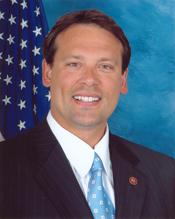
Historical · U.S. House · North Carolina · District 11
Heath Shuler
Former U.S. Representative · North Carolina District 11 · 2007–2013 · Democratic
Heath Shuler represented North Carolina's District 11 in the United States House of Representatives (2007–2013) for the Democratic party. The page below collects sourced biographical facts, term history, committee roles, and provenance for Shuler.
Bioguide ID: S001171
Key facts
- Full name
- Heath Shuler
- State
- North Carolina
- District
- District 11
- Party
- Democratic
- House service
- 2007–2013
- First House term
- 2007
- Status
- Left office
- Current term ends
- —
- Born
- 1971
- Bioguide ID
- S001171
- Committee assignments
- —
- Dataset version
- 1.20260605
Biographical narrative
948 words · sourced from the Wikipedia REST extract
Joseph Heath Shuler is a former American politician and professional football player who served as the U.S. Representative for North Carolina's 11th congressional district from 2007 until 2013. A member of the Democratic Party, Shuler's political career followed a notable tenure in the National Football League (NFL), where he played as a quarterback for five seasons. His congressional district, located in the scenic Blue Ridge Mountains of Western North Carolina, reflects his deep roots in the region and his commitment to its constituents.
Early life and career
Heath Shuler was born on December 31, 1971, in Bryson City, North Carolina, a small town nestled in the Great Smoky Mountains near the border with Tennessee. He grew up in a family where his father worked as a mail carrier and his mother was a homemaker who also volunteered with the Swain County Youth Association. Shuler has a younger brother named Benjie. His upbringing in a rural area played a significant role in shaping his values and perspectives, which would later influence his political career.
Shuler's athletic journey began during his high school years at Swain County High School, where he excelled as a quarterback. His performance on the field was remarkable; he led his team to three state championships and earned recognition as the North Carolina High School Player of the Year. His success in high school football garnered attention from college scouts, leading him to accept an athletic scholarship to the University of Tennessee in 1990.
At the University of Tennessee, Shuler played under head coaches Johnny Majors and Phillip Fulmer. He quickly gained national recognition as one of the Southeastern Conference's top quarterbacks. After a limited role in his freshman year, he became a prolific passer, achieving impressive statistics during his college career. By the end of his tenure, he had set numerous passing records for the Volunteers, many of which were later surpassed by future NFL star Peyton Manning. In 1993, Shuler was honored as the Southeastern Conference Player of the Year and was a finalist for the prestigious Heisman Trophy.
Following his successful college career, Shuler was selected in the first round of the 1994 NFL Draft by the Washington Redskins, being picked third overall. His entry into the NFL came with high expectations, as he was viewed as the franchise's quarterback of the future. However, his professional career was marked by challenges. Despite a lucrative contract, Shuler struggled to replicate his college success, leading to a quarterback controversy within the team. After three seasons with the Redskins, he was traded to the New Orleans Saints, where he faced further difficulties, including injuries that hampered his performance. Ultimately, Shuler's NFL career concluded after a brief stint with the Oakland Raiders, and he retired from professional football.
House tenure
Shuler transitioned into politics following his retirement from the NFL. In July 2005, he announced his candidacy for the Democratic nomination to represent North Carolina's 11th congressional district, challenging eight-term incumbent Republican Charles H. Taylor. The district, which encompasses much of the Western North Carolina mountains, was familiar territory for Shuler, who had deep connections to the area.
During his campaign for the House of Representatives, Shuler positioned himself as a candidate who aligned with the traditional values of the district. His platform included opposition to abortion rights, same-sex marriage, and gun control, which resonated with the conservative electorate. His lack of a legislative record made him a formidable candidate, as opponents found it challenging to attack his positions. In the 2006 elections, Shuler successfully defeated Taylor, marking the beginning of his congressional career.
Shuler's first term in the House began in January 2007. He was re-elected for two additional terms, serving a total of three terms in Congress. During his time in office, he became known for his willingness to challenge party leadership, including a notable bid against Nancy Pelosi for the position of Democratic leader in 2010. His tenure was characterized by a focus on the needs of his constituents and a commitment to representing the interests of Western North Carolina.
In 2011, the congressional district was redrawn, resulting in a significant shift in its demographics. The new map replaced much of the Democratic support from Asheville with several Republican-leaning counties. In light of these changes, Shuler announced that he would not seek re-election in 2012, concluding his congressional career after his term ended on January 3, 2013.
Legislative focus and committees
During his time in the U.S. House of Representatives, Shuler was a member of the Blue Dog Coalition, a group of moderate and conservative Democrats. This affiliation reflected his centrist approach to governance, which often sought to bridge the divide between party lines. Shuler's legislative focus included issues pertinent to his constituents in Western North Carolina, such as economic development, job creation, and support for local industries.
Throughout his congressional tenure, Shuler participated in various committees that aligned with his interests and the needs of his district. His work often emphasized the importance of infrastructure development, healthcare access, and education. He sought to advocate for policies that would benefit the residents of his district, particularly in areas related to economic growth and community support.
Shuler's approach to legislation was marked by a pragmatic understanding of the political landscape, as he navigated the complexities of representing a district with diverse views. His willingness to challenge party leadership demonstrated his commitment to his constituents and his belief in the importance of bipartisan cooperation.
After leaving Congress, Shuler returned to his roots in North Carolina, where he continued to engage with his community. His career trajectory, from professional athlete to U.S. Representative, illustrates a unique journey that reflects both personal and public service.
Notable legislation
Sponsored and co-sponsored legislation for Heath Shuler is pending operator curation. The biographical narrative above carries the same provenance trail until per-bill rows are written.
Sources
- [1]https://en.wikipedia.org/wiki/Heath_ShulerWikipedia · retrieved 2026-06-05
Notable quotes
Sourced quotes for Heath Shuler are pending operator curation. Narrative-scope provenance remains attached below.
Sources
- [1]https://en.wikipedia.org/wiki/Heath_ShulerWikipedia · retrieved 2026-06-05
Key positions
Curated policy positions for Heath Shuler are pending operator review. The biographical narrative above carries the same provenance trail until per-topic positions are written.
Sources
- [1]https://en.wikipedia.org/wiki/Heath_ShulerWikipedia · retrieved 2026-06-05
Terms served
- 2007–2009U.S. House · Term 1 · Democratic
- 2009–2011U.S. House · Term 2 · Democratic
- 2011–2013U.S. House · Term 3 · Democratic
Sources & provenance
Every attributable claim above carries a per-section [N] marker that resolves to the corresponding URL below. Each entry records the upstream provider, the canonical URL, and the timestamp at which the source was retrieved by the ingest pipeline.
Key facts
- https://bioguide.congress.gov/search/bio/S001171bioguide · retrieved 2026-06-05
- http://shuler.house.govhouse.gov · retrieved 2026-06-05
Biographical narrative
- https://en.wikipedia.org/wiki/Heath_Shulerwikipedia · retrieved 2026-06-05
Find your representative
Every U.S. state elects representatives by district. Browse North Carolina’s delegation, the full former-representative roster, or explore the role and term length.
Related on The Candidate
- Preceded by Charles TaylorEarlier holder of the North Carolina District 11 House seat · Republican.Open
- Succeeded by Mark MeadowsLater holder of the North Carolina District 11 House seat · Republican.Open
- Alfred GatlinFormer U.S. Representative · North Carolina District 1 · Crawford RepublicanOpen
- Clinton CobbFormer U.S. Representative · North Carolina District 1 · RepublicanOpen
- Eva ClaytonFormer U.S. Representative · North Carolina District 1 · DemocraticOpen
- Frank Ballance Jr.Former U.S. Representative · North Carolina District 1 · DemocraticOpen