
Historical · U.S. House · Nebraska · District 2
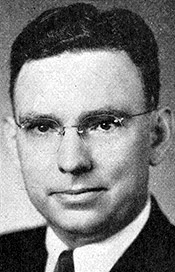
Howard Buffett
Former U.S. Representative · Nebraska District 2 · 1943–1953 · Republican
Howard Buffett represented Nebraska's District 2 in the United States House of Representatives (1943–1953) for the Republican party. The page below collects sourced biographical facts, term history, committee roles, and provenance for Buffett.
Bioguide ID: B001039
Key facts
- Full name
- Howard Buffett
- State
- Nebraska
- District
- District 2
- Party
- Republican
- House service
- 1943–1953
- First House term
- 1943
- Status
- Left office
- Current term ends
- —
- Born
- 1903
- Bioguide ID
- B001039
- Committee assignments
- —
- Dataset version
- 1.20260605
Biographical narrative
820 words · sourced from the Wikipedia REST extract
Howard Buffett was a prominent American businessman and politician who served as a Republican U.S. Representative for Nebraska's 2nd congressional district. His tenure in the House of Representatives spanned four terms from 1943 until 1953. Born in Omaha, Nebraska, in 1903, he was the father of renowned investor Warren Buffett. Throughout his political career, Howard Buffett was known for his libertarian views and strong opposition to military interventionism, reflecting a commitment to individual liberty and limited government.
Early life and career
Howard Homan Buffett was born on August 13, 1903, in Omaha, Nebraska, to Henrietta Duvall Buffett and Ernest P. Buffett, who were proprietors of a grocery business. The Buffett family has roots tracing back to France, where the surname originated from a Huguenot weaver named John Buffett. This ancestor immigrated to New York in the late 17th century. Howard Buffett attended public schools in Omaha and later pursued higher education at the University of Nebraska in Lincoln, graduating in 1925. During his time at the university, he was a member of the Alpha Sigma Phi fraternity.
Following his graduation, Howard Buffett married Leila Stahl on December 27, 1925. The couple became active members of the Dundee Presbyterian Church. Initially, Buffett sought employment in the family grocery business but was unable to secure a position. Consequently, he ventured into the investment sector by establishing a small stock brokerage firm. His early career also included a role on the Omaha Board of Education, where he served from 1939 to 1942.
In 1942, Buffett decided to enter the political arena by running for the U.S. House of Representatives in Nebraska's 2nd congressional district. Despite being perceived as a "sacrificial lamb" in a district where President Franklin D. Roosevelt enjoyed considerable popularity during wartime, he successfully won the Republican nomination in the primary elections and subsequently triumphed in the general election.
House tenure
Howard Buffett's congressional career began in 1943 when he took office as a U.S. Representative. Over the course of his four terms, he was known for his principled approach to governance. He was re-elected twice, demonstrating a degree of political resilience. However, in 1948, he faced defeat in his bid for re-election, only to reclaim his seat in 1950. His final term in the House concluded on January 3, 1953, when he chose not to seek another term and returned to his investment business in Omaha, specifically at Buffett-Falk & Co.
During his time in Congress, Buffett was involved in various legislative matters and was known for his ethical stance, often refusing perks associated with his position. He notably declined a salary increase during his first term, opting to leave the additional funds in the Capitol disbursement office, which he believed was a reflection of his commitment to public service.
In addition to his congressional duties, Howard Buffett played a significant role in the political landscape beyond Nebraska. He served as the campaign manager for Senator Robert A. Taft during Taft's presidential campaign in 1952, further solidifying his involvement in national politics.
Legislative focus and committees
Howard Buffett's legislative focus was characterized by a strong commitment to individual liberty and a skepticism of government intervention, particularly in foreign affairs. He was a vocal critic of the Truman Doctrine and the Marshall Plan, arguing that American ideals should not be imposed through military force or financial aid. Buffett believed that true Christian values could not be exported through coercion, advocating instead for persuasion and example as the means to promote American ideals abroad.
His opposition to military interventionism was a defining feature of his political philosophy. He was particularly critical of U.S. involvement in the Korean War, asserting that the United States bore significant responsibility for the conflict's outbreak. Buffett sought to declassify testimony from CIA officials that he believed would shed light on this issue, reflecting his commitment to transparency and accountability in government.
Buffett's libertarian views extended to his support for the gold standard, which he believed would help limit government spending and inflation. His perspective on economic issues was informed by a desire to protect individual freedoms and maintain a stable financial system.
Throughout his congressional career, Howard Buffett maintained a consistent voting record aligned with his principles. He often received low ratings from liberal organizations, reflecting his alignment with the Old Right faction of the Republican Party. His political philosophy emphasized the importance of civil liberties and a restrained government, positioning him as a unique voice in a period of significant political change in the United States.
Howard Buffett's legacy extends beyond his political career; he is also remembered as the father of Warren Buffett, who would go on to become one of the most successful investors in history. Howard Buffett passed away on April 30, 1964, at the age of 60, leaving behind a family and a political legacy marked by a commitment to individual liberty and a cautious approach to government intervention.
Notable legislation
Sponsored and co-sponsored legislation for Howard Buffett is pending operator curation. The biographical narrative above carries the same provenance trail until per-bill rows are written.
Sources
- [1]https://en.wikipedia.org/wiki/Howard_BuffettWikipedia · retrieved 2026-06-05
Notable quotes
Sourced quotes for Howard Buffett are pending operator curation. Narrative-scope provenance remains attached below.
Sources
- [1]https://en.wikipedia.org/wiki/Howard_BuffettWikipedia · retrieved 2026-06-05
Key positions
Curated policy positions for Howard Buffett are pending operator review. The biographical narrative above carries the same provenance trail until per-topic positions are written.
Sources
- [1]https://en.wikipedia.org/wiki/Howard_BuffettWikipedia · retrieved 2026-06-05
Terms served
- 1943–1945U.S. House · Term 1 · Republican
- 1945–1947U.S. House · Term 2 · Republican
- 1947–1949U.S. House · Term 3 · Republican
- 1951–1953U.S. House · Term 4 · Republican
Sources & provenance
Every attributable claim above carries a per-section [N] marker that resolves to the corresponding URL below. Each entry records the upstream provider, the canonical URL, and the timestamp at which the source was retrieved by the ingest pipeline.
Key facts
- https://bioguide.congress.gov/search/bio/B001039bioguide · retrieved 2026-06-05
- https://www.govtrack.us/congress/members/401989govtrack · retrieved 2026-06-05
Biographical narrative
- https://en.wikipedia.org/wiki/Howard_Buffettwikipedia · retrieved 2026-06-05
Find your representative
Every U.S. state elects representatives by district. Browse Nebraska’s delegation, the full former-representative roster, or explore the role and term length.
Related on The Candidate
- Preceded by Charles McLaughlinEarlier holder of the Nebraska District 2 House seat · Democratic.Open
- Succeeded by Jackson ChaseLater holder of the Nebraska District 2 House seat · Republican.Open
- Archibald WeaverFormer U.S. Representative · Nebraska District 1 · RepublicanOpen
- Charles ReavisFormer U.S. Representative · Nebraska District 1 · RepublicanOpen
- Charles ThoneFormer U.S. Representative · Nebraska District 1 · RepublicanOpen
- Clair CallanFormer U.S. Representative · Nebraska District 1 · DemocraticOpen