
Historical · U.S. House · Nebraska · District 2
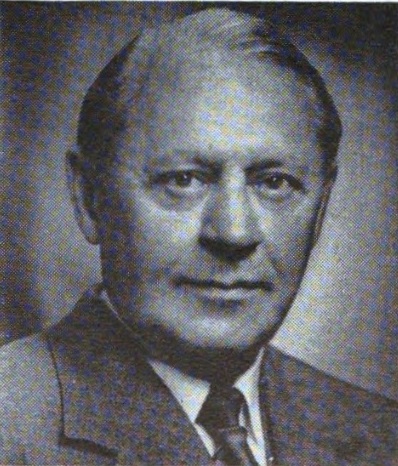
Jackson Chase
Former U.S. Representative · Nebraska District 2 · 1955–1957 · Republican
Jackson Chase represented Nebraska's District 2 in the United States House of Representatives (1955–1957) for the Republican party. The page below collects sourced biographical facts, term history, committee roles, and provenance for Chase.
Bioguide ID: C000327
Key facts
- Full name
- Jackson Chase
- State
- Nebraska
- District
- District 2
- Party
- Republican
- House service
- 1955–1957
- First House term
- 1955
- Status
- Left office
- Current term ends
- —
- Born
- 1890
- Bioguide ID
- C000327
- Committee assignments
- —
- Dataset version
- 1.20260605
Biographical narrative
822 words · sourced from the Wikipedia REST extract
Jackson Chase was an American politician and lawyer who served as a U.S. Representative for Nebraska's 2nd congressional district from 1955 to 1957. A member of the Republican Party, Chase's political career was preceded by a diverse background in law and public service, which included roles at both the state and federal levels. His tenure in Congress was marked by a commitment to his constituents, although it was relatively brief, as he chose not to seek re-election after his first term.
Early life and career
Jackson Burton Chase was born on August 19, 1890, in Seward, Nebraska. He spent his early years in Nebraska before moving to California and Illinois, where he worked for the Burlington Railroad. After completing his high school education in Omaha, Nebraska, in 1907, Chase began his professional career with the John Deere Plow Company, where he was employed from 1907 until 1910. His academic pursuits led him to the University of Nebraska, where he earned a Bachelor of Laws degree in 1912. During his time at the university, he was an active member of the Chi Phi fraternity, which provided him with a network of peers that would later support his political ambitions.
Chase continued his legal education at the University of Michigan Law School, obtaining his law degree in 1913. He successfully passed the bar examination the same year and established his law practice in Chicago, Illinois. His legal career was temporarily interrupted by his service in World War I, where he served as a member of the Field Artillery in the United States Army. Following the war, he returned to Nebraska and resumed his legal practice.
In the early 1920s, Chase held the position of assistant attorney general of Nebraska from 1921 to 1922, which marked the beginning of his involvement in public service. He continued to practice law in Omaha from 1923 until 1942, during which time he also served as a legal adviser to the Omaha Welfare Board in 1930 and 1931. His political career began to take shape when he was elected to the Nebraska House of Representatives, serving during the 1933 and 1934 sessions.
In addition to his legal and political work, Chase was also involved in agriculture, owning and managing farmland in both Nebraska and Iowa. His commitment to public service continued during World War II, when he served as a major in the Judge Advocate General's Department from 1942 to 1945. After the war, he was appointed chairman of the Nebraska Liquor Control Commission, a role he held from 1945 to 1946. Subsequently, he was elected as a judge of the fourth judicial district court of Nebraska, serving from 1946 until 1954.
House tenure
Chase's congressional career began when he was elected as a Republican to the Eighty-fourth United States Congress, representing Nebraska's 2nd congressional district. He served in this capacity from January 3, 1955, until January 3, 1957. His election to Congress came at a time when the Republican Party was gaining prominence in American politics, and Chase's background in law and public service likely contributed to his candidacy and subsequent election.
During his time in the House of Representatives, Chase participated in various legislative activities and contributed to discussions on issues pertinent to his constituents and the nation. However, his congressional tenure was relatively short-lived, as he chose not to seek renomination for the Eighty-fifth United States Congress in 1956. Instead, he returned to the judiciary, being re-elected as a judge of the fourth judicial district court of Nebraska, a position he held from 1956 until 1960.
Legislative focus and committees
While specific details regarding Chase's legislative focus and committee assignments during his time in Congress are not extensively documented, it can be inferred that his legal background and experience in public service influenced his approach to governance. As a member of the Republican Party, he likely aligned with the party's priorities and legislative agenda during the mid-1950s, a period characterized by significant political and social changes in the United States.
Chase's legal expertise and prior experience as a state legislator would have provided him with insights into the complexities of lawmaking and the importance of addressing the needs of his constituents. His involvement in the judiciary prior to and following his congressional service suggests a continued commitment to the rule of law and public service.
After concluding his term in the House, Chase returned to his judicial role, where he continued to contribute to the legal landscape of Nebraska. He remained active in public service until his retirement, demonstrating a lifelong dedication to the legal profession and the governance of his state.
Jackson Chase passed away on May 4, 1974, in Atlanta, Georgia. He was interred in Omaha, Nebraska, where he had spent much of his life. His career reflects a blend of legal expertise, public service, and political engagement, marking him as a notable figure in Nebraska's history during the mid-20th century.
Notable legislation
Sponsored and co-sponsored legislation for Jackson Chase is pending operator curation. The biographical narrative above carries the same provenance trail until per-bill rows are written.
Sources
- [1]https://en.wikipedia.org/wiki/Jackson_B._ChaseWikipedia · retrieved 2026-06-05
Notable quotes
Sourced quotes for Jackson Chase are pending operator curation. Narrative-scope provenance remains attached below.
Sources
- [1]https://en.wikipedia.org/wiki/Jackson_B._ChaseWikipedia · retrieved 2026-06-05
Key positions
Curated policy positions for Jackson Chase are pending operator review. The biographical narrative above carries the same provenance trail until per-topic positions are written.
Sources
- [1]https://en.wikipedia.org/wiki/Jackson_B._ChaseWikipedia · retrieved 2026-06-05
Terms served
- 1955–1957U.S. House · Term 1 · Republican
Sources & provenance
Every attributable claim above carries a per-section [N] marker that resolves to the corresponding URL below. Each entry records the upstream provider, the canonical URL, and the timestamp at which the source was retrieved by the ingest pipeline.
Key facts
- https://bioguide.congress.gov/search/bio/C000327bioguide · retrieved 2026-06-05
- https://www.govtrack.us/congress/members/402468govtrack · retrieved 2026-06-05
Biographical narrative
- https://en.wikipedia.org/wiki/Jackson_B._Chasewikipedia · retrieved 2026-06-05
Find your representative
Every U.S. state elects representatives by district. Browse Nebraska’s delegation, the full former-representative roster, or explore the role and term length.
Related on The Candidate
- Preceded by Howard BuffettEarlier holder of the Nebraska District 2 House seat · Republican.Open
- Succeeded by Glenn CunninghamLater holder of the Nebraska District 2 House seat · Republican.Open
- Archibald WeaverFormer U.S. Representative · Nebraska District 1 · RepublicanOpen
- Charles ReavisFormer U.S. Representative · Nebraska District 1 · RepublicanOpen
- Charles ThoneFormer U.S. Representative · Nebraska District 1 · RepublicanOpen
- Clair CallanFormer U.S. Representative · Nebraska District 1 · DemocraticOpen