
Historical · U.S. House · Nebraska · District 2
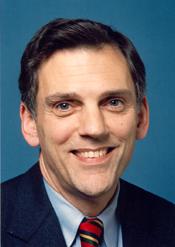
Peter Hoagland
Former U.S. Representative · Nebraska District 2 · 1989–1995 · Democratic
Peter Hoagland represented Nebraska's District 2 in the United States House of Representatives (1989–1995) for the Democratic party. The page below collects sourced biographical facts, term history, committee roles, and provenance for Hoagland.
Bioguide ID: H000652
Key facts
- Full name
- Peter Hoagland
- State
- Nebraska
- District
- District 2
- Party
- Democratic
- House service
- 1989–1995
- First House term
- 1989
- Status
- Left office
- Current term ends
- —
- Born
- 1941
- Bioguide ID
- H000652
- Committee assignments
- —
- Dataset version
- 1.20260605
Biographical narrative
884 words · sourced from the Wikipedia REST extract
Peter Hoagland was an American politician who served as a U.S. Representative for Nebraska's 2nd congressional district from 1989 to 1995. A member of the Democratic Party, he is noted for being the last Democrat to represent Nebraska in the House of Representatives for more than one term until the election of Brad Ashford in 2014. Hoagland's legislative career was characterized by his strong advocacy for environmental issues, and he was recognized for his commitment to conservation during his time in Congress.
Early life and career
Peter Jackson Hoagland was born on November 17, 1941, in Omaha, Nebraska. He completed his secondary education at Omaha Central High School, where he likely developed an early interest in civic engagement and leadership. Following high school, he attended Stanford University, graduating in 1963. His educational journey continued as he entered the United States Army, serving as a first lieutenant from 1963 to 1965 during the Vietnam War. This experience in the military may have shaped his perspectives on public service and national issues.
After his military service, Hoagland pursued a legal education at Yale Law School, where he earned his law degree in 1968. Upon graduation, he was admitted to the bar and began his legal career as a clerk for Judge Oliver Gasch in the United States District Court for the District of Columbia from 1969 to 1970. This role provided him with valuable insights into the judicial system and the workings of federal law.
Following his clerkship, Hoagland took on the role of staff attorney at the District of Columbia Public Defender Service from 1970 to 1973. In this capacity, he gained experience in criminal law and advocacy, representing individuals who could not afford legal representation. His work in public defense likely influenced his later political career, as it underscored the importance of justice and equity in society.
Hoagland's political career began in earnest when he was elected to the Nebraska Legislature in 1978. He served in this capacity until 1986, during which time he developed a reputation as a dedicated public servant. After choosing not to seek re-election in 1986, he prepared to transition to a national political stage.
House tenure
In 1988, Peter Hoagland entered the race for the U.S. House of Representatives after the incumbent, Hal Daub, announced his candidacy for the U.S. Senate. Hoagland successfully won the election to represent Nebraska's 2nd congressional district, beginning his first term in the 101st Congress in January 1989. His freshman term was notably chronicled in the book "House Rules: A Freshman Congressman's Initiation to the Backslapping, Backpedaling, and Backstabbing Ways of Washington," authored by journalist Robert Cwiklik. This account provided insights into the challenges and experiences faced by new members of Congress, highlighting the complexities of navigating the legislative process.
During his time in the House, Hoagland was re-elected in both 1990 and 1992, serving a total of three terms in Congress. His tenure was marked by active participation in various legislative initiatives, particularly those related to environmental conservation. However, in 1994, he faced a significant challenge when he was defeated for re-election by Republican candidate Jon Christensen. This defeat occurred during the broader context of the Republican Revolution, a political shift that saw many Democrats lose their seats in Congress. Hoagland's loss was significant, as it marked the end of an era for Democratic representation in Nebraska's congressional delegation.
Legislative focus and committees
Throughout his congressional career, Peter Hoagland was a staunch advocate for environmental issues. His commitment to conservation was evident in his voting record, which earned him a perfect score of 100% from The League of Conservation Voters in their National Environmental Scorecard. This recognition underscored his dedication to promoting policies aimed at protecting the environment and addressing climate change.
In addition to his environmental advocacy, Hoagland was involved in various committees during his time in the House. While specific committee assignments are not detailed in the available information, it is common for members of Congress to serve on committees that align with their interests and expertise. These committees play a crucial role in shaping legislation and overseeing government functions, allowing members to influence policy in areas such as education, healthcare, and infrastructure.
Beyond his legislative work, Hoagland was also active in civic and professional organizations. He was a member of the Episcopal Church and participated in the American Bar Association, reflecting his ongoing commitment to both his faith and the legal profession. In 1977, he was elected to the Common Cause National Governing Board, an organization focused on promoting campaign finance reform and increasing transparency in government.
After concluding his congressional service in 1995, Hoagland continued to reside in Washington, D.C., where he worked for a law firm. His legal background and experience in public service likely informed his work in the private sector, as he remained engaged in issues of law and policy.
In the later years of his life, Hoagland faced health challenges, suffering from Parkinson's disease for the last five years before his passing. He died on October 30, 2007, in Washington, D.C., at the age of 65. His legacy as a public servant and advocate for environmental issues continues to be recognized, particularly in the context of Nebraska's political landscape, where he remains a notable figure in the state's history of congressional representation.
Notable legislation
Sponsored and co-sponsored legislation for Peter Hoagland is pending operator curation. The biographical narrative above carries the same provenance trail until per-bill rows are written.
Sources
- [1]https://en.wikipedia.org/wiki/Peter_HoaglandWikipedia · retrieved 2026-06-05
Notable quotes
Sourced quotes for Peter Hoagland are pending operator curation. Narrative-scope provenance remains attached below.
Sources
- [1]https://en.wikipedia.org/wiki/Peter_HoaglandWikipedia · retrieved 2026-06-05
Key positions
Curated policy positions for Peter Hoagland are pending operator review. The biographical narrative above carries the same provenance trail until per-topic positions are written.
Sources
- [1]https://en.wikipedia.org/wiki/Peter_HoaglandWikipedia · retrieved 2026-06-05
Terms served
- 1989–1991U.S. House · Term 1 · Democratic
- 1991–1993U.S. House · Term 2 · Democratic
- 1993–1995U.S. House · Term 3 · Democratic
Sources & provenance
Every attributable claim above carries a per-section [N] marker that resolves to the corresponding URL below. Each entry records the upstream provider, the canonical URL, and the timestamp at which the source was retrieved by the ingest pipeline.
Key facts
- https://bioguide.congress.gov/search/bio/H000652bioguide · retrieved 2026-06-05
- https://www.govtrack.us/congress/members/405507govtrack · retrieved 2026-06-05
Biographical narrative
- https://en.wikipedia.org/wiki/Peter_Hoaglandwikipedia · retrieved 2026-06-05
Find your representative
Every U.S. state elects representatives by district. Browse Nebraska’s delegation, the full former-representative roster, or explore the role and term length.
Related on The Candidate
- Preceded by Hal DaubEarlier holder of the Nebraska District 2 House seat · Republican.Open
- Succeeded by Jon ChristensenLater holder of the Nebraska District 2 House seat · Republican.Open
- Archibald WeaverFormer U.S. Representative · Nebraska District 1 · RepublicanOpen
- Charles ReavisFormer U.S. Representative · Nebraska District 1 · RepublicanOpen
- Charles ThoneFormer U.S. Representative · Nebraska District 1 · RepublicanOpen
- Clair CallanFormer U.S. Representative · Nebraska District 1 · DemocraticOpen