
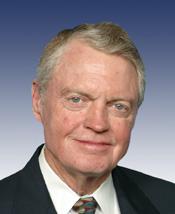
Historical · U.S. House · Nebraska · District 3
Tom Osborne
Former U.S. Representative · Nebraska District 3 · 2001–2007 · Republican
Tom Osborne represented Nebraska's District 3 in the United States House of Representatives (2001–2007) for the Republican party. The page below collects sourced biographical facts, term history, committee roles, and provenance for Osborne.
Bioguide ID: O000165
Key facts
- Full name
- Tom Osborne
- State
- Nebraska
- District
- District 3
- Party
- Republican
- House service
- 2001–2007
- First House term
- 2001
- Status
- Left office
- Current term ends
- —
- Born
- 1937
- Bioguide ID
- O000165
- Committee assignments
- —
- Dataset version
- 1.20260605
Biographical narrative
981 words · sourced from the Wikipedia REST extract
Thomas William Osborne, born on February 23, 1937, is a former American football player, coach, college athletics administrator, and politician from Nebraska. He is best known for his tenure as the head football coach of the Nebraska Cornhuskers, a position he held from 1973 to 1997, during which he became a prominent figure in college football. Following his successful coaching career, Osborne transitioned into politics, serving as a U.S. Representative for Nebraska's third congressional district from 2001 until 2007. A member of the Republican Party, he was elected to Congress after a distinguished career in athletics and education, which included significant contributions to the University of Nebraska–Lincoln. After his congressional service, he returned to the university as an athletic director, a role he held until his retirement in 2013.
Early life and career
Osborne was born and raised in Hastings, a small town in central Nebraska. He demonstrated athletic prowess from a young age, excelling in multiple sports, including football, basketball, and track during his time at Hastings High School. His exceptional abilities earned him the title of Nebraska High School Athlete of the Year in 1955, as recognized by the Omaha World-Herald. Following high school, he attended Hastings College, where he continued to showcase his athletic talent as a quarterback and wide receiver on the football team. He graduated in 1959 with a Bachelor of Arts degree in history.
Osborne's academic pursuits did not end with his undergraduate degree. He furthered his education at the University of Nebraska, where he earned a Master's degree in educational psychology in 1963 and subsequently completed his doctorate in 1965. His early career at the university began as a counselor in the Selleck Quadrangle, where he was responsible for overseeing a floor of freshmen football players. In addition to his academic and athletic commitments, Osborne served in the Nebraska Army National Guard from 1960 to 1966, reflecting his dedication to both his community and country.
Osborne's professional journey in athletics began shortly after his college career. He was selected in the nineteenth round of the 1959 NFL Draft by the San Francisco 49ers but was released before the regular season began. He then joined the Washington Redskins, where he made his NFL debut in 1960. Over the next two seasons, he played as a tight end, achieving modest success before transitioning to coaching.
House tenure
In 2000, after a long and successful career in coaching, Osborne entered the political arena. He was elected to the U.S. House of Representatives from Nebraska's third congressional district as a Republican. His first term in Congress began in 2001, and he was subsequently re-elected for two additional terms, serving until January 3, 2007. During his time in the House, Osborne focused on various issues pertinent to his constituents and the broader national landscape. His background in athletics and education informed his legislative priorities, and he sought to leverage his experience in these fields to benefit his district and the state of Nebraska.
Osborne's transition from coaching to politics was marked by his commitment to public service. He approached his role in Congress with the same dedication and discipline that characterized his coaching career. His tenure was characterized by a focus on issues such as education, health care, and agricultural policy, reflecting the needs and interests of his constituents in rural Nebraska. Osborne's experience as a coach and educator provided him with a unique perspective on the importance of community engagement and the role of government in supporting local initiatives.
During his time in the House, Osborne participated in various committees and subcommittees, where he contributed to discussions and decisions that shaped national policy. His background in athletics and education allowed him to advocate for programs that supported youth development, educational opportunities, and community health. After completing three terms in Congress, Osborne chose not to seek re-election, concluding his legislative career in early 2007.
Legislative focus and committees
Throughout his tenure in the U.S. House of Representatives, Osborne's legislative focus was shaped by his extensive background in athletics and education. He was particularly interested in issues related to education reform, health care, and agricultural policies, which were critical to the constituents of Nebraska's third district. His experience as a college football coach and administrator provided him with insights into the importance of education and youth development, which he sought to promote through various legislative initiatives.
Osborne's commitment to education was evident in his support for policies that aimed to improve educational outcomes for students across the nation. He advocated for increased funding for schools and programs that supported at-risk youth, reflecting his belief in the transformative power of education. His background in coaching also influenced his perspective on teamwork and collaboration, which he emphasized in his approach to legislative work.
In addition to education, Osborne was involved in discussions surrounding health care reform. He recognized the challenges faced by rural communities in accessing quality health care services and sought to address these issues through legislative measures that aimed to improve health care delivery and access in underserved areas. His focus on health care was informed by his understanding of the importance of physical well-being, which he had championed throughout his coaching career.
Osborne also engaged with agricultural policies, recognizing the significance of agriculture to Nebraska's economy and way of life. He supported initiatives that aimed to strengthen the agricultural sector, promote sustainable practices, and ensure that farmers and ranchers had the resources they needed to thrive. His deep roots in Nebraska and understanding of its agricultural landscape informed his advocacy for policies that benefited rural communities.
After concluding his congressional service, Osborne returned to the University of Nebraska–Lincoln as the athletic director, a position he held until his retirement in 2013. His legacy in both athletics and public service continues to resonate in Nebraska, reflecting his commitment to the values of education, community engagement, and leadership.
Notable legislation
Sponsored and co-sponsored legislation for Tom Osborne is pending operator curation. The biographical narrative above carries the same provenance trail until per-bill rows are written.
Sources
- [1]https://en.wikipedia.org/wiki/Tom_OsborneWikipedia · retrieved 2026-06-05
Notable quotes
Sourced quotes for Tom Osborne are pending operator curation. Narrative-scope provenance remains attached below.
Sources
- [1]https://en.wikipedia.org/wiki/Tom_OsborneWikipedia · retrieved 2026-06-05
Key positions
Curated policy positions for Tom Osborne are pending operator review. The biographical narrative above carries the same provenance trail until per-topic positions are written.
Sources
- [1]https://en.wikipedia.org/wiki/Tom_OsborneWikipedia · retrieved 2026-06-05
Terms served
- 2001–2003U.S. House · Term 1 · Republican
- 2003–2005U.S. House · Term 2 · Republican
- 2005–2007U.S. House · Term 3 · Republican
Sources & provenance
Every attributable claim above carries a per-section [N] marker that resolves to the corresponding URL below. Each entry records the upstream provider, the canonical URL, and the timestamp at which the source was retrieved by the ingest pipeline.
Key facts
- https://bioguide.congress.gov/search/bio/O000165bioguide · retrieved 2026-06-05
- http://www.house.gov/osbornehouse.gov · retrieved 2026-06-05
Biographical narrative
- https://en.wikipedia.org/wiki/Tom_Osbornewikipedia · retrieved 2026-06-05
Find your representative
Every U.S. state elects representatives by district. Browse Nebraska’s delegation, the full former-representative roster, or explore the role and term length.
Related on The Candidate
- Preceded by Bill BarrettEarlier holder of the Nebraska District 3 House seat · Republican.Open
- Archibald WeaverFormer U.S. Representative · Nebraska District 1 · RepublicanOpen
- Charles ReavisFormer U.S. Representative · Nebraska District 1 · RepublicanOpen
- Charles ThoneFormer U.S. Representative · Nebraska District 1 · RepublicanOpen
- Clair CallanFormer U.S. Representative · Nebraska District 1 · DemocraticOpen
- Republican PartyFederal candidates and office holders on the Republican line.Open