
Historical · U.S. House · Ohio · District 10
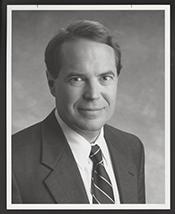
Martin Hoke
Former U.S. Representative · Ohio District 10 · 1993–1997 · Republican
Martin Hoke represented Ohio's District 10 in the United States House of Representatives (1993–1997) for the Republican party. The page below collects sourced biographical facts, term history, committee roles, and provenance for Hoke.
Bioguide ID: H000707
Key facts
- Full name
- Martin Hoke
- State
- Ohio
- District
- District 10
- Party
- Republican
- House service
- 1993–1997
- First House term
- 1993
- Status
- Left office
- Current term ends
- —
- Born
- 1952
- Bioguide ID
- H000707
- Committee assignments
- —
- Dataset version
- 1.20260605
Biographical narrative
998 words · sourced from the Wikipedia REST extract
Martin R. Hoke is a former American politician who served as a Republican member of the United States House of Representatives, representing Ohio's 10th congressional district from 1993 until 1997. Hoke is notable for being the first Republican to represent a significant portion of traditionally Democratic Cleveland in over three decades. His political career was marked by both electoral success and controversy, as well as a subsequent entrepreneurial venture in the healthcare industry.
Early life and career
Martin R. Hoke was born on May 18, 1952, in Lakewood, Ohio. He pursued his early education at the private Western Reserve Academy, which is known for its rigorous academic standards and commitment to developing well-rounded students. Following his high school education, Hoke attended Amherst College, where he graduated in 1973. He then furthered his education by earning a Juris Doctor (J.D.) degree from Case Western Reserve University in 1980, equipping him with a legal background that would later inform his political career.
Before entering politics, Hoke embarked on a business career. In 1981, he founded Red Carpet Airport Car Care, a company that provided auto repair services at Cleveland Hopkins International Airport. This venture marked the beginning of his entrepreneurial journey. Four years later, he established Red Carpet Cellular, a business that distributed cellular telephones, which were then a relatively new technology. Under Hoke's leadership, Red Carpet Cellular grew to become the largest distributor of cell phones in Ohio. His success in the telecommunications industry culminated in the sale of the company to British Petroleum in 1988, followed by its acquisition by Bell Atlantic in 1991. This experience in business not only provided Hoke with financial resources but also contributed to his understanding of economic issues, which would later play a role in his political platform.
In addition to his business endeavors, Hoke has been noted for his practice of Sikhism, a faith that emphasizes community service and ethical living. This aspect of his life reflects a commitment to values that may have influenced his public service and interactions with constituents.
House tenure
Hoke's political career began in earnest when he won the Republican nomination for Ohio's 10th congressional district in 1992. This district, located on the west side of Cleveland, had been represented by Democrats for many years, making Hoke's candidacy significant. He faced off against incumbent Democrat Mary Rose Oakar, who had held the seat for 16 years. Hoke's victory was unexpected, as he managed to defeat Oakar, who was considered a strong candidate. His win was partly attributed to Oakar's involvement in the House banking scandal, which had damaged her reputation and credibility among voters.
Hoke's election to Congress marked a notable shift in the political landscape of the district, as he became the first Republican to represent a significant portion of Cleveland in over 30 years. His tenure in the House began in January 1993, and he served on various committees that addressed issues pertinent to his constituents and the nation.
During his time in office, Hoke participated in legislative discussions and contributed to the development of policies that aligned with Republican values. His background in business likely influenced his approach to economic and regulatory issues, as he sought to advocate for policies that would benefit the business community and promote economic growth.
Hoke's time in Congress was not without controversy. Following President Bill Clinton's 1994 State of the Union address, Hoke made a remark to a fellow congressman that was deemed inappropriate. Although the comment was not broadcast live, it was recorded and subsequently reported by major media outlets, leading to negative publicity. This incident may have contributed to challenges he faced in his subsequent re-election campaign.
Legislative focus and committees
Throughout his congressional tenure, Hoke focused on a range of issues that were significant to his constituents and aligned with the Republican Party's agenda. His business background provided him with insights into economic matters, and he likely emphasized policies that promoted entrepreneurship, reduced regulation, and stimulated job creation. Hoke's legislative priorities may have included tax reform, support for small businesses, and initiatives aimed at enhancing the economic vitality of his district.
In addition to economic issues, Hoke's work in Congress would have involved participation in various committees that addressed a wide array of topics, including those related to commerce, transportation, and public safety. His involvement in these committees would have allowed him to engage with fellow lawmakers and contribute to the legislative process on critical national issues.
Despite his initial success in Congress, Hoke faced challenges in his re-election bid in 1996. He won re-election in 1994 against Frank Gaul, a candidate with a background in local government. However, in the 1996 election, Hoke was defeated by Dennis Kucinich, a former mayor of Cleveland. Several factors contributed to this outcome, including the Democratic-leaning nature of the district, strong labor support for Kucinich, and public perception of Hoke's vulnerability as an incumbent. His campaign was also affected by the fallout from his earlier gaffe, which may have influenced voters' opinions.
After leaving Congress, Hoke transitioned into the private sector, where he continued to innovate. In 2007, he developed a nasal irrigation system to address his own sinus issues, which led to the creation of Rhinosystems, Inc. This company, based in Brooklyn, Ohio, manufactures the Navage nasal irrigator, a product that has gained recognition in the healthcare market. The Navage nasal irrigator has been well-received, with accolades for its effectiveness in nasal care.
In addition to his entrepreneurial pursuits, Hoke was appointed to the Ohio Casino Control Commission by Governor John Kasich in 2011. His term on the commission lasted until 2017, during which he contributed to the oversight of the state's gaming industry.
Martin R. Hoke's career reflects a blend of business acumen and public service, marked by significant achievements and challenges. His tenure in the U.S. House of Representatives and subsequent ventures illustrate his engagement with both the political and entrepreneurial spheres, leaving a lasting impact on his community and beyond.
Notable legislation
Sponsored and co-sponsored legislation for Martin Hoke is pending operator curation. The biographical narrative above carries the same provenance trail until per-bill rows are written.
Sources
- [1]https://en.wikipedia.org/wiki/Martin_HokeWikipedia · retrieved 2026-06-05
Notable quotes
Sourced quotes for Martin Hoke are pending operator curation. Narrative-scope provenance remains attached below.
Sources
- [1]https://en.wikipedia.org/wiki/Martin_HokeWikipedia · retrieved 2026-06-05
Key positions
Curated policy positions for Martin Hoke are pending operator review. The biographical narrative above carries the same provenance trail until per-topic positions are written.
Sources
- [1]https://en.wikipedia.org/wiki/Martin_HokeWikipedia · retrieved 2026-06-05
Terms served
- 1993–1995U.S. House · Term 1 · Republican
- 1995–1997U.S. House · Term 2 · Republican
Sources & provenance
Every attributable claim above carries a per-section [N] marker that resolves to the corresponding URL below. Each entry records the upstream provider, the canonical URL, and the timestamp at which the source was retrieved by the ingest pipeline.
Key facts
- https://bioguide.congress.gov/search/bio/H000707bioguide · retrieved 2026-06-05
- https://www.govtrack.us/congress/members/405560govtrack · retrieved 2026-06-05
Biographical narrative
- https://en.wikipedia.org/wiki/Martin_Hokewikipedia · retrieved 2026-06-05
Find your representative
Every U.S. state elects representatives by district. Browse Ohio’s delegation, the full former-representative roster, or explore the role and term length.
Related on The Candidate
- Preceded by Clarence MillerEarlier holder of the Ohio District 10 House seat · Republican.Open
- Succeeded by Dennis KucinichLater holder of the Ohio District 10 House seat · Democratic.Open
- Aaron PerryFormer U.S. Representative · Ohio District 1 · RepublicanOpen
- Alexander DuncanFormer U.S. Representative · Ohio District 1 · DemocraticOpen
- Bellamy StorerFormer U.S. Representative · Ohio District 1 · WhigOpen
- Bellamy StorerFormer U.S. Representative · Ohio District 1 · RepublicanOpen