
Historical · U.S. House · Ohio · District 10
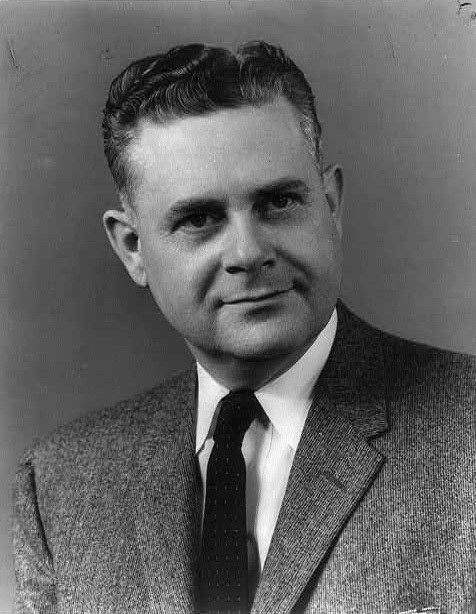
Walter Moeller
Former U.S. Representative · Ohio District 10 · 1959–1967 · Democratic
Walter Moeller represented Ohio's District 10 in the United States House of Representatives (1959–1967) for the Democratic party. The page below collects sourced biographical facts, term history, committee roles, and provenance for Moeller.
Bioguide ID: M000836
Key facts
- Full name
- Walter Moeller
- State
- Ohio
- District
- District 10
- Party
- Democratic
- House service
- 1959–1967
- First House term
- 1959
- Status
- Left office
- Current term ends
- —
- Born
- 1910
- Bioguide ID
- M000836
- Committee assignments
- —
- Dataset version
- 1.20260605
Biographical narrative
892 words · sourced from the Wikipedia REST extract
Walter Moeller was an American politician and pastor who served as a U.S. Representative for Ohio's 10th congressional district from 1959 to 1967. A member of the Democratic Party, Moeller's congressional career spanned three terms, during which he participated in significant legislative activities in the House of Representatives. His background as a pastor informed his political perspective and community engagement, contributing to his approach to governance and public service.
Early life and career
Walter Henry Moeller was born on March 15, 1910, in New Palestine, Indiana. His early life in Indiana laid the foundation for his future endeavors, both in religious service and politics. In 1935, he began his formal education in theology by entering a Lutheran seminary. This decision marked the beginning of a lifelong commitment to pastoral work, which he pursued throughout the 1940s and beyond. His experiences as a pastor not only shaped his values but also provided him with a deep understanding of the social issues affecting his community.
Moeller's pastoral career was characterized by his dedication to serving others, which would later influence his political career. He became actively involved in his local community, engaging with various social and civic issues. His work in the church allowed him to connect with constituents on a personal level, fostering relationships that would prove beneficial during his political career. By the 1950s, Moeller had transitioned into the political arena, seeking to address the needs of his community through legislative action.
House tenure
Walter Moeller's political career in the U.S. House of Representatives began in 1959 when he was elected to represent Ohio's 10th congressional district. He served during the 86th, 87th, and 89th Congresses, completing a total of three terms in office. His tenure in Congress was marked by a commitment to the Democratic Party's principles and a focus on issues pertinent to his constituents in Ohio.
During his time in the House, Moeller participated in various legislative activities and discussions that shaped national policy. His background as a pastor likely influenced his approach to governance, emphasizing compassion and community welfare. Moeller's political career was characterized by a desire to improve the lives of those he represented, reflecting the values he upheld as a religious leader.
Moeller's congressional service included two distinct periods: his first term lasted from 1959 to 1963, followed by a second period from 1965 to 1967. This gap in service was not uncommon during that era, as political dynamics shifted and new candidates emerged. Despite the interruption in his congressional service, Moeller remained engaged in political activities and continued to advocate for his constituents.
His re-election in 1965 demonstrated his sustained support within the community, as he returned to the House to continue his legislative work. Throughout his time in Congress, Moeller focused on various issues that were relevant to his district and aligned with the Democratic Party's agenda. His legislative efforts were part of a broader movement during the 1960s, a decade marked by significant social and political change in the United States.
Legislative focus and committees
During his tenure in the House of Representatives, Walter Moeller was involved in a range of legislative initiatives that reflected his commitment to the needs of his constituents and the Democratic Party's platform. While specific details about the bills he sponsored or supported are not provided, it can be inferred that his background as a pastor and community leader informed his legislative priorities. Issues such as education, healthcare, and social welfare were likely central to his focus, given his commitment to serving the public and addressing the needs of vulnerable populations.
Moeller's experience in the church may have also influenced his views on social justice and community support, which were critical themes during the 1960s. The era was characterized by movements advocating for civil rights, economic equity, and social reform, and Moeller's legislative efforts would have been shaped by these broader societal changes. His participation in the House during this transformative period allowed him to contribute to discussions and decisions that impacted the lives of many Americans.
In addition to his legislative work, Moeller was likely involved in various committees that aligned with his interests and expertise. While specific committee assignments are not detailed, it is common for members of Congress to serve on committees that address issues relevant to their constituents and areas of focus. These committees play a crucial role in shaping legislation and overseeing government functions, providing a platform for representatives to advocate for their priorities.
After leaving Congress in 1967, Moeller continued to engage in public service through various roles. He served as an assistant to the education director of NASA, where he contributed to educational initiatives and programs. This position reflected his ongoing commitment to education and community development, areas that were likely important to him throughout his career.
Walter Moeller's life and career were marked by a dedication to public service, both as a pastor and as a politician. His experiences in the church and his time in Congress allowed him to advocate for the needs of his community and contribute to the legislative process during a significant period in American history. Moeller passed away on April 13, 1999, in Santa Barbara, California, at the age of 89. His legacy as a public servant and community leader continues to be remembered by those who were impacted by his work.
Notable legislation
Sponsored and co-sponsored legislation for Walter Moeller is pending operator curation. The biographical narrative above carries the same provenance trail until per-bill rows are written.
Sources
- [1]https://en.wikipedia.org/wiki/Walter_H._MoellerWikipedia · retrieved 2026-06-05
Notable quotes
Sourced quotes for Walter Moeller are pending operator curation. Narrative-scope provenance remains attached below.
Sources
- [1]https://en.wikipedia.org/wiki/Walter_H._MoellerWikipedia · retrieved 2026-06-05
Key positions
Curated policy positions for Walter Moeller are pending operator review. The biographical narrative above carries the same provenance trail until per-topic positions are written.
Sources
- [1]https://en.wikipedia.org/wiki/Walter_H._MoellerWikipedia · retrieved 2026-06-05
Terms served
- 1959–1961U.S. House · Term 1 · Democratic
- 1961–1963U.S. House · Term 2 · Democratic
- 1965–1967U.S. House · Term 3 · Democratic
Sources & provenance
Every attributable claim above carries a per-section [N] marker that resolves to the corresponding URL below. Each entry records the upstream provider, the canonical URL, and the timestamp at which the source was retrieved by the ingest pipeline.
Key facts
- https://bioguide.congress.gov/search/bio/M000836bioguide · retrieved 2026-06-05
- https://www.govtrack.us/congress/members/407810govtrack · retrieved 2026-06-05
Biographical narrative
- https://en.wikipedia.org/wiki/Walter_H._Moellerwikipedia · retrieved 2026-06-05
Find your representative
Every U.S. state elects representatives by district. Browse Ohio’s delegation, the full former-representative roster, or explore the role and term length.
Related on The Candidate
- Preceded by Thomas JenkinsEarlier holder of the Ohio District 10 House seat · Republican.Open
- Succeeded by Clarence MillerLater holder of the Ohio District 10 House seat · Republican.Open
- Aaron PerryFormer U.S. Representative · Ohio District 1 · RepublicanOpen
- Alexander DuncanFormer U.S. Representative · Ohio District 1 · DemocraticOpen
- Bellamy StorerFormer U.S. Representative · Ohio District 1 · WhigOpen
- Bellamy StorerFormer U.S. Representative · Ohio District 1 · RepublicanOpen