
Historical · U.S. House · Ohio · District 8
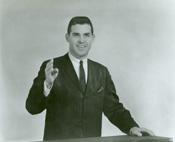
Donald Lukens
Former U.S. Representative · Ohio District 8 · 1967–1991 · Republican
Donald Lukens represented Ohio's District 8 in the United States House of Representatives (1967–1991) for the Republican party. The page below collects sourced biographical facts, term history, committee roles, and provenance for Lukens.
Bioguide ID: L000509
Key facts
- Full name
- Donald Lukens
- State
- Ohio
- District
- District 8
- Party
- Republican
- House service
- 1967–1991
- First House term
- 1967
- Status
- Left office
- Current term ends
- —
- Born
- 1931
- Bioguide ID
- L000509
- Committee assignments
- —
- Dataset version
- 1.20260605
Biographical narrative
947 words · sourced from the Wikipedia REST extract
Donald E. Lukens was an American politician and member of the Republican Party who served as a U.S. Representative from Ohio's 8th congressional district. His congressional career spanned from 1967 to 1971 and then again from 1987 to 1991. Lukens's political journey was marked by significant achievements, as well as controversies that ultimately led to his resignation from Congress. His life and career reflect a complex narrative of public service, legal troubles, and personal challenges.
Early life and career
Donald Edgar "Buz" Lukens was born on February 11, 1931, in Harveysburg, Ohio. He grew up in a small town environment, attending local schools in Harveysburg before graduating from high school in Waynesville, Ohio. Following his secondary education, Lukens pursued higher education at Ohio State University in Columbus, where he earned a bachelor's degree in 1954. His academic achievements laid the groundwork for his future endeavors in both public service and politics.
After completing his education, Lukens joined the United States Air Force, where he served for six-and-a-half years, ultimately attaining the rank of captain. His military service not only provided him with discipline and leadership skills but also instilled in him a sense of civic duty that would later influence his political career. After his active duty, he remained in the Air Force Reserve, which allowed him to continue his commitment to service while transitioning into civilian life.
In 1961, Lukens began his political career by accepting a position as minority counsel for the Republican staff of the House Rules Committee. This role provided him with valuable experience in legislative processes and an understanding of the inner workings of Congress. His involvement in the Republican Party deepened during this time, and he became president of the national Young Republicans in the early 1960s, further establishing his political credentials and network.
House tenure
Lukens's political career took a significant turn in 1966 when he successfully ran for a seat in the United States House of Representatives, representing Ohio's 8th congressional district. He defeated the incumbent Democrat James H. Pelley in the election, marking the beginning of his first term in Congress, which commenced in January 1967 during the 90th Congress. His initial tenure was characterized by a commitment to his constituents and active participation in legislative discussions.
In 1968, Lukens won re-election, defeating Democrat Lloyd D. Miller, which solidified his position in the House. However, he chose not to seek a third consecutive term in 1970, opting instead to run for the governorship of Ohio. This decision ultimately did not yield success, as he was defeated in the Republican primary by Roger Cloud, who subsequently lost in the general election to Democrat John J. Gilligan.
Following his unsuccessful gubernatorial bid, Lukens was appointed to the Ohio State Senate, where he served from 1971 until 1986. This period allowed him to continue his political career at the state level, gaining further experience in governance and policy-making. In 1986, he sought to reclaim his former congressional seat after Tom Kindness, the incumbent, decided to run for the U.S. Senate. Lukens won the Republican primary and subsequently defeated perennial Democratic candidate John W. Griffin, returning to Congress in 1987 for his second stint, which began with the 101st Congress.
During his time in the House, Lukens was known for his alignment with the Republican Party's policies and initiatives, particularly during a period of significant political change in the United States. His support for California Governor Ronald Reagan's campaign for the Republican presidential nomination in 1968 highlighted his commitment to the party's conservative values.
Legislative focus and committees
Throughout his congressional tenure, Lukens was involved in various legislative initiatives and served on multiple committees. His experience as minority counsel for the House Rules Committee likely influenced his understanding of legislative procedures and his ability to navigate complex policy discussions. However, specific details regarding the committees he served on or the legislation he championed during his time in Congress are not extensively documented.
Lukens's political career, however, was overshadowed by personal controversies that began to emerge in the late 1980s. In February 1989, a television station captured him in a compromising situation, leading to serious allegations regarding his conduct with a minor. He faced charges of contributing to the delinquency of a minor, stemming from accusations that he had engaged in a sexual relationship with a 16-year-old girl. The situation escalated, resulting in a conviction for contributing to the unruliness of a minor, which culminated in a jail sentence and mandated participation in sex offender programs.
Despite the gravity of these allegations, Lukens initially resisted calls to resign from his congressional seat. However, the political fallout from his actions ultimately led to his defeat in the 1990 Republican primary, which was a significant contest in his heavily Republican district. Following this loss, the House Ethics Committee began investigating further allegations of misconduct, including accusations of inappropriate behavior towards a Capitol elevator operator. Recognizing the untenability of his position, Lukens resigned from Congress in October 1990.
His legal troubles did not end with his resignation. In 1995, he was charged with bribery and conspiracy related to actions taken during his time in Congress, specifically involving a bribe of $15,000. He was convicted in 1996 and sentenced to 30 months in prison, further tarnishing his legacy as a public servant.
Lukens's personal life included a marriage to Toshiko Shirley Jane Davis in 1973, although the couple divorced in 1983. He passed away on May 22, 2010, in Dallas, Texas, after battling cancer. His life story serves as a complex reflection of a political career marked by both public service and significant personal challenges, illustrating the multifaceted nature of political life in America.
Notable legislation
Sponsored and co-sponsored legislation for Donald Lukens is pending operator curation. The biographical narrative above carries the same provenance trail until per-bill rows are written.
Sources
- [1]https://en.wikipedia.org/wiki/Buz_LukensWikipedia · retrieved 2026-06-05
Notable quotes
Sourced quotes for Donald Lukens are pending operator curation. Narrative-scope provenance remains attached below.
Sources
- [1]https://en.wikipedia.org/wiki/Buz_LukensWikipedia · retrieved 2026-06-05
Key positions
Curated policy positions for Donald Lukens are pending operator review. The biographical narrative above carries the same provenance trail until per-topic positions are written.
Sources
- [1]https://en.wikipedia.org/wiki/Buz_LukensWikipedia · retrieved 2026-06-05
Terms served
- 1967–1969U.S. House · Term 1 · Republican
- 1969–1971U.S. House · Term 2 · Republican
- 1987–1989U.S. House · Term 3 · Republican
- 1989–1991U.S. House · Term 4 · Republican
Sources & provenance
Every attributable claim above carries a per-section [N] marker that resolves to the corresponding URL below. Each entry records the upstream provider, the canonical URL, and the timestamp at which the source was retrieved by the ingest pipeline.
Key facts
- https://bioguide.congress.gov/search/bio/L000509bioguide · retrieved 2026-06-05
- https://www.govtrack.us/congress/members/406995govtrack · retrieved 2026-06-05
Biographical narrative
- https://en.wikipedia.org/wiki/Buz_Lukenswikipedia · retrieved 2026-06-05
Find your representative
Every U.S. state elects representatives by district. Browse Ohio’s delegation, the full former-representative roster, or explore the role and term length.
Related on The Candidate
- Preceded by Frederick SmithEarlier holder of the Ohio District 8 House seat · Republican.Open
- Succeeded by John BoehnerLater holder of the Ohio District 8 House seat · Republican.Open
- Aaron PerryFormer U.S. Representative · Ohio District 1 · RepublicanOpen
- Alexander DuncanFormer U.S. Representative · Ohio District 1 · DemocraticOpen
- Bellamy StorerFormer U.S. Representative · Ohio District 1 · WhigOpen
- Bellamy StorerFormer U.S. Representative · Ohio District 1 · RepublicanOpen