
Historical · U.S. House · Oklahoma · District 1
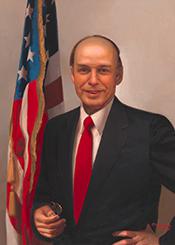
James Jones
Former U.S. Representative · Oklahoma District 1 · 1973–1987 · Democratic
James Jones represented Oklahoma's District 1 in the United States House of Representatives (1973–1987) for the Democratic party. The page below collects sourced biographical facts, term history, committee roles, and provenance for Jones.
Bioguide ID: J000232
Key facts
- Full name
- James Jones
- State
- Oklahoma
- District
- District 1
- Party
- Democratic
- House service
- 1973–1987
- First House term
- 1973
- Status
- Left office
- Current term ends
- —
- Born
- 1939
- Bioguide ID
- J000232
- Committee assignments
- —
- Dataset version
- 1.20260605
Biographical narrative
961 words · sourced from the Wikipedia REST extract
James R. Jones is a former U.S. Representative from Oklahoma's 1st congressional district, serving as a member of the Democratic Party. His congressional career spanned from 1973 until 1987, during which he was elected to seven consecutive terms. In addition to his legislative work, Jones has held significant positions in both the legal and diplomatic fields, including serving as the U.S. Ambassador to Mexico under President Bill Clinton.
Early life and career
James R. Jones was born on May 5, 1939, in Muskogee, Oklahoma. His early involvement in politics began at a young age; by the age of 12, he was actively campaigning for Ed Edmondson, who was then running for a congressional seat. This early exposure to political processes would shape his future career in public service. Jones pursued higher education at the University of Oklahoma, where he earned a Bachelor of Arts degree in 1961. During his time at the university, he was a member of the Lambda Chi Alpha fraternity, which contributed to his social and leadership development.
Following his undergraduate studies, Jones attended Georgetown University Law Center in Washington, D.C., where he obtained his LL.B. in 1964. His legal career commenced shortly thereafter, as he was admitted to the Oklahoma bar the same year. In addition to his legal practice, Jones served in the U.S. Army Reserve from 1961 to 1968, including a period in the Army Counterintelligence Corps, where he attained the rank of captain from 1964 to 1965.
Jones's political career began in earnest when he took on the role of legislative assistant to Congressman Ed Edmondson from 1961 to 1964. This position provided him with valuable insights into the legislative process and helped him build a network within political circles. In 1965, he transitioned to the White House, serving as the Appointments Secretary to President Lyndon B. Johnson. At the time, he was the youngest individual to hold this influential position, which involved significant responsibilities in managing presidential appointments.
After Johnson's presidency, Jones returned to Oklahoma, where he resumed his law practice in Tulsa. His political ambitions led him to run for Congress in 1970 against the long-serving Republican incumbent Page Belcher. Although he did not win that election, he garnered a notable share of the vote, indicating his potential as a serious contender in future races.
House tenure
In 1972, Jones successfully ran for Oklahoma's 1st congressional district, defeating his opponent by a margin that was considered significant given the political landscape of the time. His victory was particularly noteworthy as he became the first Democrat to represent Tulsa in Congress since 1951. Over the course of his seven terms in the House, which concluded in January 1987, Jones was re-elected six times, demonstrating his sustained support among constituents.
During his tenure, Jones served on several important committees, including the Ways and Means Committee, where he played a role in shaping tax policy. In 1978, he was instrumental in securing House approval for a conservative tax cut, reflecting his ability to work across party lines on fiscal matters. In 1979, he joined the House Budget Committee, where he advocated for the inclusion of more fiscally conservative members, thereby influencing the direction of budgetary policies.
Jones's leadership capabilities were recognized when he served as Chairman of the House Budget Committee for four years. In this role, he was involved in critical discussions regarding federal budget priorities and fiscal responsibility. His experience and insights were valuable during a time when budgetary issues were increasingly complex and contentious.
In 1986, Jones made the decision to run for the U.S. Senate against Republican incumbent Don Nickles. This move came after a narrow victory in his previous House election against future Oklahoma Governor Frank Keating. Despite his efforts, Jones lost the Senate race by a margin of ten points, concluding his direct involvement in congressional politics.
Legislative focus and committees
Throughout his congressional career, Jones focused on various legislative issues, particularly those related to fiscal policy and budgeting. His work on the Ways and Means Committee allowed him to engage with tax legislation, where he advocated for tax cuts that aligned with his party's goals while also appealing to a broader constituency. His ability to navigate complex tax issues demonstrated his understanding of economic principles and the impact of fiscal policy on constituents.
As a member of the House Budget Committee, Jones contributed to discussions on federal spending and budgetary allocations. His chairmanship of the committee provided him with a platform to influence budgetary priorities and advocate for responsible fiscal management. His tenure in this role coincided with significant economic challenges, and he worked to address these issues through legislative measures.
Jones's political career extended beyond his time in Congress. After leaving the House, he resumed his legal practice and took on leadership roles in various organizations. Notably, he served as the Chairman of the American Stock Exchange from 1989 to 1993. Following the election of President Bill Clinton, Jones was appointed as the U.S. Ambassador to Mexico, where he served from 1993 until 1997. His diplomatic experience further enriched his understanding of international relations and trade, particularly in the context of U.S.-Mexico relations.
In addition to his legal and diplomatic endeavors, Jones has remained active in civic and political organizations. He has served on the board of directors of the Committee for a Responsible Federal Budget and has been involved with the Mexico Institute, reflecting his ongoing commitment to public service and policy advocacy.
James R. Jones's career has been marked by significant contributions to both legislative and diplomatic spheres, and he continues to be recognized for his service in various capacities. His legacy includes a focus on fiscal responsibility, effective governance, and international diplomacy, which have shaped his professional journey and public impact.
Notable legislation
Sponsored and co-sponsored legislation for James Jones is pending operator curation. The biographical narrative above carries the same provenance trail until per-bill rows are written.
Sources
- [1]https://en.wikipedia.org/wiki/James_R._JonesWikipedia · retrieved 2026-06-05
Notable quotes
Sourced quotes for James Jones are pending operator curation. Narrative-scope provenance remains attached below.
Sources
- [1]https://en.wikipedia.org/wiki/James_R._JonesWikipedia · retrieved 2026-06-05
Key positions
Curated policy positions for James Jones are pending operator review. The biographical narrative above carries the same provenance trail until per-topic positions are written.
Sources
- [1]https://en.wikipedia.org/wiki/James_R._JonesWikipedia · retrieved 2026-06-05
Terms served
- 1973–1975U.S. House · Term 1 · Democratic
- 1975–1977U.S. House · Term 2 · Democratic
- 1977–1979U.S. House · Term 3 · Democratic
- 1979–1981U.S. House · Term 4 · Democratic
- 1981–1983U.S. House · Term 5 · Democratic
- 1983–1985U.S. House · Term 6 · Democratic
- 1985–1987U.S. House · Term 7 · Democratic
Sources & provenance
Every attributable claim above carries a per-section [N] marker that resolves to the corresponding URL below. Each entry records the upstream provider, the canonical URL, and the timestamp at which the source was retrieved by the ingest pipeline.
Key facts
- https://bioguide.congress.gov/search/bio/J000232bioguide · retrieved 2026-06-05
- https://www.govtrack.us/congress/members/406125govtrack · retrieved 2026-06-05
Biographical narrative
- https://en.wikipedia.org/wiki/James_R._Joneswikipedia · retrieved 2026-06-05
Find your representative
Every U.S. state elects representatives by district. Browse Oklahoma’s delegation, the full former-representative roster, or explore the role and term length.
Related on The Candidate
- Preceded by Page BelcherEarlier holder of the Oklahoma District 1 House seat · Republican.Open
- Succeeded by Steve LargentLater holder of the Oklahoma District 1 House seat · Republican.Open
- Bird McGuireFormer U.S. Representative · Oklahoma District 1 · RepublicanOpen
- Charles O’ConnorFormer U.S. Representative · Oklahoma District 1 · RepublicanOpen
- Dixie GilmerFormer U.S. Representative · Oklahoma District 1 · DemocraticOpen
- Everette HowardFormer U.S. Representative · Oklahoma District 1 · DemocraticOpen