
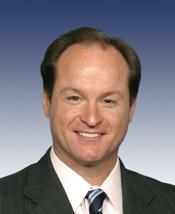
Historical · U.S. House · Oklahoma · District 1
John Sullivan
Former U.S. Representative · Oklahoma District 1 · 2002–2013 · Republican
John Sullivan represented Oklahoma's District 1 in the United States House of Representatives (2002–2013) for the Republican party. The page below collects sourced biographical facts, term history, committee roles, and provenance for Sullivan.
Bioguide ID: S001155
Key facts
- Full name
- John Sullivan
- State
- Oklahoma
- District
- District 1
- Party
- Republican
- House service
- 2002–2013
- First House term
- 2002
- Status
- Left office
- Current term ends
- —
- Born
- 1965
- Bioguide ID
- S001155
- Committee assignments
- —
- Dataset version
- 1.20260605
Biographical narrative
895 words · sourced from the Wikipedia REST extract
John Sullivan is a former U.S. Representative who served Oklahoma's 1st congressional district from 2002 until 2013. A member of the Republican Party, Sullivan was elected to Congress following the resignation of incumbent Steve Largent. Throughout his tenure, he was involved in various legislative initiatives and held leadership positions within the House Republican caucus. Sullivan's political career was marked by his conservative stance on numerous issues, as well as a notable defeat in the 2012 Republican primary.
Early life and career
John Alfred Sullivan was born on January 1, 1965, in Oklahoma City, Oklahoma. He completed his secondary education at Bishop Kelley High School in Tulsa, Oklahoma. Following high school, Sullivan pursued higher education at Northeastern State University, where he earned a Bachelor of Business Administration degree with a focus on marketing in 1992. Before entering politics, Sullivan gained experience in the private sector, working as a regional sales manager for Love Travel Centers and as a fleet manager for BAMA Transportation.
Sullivan's political career began in the Oklahoma House of Representatives, where he served from 1995 until 2002. During his time in the state legislature, he held the position of minority whip, which involved assisting in party leadership and strategy. This role provided him with valuable experience in legislative processes and party dynamics, laying the groundwork for his future congressional career.
House tenure
Sullivan was first elected to the U.S. House of Representatives in a special election in 2002, following the resignation of Steve Largent, who left Congress to run for governor. Initially viewed as a long-shot candidate, Sullivan gained momentum by securing a significant lead in the primary election, which prompted his opponent, Cathy Keating, to withdraw from the runoff. He subsequently became the Republican nominee and won the general election against Democratic candidate Doug Dodd with a margin of 54 to 44 percent.
Throughout his six terms in Congress, Sullivan faced various challenges and controversies. During the 2004 election cycle, his past police record came to light, revealing multiple arrests from his youth, including incidents of public intoxication and assault. Despite these revelations, he continued to serve in Congress, where he was known for his conservative voting record.
Sullivan was an active participant in significant legislative matters during his time in office. He was a supporter of the PATRIOT Act, voting to make it permanent without provisions for future Congressional review. He also served as an Assistant Minority Whip under House Minority Whip Roy Blunt and later under Republican Whip Kevin McCarthy during the 110th, 111th, and 112th Congresses.
In 2008, Sullivan voted in favor of the Emergency Economic Stabilization Act, which established the Troubled Assets Relief Program (TARP). However, he later opposed a bailout for the automobile industry, articulating his belief that taxpayers should not be responsible for subsidizing failing businesses. Sullivan was also involved in the Tea Party movement, which emerged during his tenure, and he participated in rallies that criticized government bailouts.
In 2010, Sullivan was appointed vice chairman of the Subcommittee on Energy and Power within the House Energy and Commerce Committee. His legislative initiatives included sponsoring the New Alternative Transportation to Give America Solutions (NAT GAS) Act of 2011, aimed at promoting natural gas vehicles to reduce dependence on foreign oil. He also introduced legislation to assess the economic impact of Environmental Protection Agency (EPA) regulations and supported amendments to restrict certain EPA actions.
Despite his conservative credentials, Sullivan faced criticism for a controversial remark made during a town hall meeting in 2012, where he suggested that violence might be necessary to pass a particular budget proposal. Following backlash, he issued an apology through a spokesperson.
In June 2012, Sullivan was defeated in the Republican primary by Jim Bridenstine, marking the end of his congressional career. His loss was considered a significant upset, as he had been a prominent figure within the party.
Legislative focus and committees
During his tenure in the House of Representatives, Sullivan was known for his strong conservative stance on various issues. He consistently received high ratings from conservative organizations, including a 100% rating from the American Conservative Union in 2009 and 2010, which earned him the "Defender of Liberty" award from the organization in both years. Sullivan's positions included opposition to legalized abortion, belief in the sanctity of life from conception, and a strong stance against gun control, earning endorsements from the National Rifle Association (NRA) Political Victory Fund.
Sullivan was also an advocate for a constitutional amendment to ban flag burning and sought to limit the judiciary's authority over matters related to the Pledge of Allegiance. His views on civil rights were notably conservative, as evidenced by a 0% rating from the American Civil Liberties Union (ACLU). He supported continued U.S. military involvement in Iraq and opposed rapid troop withdrawals.
Throughout his congressional career, Sullivan served on the Committee on Energy and Commerce, where he was involved in various subcommittees, including the Subcommittee on Energy and Power, where he held the position of vice chair. His legislative efforts often focused on energy policy, regulatory reform, and economic issues related to environmental regulations.
Sullivan's career in the U.S. House of Representatives was characterized by a commitment to conservative principles and active participation in significant legislative debates. His tenure concluded in 2013, following his defeat in the primary election, marking the end of a notable chapter in Oklahoma's political landscape.
Notable legislation
Sponsored and co-sponsored legislation for John Sullivan is pending operator curation. The biographical narrative above carries the same provenance trail until per-bill rows are written.
Sources
- [1]https://en.wikipedia.org/wiki/John_Sullivan_(Oklahoma_politician)Wikipedia · retrieved 2026-06-05
Notable quotes
Sourced quotes for John Sullivan are pending operator curation. Narrative-scope provenance remains attached below.
Sources
- [1]https://en.wikipedia.org/wiki/John_Sullivan_(Oklahoma_politician)Wikipedia · retrieved 2026-06-05
Key positions
Curated policy positions for John Sullivan are pending operator review. The biographical narrative above carries the same provenance trail until per-topic positions are written.
Sources
- [1]https://en.wikipedia.org/wiki/John_Sullivan_(Oklahoma_politician)Wikipedia · retrieved 2026-06-05
Terms served
- 2002–2003U.S. House · Term 1 · Republican
- 2003–2005U.S. House · Term 2 · Republican
- 2005–2007U.S. House · Term 3 · Republican
- 2007–2009U.S. House · Term 4 · Republican
- 2009–2011U.S. House · Term 5 · Republican
- 2011–2013U.S. House · Term 6 · Republican
Sources & provenance
Every attributable claim above carries a per-section [N] marker that resolves to the corresponding URL below. Each entry records the upstream provider, the canonical URL, and the timestamp at which the source was retrieved by the ingest pipeline.
Key facts
- https://bioguide.congress.gov/search/bio/S001155bioguide · retrieved 2026-06-05
- http://www.house.gov/sullivanhouse.gov · retrieved 2026-06-05
Biographical narrative
- https://en.wikipedia.org/wiki/John_Sullivan_(Oklahoma_politician)wikipedia · retrieved 2026-06-05
Find your representative
Every U.S. state elects representatives by district. Browse Oklahoma’s delegation, the full former-representative roster, or explore the role and term length.
Related on The Candidate
- Preceded by Steve LargentEarlier holder of the Oklahoma District 1 House seat · Republican.Open
- Succeeded by Jim BridenstineLater holder of the Oklahoma District 1 House seat · Republican.Open
- Bird McGuireFormer U.S. Representative · Oklahoma District 1 · RepublicanOpen
- Charles O’ConnorFormer U.S. Representative · Oklahoma District 1 · RepublicanOpen
- Dixie GilmerFormer U.S. Representative · Oklahoma District 1 · DemocraticOpen
- Everette HowardFormer U.S. Representative · Oklahoma District 1 · DemocraticOpen