
Historical · U.S. House · Oklahoma · District 2
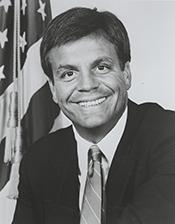
Michael Synar
Former U.S. Representative · Oklahoma District 2 · 1979–1995 · Democratic
Michael Synar represented Oklahoma's District 2 in the United States House of Representatives (1979–1995) for the Democratic party. The page below collects sourced biographical facts, term history, committee roles, and provenance for Synar.
Bioguide ID: S001139
Key facts
- Full name
- Michael Synar
- State
- Oklahoma
- District
- District 2
- Party
- Democratic
- House service
- 1979–1995
- First House term
- 1979
- Status
- Left office
- Current term ends
- —
- Born
- 1950
- Bioguide ID
- S001139
- Committee assignments
- —
- Dataset version
- 1.20260605
Biographical narrative
1,114 words · sourced from the Wikipedia REST extract
Michael Lynn Synar was an American politician and member of the Democratic Party who served as a U.S. Representative for Oklahoma's 2nd congressional district from 1979 until 1995. Known for his liberal views in a predominantly conservative state, Synar's congressional career spanned eight terms, during which he became recognized for his advocacy on various issues, including environmental policy and tobacco regulation. His tenure in Congress was marked by significant legislative efforts and a notable Supreme Court case that underscored his commitment to constitutional principles.
Early life and career
Mike Synar was born on October 17, 1950, in Vinita, Oklahoma. He grew up in a family with a military background; his father, Ed Synar, served as a B-24 tailgunner during World War II in Europe. The Synar family has Polish Catholic roots, which influenced Mike's upbringing. He completed his secondary education at Muskogee High School, graduating in 1968. Following high school, Synar pursued higher education at the University of Oklahoma, where he earned a Bachelor of Science degree in 1972. His academic journey continued at the University of Oklahoma College of Law, where he obtained his Juris Doctor degree in 1977.
During his time at the University of Oklahoma, Synar was actively involved in student government and legislative affairs, participating in the Oklahoma Intercollegiate Legislature. His educational pursuits also included an international experience as a Rotary International Scholar at the University of Edinburgh in Scotland in 1973, where he studied economics. He later earned a Master of Arts degree from Northwestern University in 1974.
Before entering politics, Synar practiced law and engaged in various business ventures, including ranching and real estate brokerage in the Muskogee area. His diverse professional background provided him with a unique perspective on the issues facing his constituents in Oklahoma.
House tenure
Synar's political career began when he was elected to the U.S. House of Representatives in 1978 at the age of 28, defeating the incumbent Ted Risenhoover in a surprising upset. His campaign was notable for its effective use of media, including a report that highlighted Risenhoover's unconventional sleeping arrangements, which resonated poorly with voters in Oklahoma. Synar's victory marked the beginning of an eight-term tenure in Congress, during which he became known for his liberal stance on various issues, distinguishing himself from many of his Oklahoma Democratic colleagues.
Throughout his time in Congress, Synar was involved in several high-profile legislative efforts. He is perhaps best remembered for his role in the landmark Supreme Court case Bowsher v. Synar, which addressed the constitutionality of the Gramm-Rudman Act. The Court ultimately ruled that the law violated the Constitution by granting executive powers to a legislative officer, reinforcing the principle of separation of powers within the federal government.
Synar was also a vocal opponent of the tobacco industry, advocating for public health measures aimed at reducing tobacco use. His commitment to health issues extended to his work on environmental policies, particularly concerning the management of public lands. He raised concerns about the low grazing fees charged to ranchers, arguing that these fees amounted to a federal subsidy that disproportionately benefited large corporations. In collaboration with Interior Secretary Bruce Babbitt, Synar sought to increase these fees, although his efforts faced significant opposition from senators representing Western states.
In addition to his legislative work, Synar played a crucial role in the impeachment trial of federal judge Alcee Hastings in 1989. Despite lacking experience in criminal prosecution, he served as the lead House manager during the trial, which culminated in Hastings' removal from the bench on bribery charges. Hastings later returned to public service as a member of Congress from Florida, where he achieved significant longevity in office.
Another significant aspect of Synar's congressional career was his chairmanship of the Environment, Energy, and Natural Resources Subcommittee. Under his leadership, the committee produced the "Synar Report," formally titled "Misplaced Trust: The Bureau of Indian Affairs Mismanagement of the Indian Trust Fund." This report, released in 1992, highlighted serious mismanagement issues within the Bureau of Indian Affairs and ultimately contributed to the passage of the Indian Trust Fund Management Reform Act of 1994.
In 1994, Synar faced a challenging primary election, where he was narrowly defeated by Virgil Cooper, a retired high school principal. Despite his long tenure and previous successes, Synar's connections with certain industries, including Japanese businesses, were leveraged against him by his opponent. Cooper's campaign, which received support from outside interests opposed to Synar, resulted in a close electoral outcome.
Legislative focus and committees
During his time in the House of Representatives, Mike Synar focused on a range of legislative issues that reflected his commitment to social justice, environmental protection, and public health. His liberal stance on various topics set him apart from many of his colleagues in Oklahoma, allowing him to advocate for progressive policies in a challenging political landscape.
One of Synar's most notable legislative achievements was his successful challenge to the Gramm-Rudman Act, which aimed to reduce the federal budget deficit through automatic spending cuts. The Supreme Court's ruling in Bowsher v. Synar not only invalidated key provisions of the law but also reinforced the importance of maintaining a clear separation of powers among the branches of government. This case remains a significant part of his legacy in Congress.
Synar's work on environmental issues was particularly focused on the management of public lands and the fees associated with grazing rights. He argued that the low fees charged to ranchers were unfair and constituted a subsidy that benefitted large corporations at the expense of taxpayers and the environment. His efforts to raise these fees were part of a broader commitment to environmental stewardship and sustainable land use.
In addition to his environmental advocacy, Synar was a staunch opponent of the tobacco industry, working to implement policies that would reduce tobacco use and promote public health. His dedication to this cause was recognized posthumously when the American College of Physicians established a national public service award in his honor, acknowledging his efforts to combat tobacco smoking.
After leaving Congress, Synar continued to engage in public service and advocacy, serving as the Chairman of the Campaign for America Project and the National Bankruptcy Review Commission. His contributions to public life were recognized with the John F. Kennedy Profile in Courage Award in 1995, reflecting his commitment to principled leadership.
Mike Synar passed away on January 9, 1996, at the age of 45 due to a brain tumor. His legacy continues to be honored through various awards and institutions named in his memory, including the Mike Synar Center at Northeastern State University in Muskogee, Oklahoma, and fellowships awarded by the Institute of Governmental Studies at UC Berkeley for research in American politics.
Notable legislation
Sponsored and co-sponsored legislation for Michael Synar is pending operator curation. The biographical narrative above carries the same provenance trail until per-bill rows are written.
Sources
- [1]https://en.wikipedia.org/wiki/Mike_SynarWikipedia · retrieved 2026-06-05
Notable quotes
Sourced quotes for Michael Synar are pending operator curation. Narrative-scope provenance remains attached below.
Sources
- [1]https://en.wikipedia.org/wiki/Mike_SynarWikipedia · retrieved 2026-06-05
Key positions
Curated policy positions for Michael Synar are pending operator review. The biographical narrative above carries the same provenance trail until per-topic positions are written.
Sources
- [1]https://en.wikipedia.org/wiki/Mike_SynarWikipedia · retrieved 2026-06-05
Terms served
- 1979–1981U.S. House · Term 1 · Democratic
- 1981–1983U.S. House · Term 2 · Democratic
- 1983–1985U.S. House · Term 3 · Democratic
- 1985–1987U.S. House · Term 4 · Democratic
- 1987–1989U.S. House · Term 5 · Democratic
- 1989–1991U.S. House · Term 6 · Democratic
- 1991–1993U.S. House · Term 7 · Democratic
- 1993–1995U.S. House · Term 8 · Democratic
Sources & provenance
Every attributable claim above carries a per-section [N] marker that resolves to the corresponding URL below. Each entry records the upstream provider, the canonical URL, and the timestamp at which the source was retrieved by the ingest pipeline.
Key facts
- https://bioguide.congress.gov/search/bio/S001139bioguide · retrieved 2026-06-05
- https://www.govtrack.us/congress/members/410589govtrack · retrieved 2026-06-05
Biographical narrative
- https://en.wikipedia.org/wiki/Mike_Synarwikipedia · retrieved 2026-06-05
Find your representative
Every U.S. state elects representatives by district. Browse Oklahoma’s delegation, the full former-representative roster, or explore the role and term length.
Related on The Candidate
- Preceded by Theodore RisenhooverEarlier holder of the Oklahoma District 2 House seat · Democratic.Open
- Succeeded by Brad CarsonLater holder of the Oklahoma District 2 House seat · Democratic.Open
- Bird McGuireFormer U.S. Representative · Oklahoma District 1 · RepublicanOpen
- Charles O’ConnorFormer U.S. Representative · Oklahoma District 1 · RepublicanOpen
- Dixie GilmerFormer U.S. Representative · Oklahoma District 1 · DemocraticOpen
- Everette HowardFormer U.S. Representative · Oklahoma District 1 · DemocraticOpen