
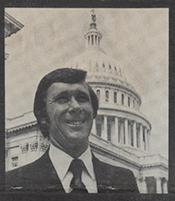
Historical · U.S. House · Oklahoma · District 2
Theodore Risenhoover
Former U.S. Representative · Oklahoma District 2 · 1975–1979 · Democratic
Theodore Risenhoover represented Oklahoma's District 2 in the United States House of Representatives (1975–1979) for the Democratic party. The page below collects sourced biographical facts, term history, committee roles, and provenance for Risenhoover.
Bioguide ID: R000268
Key facts
- Full name
- Theodore Risenhoover
- State
- Oklahoma
- District
- District 2
- Party
- Democratic
- House service
- 1975–1979
- First House term
- 1975
- Status
- Left office
- Current term ends
- —
- Born
- 1934
- Bioguide ID
- R000268
- Committee assignments
- —
- Dataset version
- 1.20260605
Biographical narrative
830 words · sourced from the Wikipedia REST extract
Theodore M. Risenhoover was an American politician and community newspaper publisher who served as a U.S. Representative for Oklahoma's 2nd congressional district from 1975 to 1979. A member of the Democratic Party, Risenhoover's political career was marked by his commitment to addressing local issues and his involvement in community affairs. His tenure in Congress was characterized by a focus on the needs of his constituents in northeastern Oklahoma, where he had deep roots.
Early life and career
Theodore Marshall Risenhoover was born on November 3, 1934, in East Liberty, a small community located in Haskell County, Oklahoma. He completed his secondary education at Stigler High School, graduating in 1952. Following high school, Risenhoover began his professional career at Western Electric, where he worked for three years. In 1955, he enlisted in the United States Air Force, serving for eight years until his discharge in 1963. During his military service, he pursued studies in government and economics at the University of Alabama, which laid the groundwork for his future political endeavors.
After returning to Oklahoma, Risenhoover continued his education and earned a bachelor's degree in business administration from Northeastern State College in Tahlequah in 1965. His involvement in the local community began to take shape during this period. He became associated with the Pictorial Press, a weekly newspaper in Tahlequah, where he served as part owner and president. Under his leadership, the newspaper underwent significant reorganization, and he also acquired the Tahlequah Star-Citizen, further expanding his influence in local media.
Risenhoover was known for his strong stance against organized crime in northeastern Oklahoma. His efforts to combat criminal activities gained him recognition, but they also put him in danger; the Pictorial Press was bombed as a result of his crime-fighting initiatives. His commitment to public safety led to his appointment to the Oklahoma Crime Commission, where he served from 1970 to 1974. In 1974, Risenhoover was a delegate to the Democratic National Mid-term Convention, marking his growing involvement in the political landscape.
House tenure
Risenhoover's political career reached a significant milestone when he was elected to the U.S. House of Representatives in 1974, representing Oklahoma's 2nd congressional district. He officially took office on January 3, 1975. During his two terms in Congress, Risenhoover was involved in various legislative activities and worked to address the concerns of his constituents. His tenure coincided with a period of significant political and social change in the United States, and he sought to navigate these challenges while advocating for the interests of Oklahomans.
Throughout his time in office, Risenhoover focused on issues pertinent to his district, which included economic development, education, and public safety. His background as a newspaper publisher and his experience in community service informed his approach to governance. He aimed to represent the voices of his constituents and address the unique challenges faced by residents of northeastern Oklahoma.
However, Risenhoover's congressional career came to an end after he lost the Democratic nomination for his seat in 1978. His defeat was influenced by various factors, including a controversial article published by The Washington Post that highlighted aspects of his personal life. This article was leveraged by his opponent, Mike Synar, who questioned Risenhoover's judgment in a campaign that ultimately led to his departure from Congress. Risenhoover left office on January 3, 1979, concluding his time in the House after two full terms.
Legislative focus and committees
During his time in the U.S. House of Representatives, Risenhoover served on various committees and was involved in legislative initiatives that reflected his priorities and the needs of his constituents. While specific details about the committees he served on are not provided, it can be inferred that his background in business and community service influenced his legislative focus. He was likely engaged in discussions and decision-making processes related to economic development, education, and public safety, which were critical issues for the residents of his district.
Risenhoover's approach to governance was shaped by his experiences as a community newspaper publisher and his commitment to addressing local concerns. His efforts to combat organized crime and his involvement in the Oklahoma Crime Commission demonstrated his dedication to public safety and community well-being. These experiences likely informed his legislative priorities during his time in Congress.
After leaving office, Risenhoover remained active in Washington, D.C., where he worked at the Pentagon and later for the doorkeeper of the House of Representatives. Eventually, he returned to Oklahoma in the early 1980s, where he sold his newspaper business and continued to engage with the community through various jobs. His life after Congress reflected his ongoing commitment to the people of northeastern Oklahoma.
Theodore M. Risenhoover passed away on September 10, 2006, in Claremore, Oklahoma. He was laid to rest at the Fort Gibson National Cemetery in Fort Gibson, Oklahoma. His legacy as a community leader and public servant continues to be remembered by those who knew him and by the constituents he represented during his time in the U.S. House of Representatives.
Notable legislation
Sponsored and co-sponsored legislation for Theodore Risenhoover is pending operator curation. The biographical narrative above carries the same provenance trail until per-bill rows are written.
Sources
- [1]https://en.wikipedia.org/wiki/Ted_RisenhooverWikipedia · retrieved 2026-06-05
Notable quotes
Sourced quotes for Theodore Risenhoover are pending operator curation. Narrative-scope provenance remains attached below.
Sources
- [1]https://en.wikipedia.org/wiki/Ted_RisenhooverWikipedia · retrieved 2026-06-05
Key positions
Curated policy positions for Theodore Risenhoover are pending operator review. The biographical narrative above carries the same provenance trail until per-topic positions are written.
Sources
- [1]https://en.wikipedia.org/wiki/Ted_RisenhooverWikipedia · retrieved 2026-06-05
Terms served
- 1975–1977U.S. House · Term 1 · Democratic
- 1977–1979U.S. House · Term 2 · Democratic
Sources & provenance
Every attributable claim above carries a per-section [N] marker that resolves to the corresponding URL below. Each entry records the upstream provider, the canonical URL, and the timestamp at which the source was retrieved by the ingest pipeline.
Key facts
- https://bioguide.congress.gov/search/bio/R000268bioguide · retrieved 2026-06-05
- https://www.govtrack.us/congress/members/409242govtrack · retrieved 2026-06-05
Biographical narrative
- https://en.wikipedia.org/wiki/Ted_Risenhooverwikipedia · retrieved 2026-06-05
Find your representative
Every U.S. state elects representatives by district. Browse Oklahoma’s delegation, the full former-representative roster, or explore the role and term length.
Related on The Candidate
- Preceded by Clem McSpaddenEarlier holder of the Oklahoma District 2 House seat · Democratic.Open
- Succeeded by Michael SynarLater holder of the Oklahoma District 2 House seat · Democratic.Open
- Bird McGuireFormer U.S. Representative · Oklahoma District 1 · RepublicanOpen
- Charles O’ConnorFormer U.S. Representative · Oklahoma District 1 · RepublicanOpen
- Dixie GilmerFormer U.S. Representative · Oklahoma District 1 · DemocraticOpen
- Everette HowardFormer U.S. Representative · Oklahoma District 1 · DemocraticOpen