
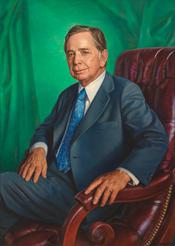
Historical · U.S. House · Oklahoma · District 3
Carl Albert
Former U.S. Representative · Oklahoma District 3 · 1947–1977 · Democratic
Carl Albert represented Oklahoma's District 3 in the United States House of Representatives (1947–1977) for the Democratic party. The page below collects sourced biographical facts, term history, committee roles, and provenance for Albert.
Bioguide ID: A000073
Key facts
- Full name
- Carl Albert
- State
- Oklahoma
- District
- District 3
- Party
- Democratic
- House service
- 1947–1977
- First House term
- 1947
- Status
- Left office
- Current term ends
- —
- Born
- 1908
- Bioguide ID
- A000073
- Committee assignments
- —
- Dataset version
- 1.20260605
Biographical narrative
1,233 words · sourced from the Wikipedia REST extract
Carl Albert was an influential American lawyer and politician who served as a U.S. Representative for Oklahoma's 3rd congressional district from 1947 until 1977. A member of the Democratic Party, he held the position of the 46th Speaker of the United States House of Representatives from 1971 to 1977. Known for his moderate political stance, Albert played a significant role in advancing key legislative initiatives during a transformative period in American history, particularly in areas such as healthcare and civil rights.
Early life and career
Carl Albert was born on May 10, 1908, in McAlester, Oklahoma, to Leona Ann Scott and Ernest Homer Albert, who worked as a coal miner and farmer. Shortly after his birth, the family relocated to Bugtussle, a small community located just north of McAlester. Albert's upbringing in a log cabin on his father's farm shaped his early experiences and values. He demonstrated leadership skills and a talent for public speaking during his high school years, where he excelled in debate, served as student body president, and won a national high school oratorical contest, which earned him a trip to Europe. Additionally, he was active in the local Order of DeMolay chapter and was later inducted into the Order of DeMolay Hall of Fame.
In 1927, Albert enrolled at the University of Oklahoma, where he majored in political science. His academic prowess was evident as he won the National Oratorical Championship in 1928, which also included a trip to Europe. To finance his education, he worked in the college registrar's office and participated in the Reserve Officers' Training Corps (ROTC). During his time at the university, he was involved in various extracurricular activities, including amateur wrestling, and was a member of the Kappa Alpha Order fraternity and the RUF/NEKS. Albert graduated Phi Beta Kappa in 1931, earning recognition as the top male student. He then continued his studies at the University of Oxford on a Rhodes Scholarship, where he obtained a Bachelor of Arts in jurisprudence and a Bachelor of Civil Laws from St. Peter's College in 1934. Upon returning to the United States, he established a law practice in Oklahoma City in 1935 and worked with several oil companies in leasing roles until the onset of World War II.
With the outbreak of the war, Albert enlisted in the United States Army in 1941, initially serving as a private in the 3rd Armored Division. He was soon commissioned as a second lieutenant in the Army Air Forces. During his military service, he married Mary Harmon on August 20, 1942, in Columbia, South Carolina, just before his deployment to the South Pacific. The couple had two children, Mary Frances and David. Albert served in the Judge Advocate General Corps, where he was assigned as a prosecutor for the Far East Air Service Command. His service earned him a Bronze Star Medal and other commendations, and he concluded his military career with the rank of lieutenant colonel in 1946. He continued to serve in the Army Reserve, retiring in 1968 with the rank of colonel.
House tenure
Carl Albert's political career began when he was elected to the U.S. House of Representatives in 1946, marking the start of a lengthy tenure that would span three decades. He was a self-identified Cold War liberal, supporting President Harry S. Truman's policies aimed at containing Soviet expansionism. His legislative priorities included public housing, federal aid to education, and farm price supports. Albert's diligence and effectiveness as a legislator caught the attention of Speaker of the House Sam Rayburn, who invited him to informal meetings and encouraged him to pursue leadership roles within the House. In 1949, he was appointed chairman of the Agriculture Committee, and in 1955, he became House Majority Whip. Following Rayburn's death in 1961, Albert was elected House Majority Leader.
Throughout his congressional career, Albert positioned himself as a political moderate, expressing a distaste for both extreme liberalism and conservatism. He believed in addressing issues based on their specific conditions rather than adhering strictly to ideological frameworks. His leadership in the House was characterized by a focus on advancing the Democratic legislative agenda, particularly in the realm of healthcare.
As Majority Leader, Albert played a pivotal role in the passage of significant legislation, including the Medicare program, which aimed to provide federal hospital insurance for individuals aged 65 and older. Initially proposed by the Kennedy Administration, the Medicare bill faced challenges in garnering sufficient support in Congress. Albert advised the President to pursue Senate passage first, allowing the House to consider the measure as part of a broader welfare bill. Although this initial effort did not succeed, Albert later worked to modify House rules to enhance the Democratic majority's influence under President Lyndon B. Johnson. These changes facilitated the eventual passage of the Medicare bill as part of the Social Security Act of 1965, along with other components of Johnson's Great Society program.
Albert's legislative record also reflects his commitment to civil rights. He did not sign the 1956 Southern Manifesto and voted in favor of key civil rights legislation, including the Civil Rights Acts of 1960, 1964, and 1968, as well as the Voting Rights Act of 1965. Although he initially voted against the House resolution for the Civil Rights Act of 1957, he later supported a Senate amendment to the bill.
In addition to his legislative responsibilities, Albert chaired the 1968 Democratic National Convention, which was marked by significant turmoil and protests. The convention took place during a period of national upheaval, following the assassinations of prominent leaders and widespread opposition to the Vietnam War.
Legislative focus and committees
During his time in Congress, Carl Albert's legislative focus encompassed a range of issues, with particular emphasis on healthcare, civil rights, and agricultural policy. As a member of the Agriculture Committee, he worked on legislation that impacted farmers and rural communities in Oklahoma and beyond. His leadership roles, including House Majority Leader and later Speaker of the House, positioned him to influence major legislative initiatives and navigate complex political landscapes.
Albert's tenure as Speaker was characterized by efforts to unify the Democratic Party and advance a progressive agenda. He played a crucial role in facilitating discussions and negotiations among party members, ensuring that key legislation was brought to the floor for consideration. His ability to build consensus and foster collaboration among diverse factions within the party was instrumental in achieving legislative victories during a time of significant social and political change.
In addition to healthcare and civil rights, Albert's legislative work included a focus on education and social welfare programs. He advocated for federal support for education initiatives and worked to secure funding for various social programs aimed at improving the quality of life for Americans, particularly those in underserved communities.
Throughout his congressional career, Albert's contributions were recognized by his peers and constituents. He was inducted into the Oklahoma Hall of Fame in 1957, reflecting his impact on both state and national levels. His legacy as a legislator is marked by his commitment to public service, his ability to navigate complex political challenges, and his dedication to advancing the interests of his constituents in Oklahoma and the broader American populace. Albert's career in the U.S. House of Representatives concluded on January 3, 1977, after serving a total of 15 terms. He passed away on February 4, 2000, leaving behind a significant legacy in American politics.
Notable legislation
Sponsored and co-sponsored legislation for Carl Albert is pending operator curation. The biographical narrative above carries the same provenance trail until per-bill rows are written.
Sources
- [1]https://en.wikipedia.org/wiki/Carl_AlbertWikipedia · retrieved 2026-06-05
Notable quotes
Sourced quotes for Carl Albert are pending operator curation. Narrative-scope provenance remains attached below.
Sources
- [1]https://en.wikipedia.org/wiki/Carl_AlbertWikipedia · retrieved 2026-06-05
Key positions
Curated policy positions for Carl Albert are pending operator review. The biographical narrative above carries the same provenance trail until per-topic positions are written.
Sources
- [1]https://en.wikipedia.org/wiki/Carl_AlbertWikipedia · retrieved 2026-06-05
Terms served
- 1947–1949U.S. House · Term 1 · Democratic
- 1949–1951U.S. House · Term 2 · Democratic
- 1951–1953U.S. House · Term 3 · Democratic
- 1953–1955U.S. House · Term 4 · Democratic
- 1955–1957U.S. House · Term 5 · Democratic
- 1957–1959U.S. House · Term 6 · Democratic
- 1959–1961U.S. House · Term 7 · Democratic
- 1961–1963U.S. House · Term 8 · Democratic
- 1963–1965U.S. House · Term 9 · Democratic
- 1965–1967U.S. House · Term 10 · Democratic
- 1967–1969U.S. House · Term 11 · Democratic
- 1969–1971U.S. House · Term 12 · Democratic
- 1971–1973U.S. House · Term 13 · Democratic
- 1973–1975U.S. House · Term 14 · Democratic
- 1975–1977U.S. House · Term 15 · Democratic
Sources & provenance
Every attributable claim above carries a per-section [N] marker that resolves to the corresponding URL below. Each entry records the upstream provider, the canonical URL, and the timestamp at which the source was retrieved by the ingest pipeline.
Key facts
- https://bioguide.congress.gov/search/bio/A000073bioguide · retrieved 2026-06-05
- https://www.govtrack.us/congress/members/400732govtrack · retrieved 2026-06-05
Biographical narrative
- https://en.wikipedia.org/wiki/Carl_Albertwikipedia · retrieved 2026-06-05
Find your representative
Every U.S. state elects representatives by district. Browse Oklahoma’s delegation, the full former-representative roster, or explore the role and term length.
Related on The Candidate
- Preceded by Paul StewartEarlier holder of the Oklahoma District 3 House seat · Democratic.Open
- Succeeded by Wes WatkinsLater holder of the Oklahoma District 3 House seat · Republican.Open
- Bird McGuireFormer U.S. Representative · Oklahoma District 1 · RepublicanOpen
- Charles O’ConnorFormer U.S. Representative · Oklahoma District 1 · RepublicanOpen
- Dixie GilmerFormer U.S. Representative · Oklahoma District 1 · DemocraticOpen
- Everette HowardFormer U.S. Representative · Oklahoma District 1 · DemocraticOpen