
Historical · U.S. House · Oklahoma · District 4
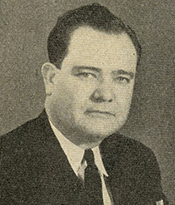
Glen Johnson
Former U.S. Representative · Oklahoma District 4 · 1947–1949 · Democratic
Glen Johnson represented Oklahoma's District 4 in the United States House of Representatives (1947–1949) for the Democratic party. The page below collects sourced biographical facts, term history, committee roles, and provenance for Johnson.
Bioguide ID: J000133
Key facts
- Full name
- Glen Johnson
- State
- Oklahoma
- District
- District 4
- Party
- Democratic
- House service
- 1947–1949
- First House term
- 1947
- Status
- Left office
- Current term ends
- —
- Born
- 1911
- Bioguide ID
- J000133
- Committee assignments
- —
- Dataset version
- 1.20260605
Biographical narrative
839 words · sourced from the Wikipedia REST extract
Glen Johnson was an American politician and lawyer who served as a Democratic member of the United States House of Representatives from Oklahoma's 4th congressional district for a single term from 1947 to 1949. A veteran of World War II, Johnson's political career was marked by his election to Congress after defeating a long-serving incumbent. Following his time in the House, he continued to work in various legal capacities until his death in 1983.
Early life and career
Glen Dale Johnson was born on September 11, 1911, in Melbourne, Arkansas, to parents Willie and Jeffie Johnson. In 1920, the Johnson family moved to Paden, Oklahoma, where Glen attended local public schools. He pursued higher education at Louisiana State University, earning a bachelor's degree in 1935. During his time at the university, he met Rose McConnell Long, a prominent political figure who had succeeded her husband, Huey Long, in the United States Senate after his assassination. Johnson worked as her secretary for a brief period before graduating from the University of Oklahoma Law School in 1939. He was admitted to the bar the same year and began practicing law in Okemah, Oklahoma.
Johnson's political career began in the Oklahoma House of Representatives, where he was first elected in 1940 and subsequently re-elected in 1942. His tenure in the state legislature was cut short when he resigned in January 1942 to enlist in the United States Army following the attack on Pearl Harbor. Johnson married Imogene Storms during a brief leave from military service on December 5, 1942. He served in the Army, rising from the rank of private to captain before his discharge in May 1946. After returning to Oklahoma, he resumed his law practice.
House tenure
In 1946, Johnson sought a higher political office and ran for the United States House of Representatives, representing Oklahoma's 4th congressional district. He achieved a significant political upset by defeating the five-term incumbent, Lyle Boren, in the Democratic primary election. Johnson's initial support in the primary was modest, as he garnered only 24% of the vote, but he advanced to a runoff where he won decisively with 61%. He took office on January 3, 1947, and served until January 3, 1949.
During his time in Congress, Johnson was involved in various legislative activities and was noted for his efforts to organize new members of the House. His term was characterized by a focus on due process and civil rights, although he was also recognized for his xenophobic views. Johnson's attendance record was less than exemplary, as he missed a notable percentage of key votes during his tenure. After serving one term, he opted to run for the U.S. Senate rather than seek re-election to the House. However, he faced a disappointing defeat in the Democratic primary, receiving only a small fraction of the votes.
In 1950, Johnson attempted to return to the House but was unsuccessful, securing only 26% of the vote in the primary against the incumbent. His congressional career was brief, but it was marked by a significant victory over a long-standing political figure in Oklahoma.
Legislative focus and committees
Throughout his congressional career, Johnson's legislative focus included issues related to civil rights and due process. He was known for his passionate defense of these principles, which reflected a broader national conversation during the post-World War II era. His efforts to organize new members of Congress indicated a commitment to fostering collaboration and engagement among his peers.
Despite his involvement in legislative matters, Johnson's attendance record raised questions about his commitment to his congressional duties. Missing a considerable number of key votes may have limited his effectiveness and influence in shaping legislation during his time in office. His political stance was often characterized by a mix of progressive ideals and more conservative views, particularly regarding immigration and foreign policy.
After leaving Congress, Johnson continued his legal career, taking on various roles in government and private practice. He served as a neutral arbitrator for the National Mediation Board in 1949 and 1950 and later worked as an attorney in the Office of the Solicitor for the U.S. Department of the Interior from 1961 to 1967. His career also included a position as chairman of the Oil Import Appeals Board from 1967 to 1969 and further legal work in the Department of the Interior's Muskogee field office from 1969 to 1972.
Johnson returned to Okemah, Oklahoma, where he lived until his death on February 10, 1983, due to congestive heart failure. His legacy includes not only his brief tenure in Congress but also the impact of his family, as his son, Glen D. Johnson Jr., went on to serve as Oklahoma's youngest Speaker of the House and held significant positions in higher education.
In summary, Glen Johnson's political career, while short-lived, was marked by notable achievements and challenges. His transition from state politics to the national stage exemplifies the complexities of American political life in the mid-20th century, reflecting both the opportunities and obstacles faced by politicians of his era.
Notable legislation
Sponsored and co-sponsored legislation for Glen Johnson is pending operator curation. The biographical narrative above carries the same provenance trail until per-bill rows are written.
Sources
- [1]https://en.wikipedia.org/wiki/Glen_D._JohnsonWikipedia · retrieved 2026-06-05
Notable quotes
Sourced quotes for Glen Johnson are pending operator curation. Narrative-scope provenance remains attached below.
Sources
- [1]https://en.wikipedia.org/wiki/Glen_D._JohnsonWikipedia · retrieved 2026-06-05
Key positions
Curated policy positions for Glen Johnson are pending operator review. The biographical narrative above carries the same provenance trail until per-topic positions are written.
Sources
- [1]https://en.wikipedia.org/wiki/Glen_D._JohnsonWikipedia · retrieved 2026-06-05
Terms served
- 1947–1949U.S. House · Term 1 · Democratic
Sources & provenance
Every attributable claim above carries a per-section [N] marker that resolves to the corresponding URL below. Each entry records the upstream provider, the canonical URL, and the timestamp at which the source was retrieved by the ingest pipeline.
Key facts
- https://bioguide.congress.gov/search/bio/J000133bioguide · retrieved 2026-06-05
- https://www.govtrack.us/congress/members/406032govtrack · retrieved 2026-06-05
Biographical narrative
- https://en.wikipedia.org/wiki/Glen_D._Johnsonwikipedia · retrieved 2026-06-05
Find your representative
Every U.S. state elects representatives by district. Browse Oklahoma’s delegation, the full former-representative roster, or explore the role and term length.
Related on The Candidate
- Preceded by Lyle BorenEarlier holder of the Oklahoma District 4 House seat · Democratic.Open
- Succeeded by Thomas SteedLater holder of the Oklahoma District 4 House seat · Democratic.Open
- Bird McGuireFormer U.S. Representative · Oklahoma District 1 · RepublicanOpen
- Charles O’ConnorFormer U.S. Representative · Oklahoma District 1 · RepublicanOpen
- Dixie GilmerFormer U.S. Representative · Oklahoma District 1 · DemocraticOpen
- Everette HowardFormer U.S. Representative · Oklahoma District 1 · DemocraticOpen