
Historical · U.S. House · Oklahoma · District 4
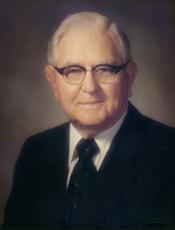
Thomas Steed
Former U.S. Representative · Oklahoma District 4 · 1949–1981 · Democratic
Thomas Steed represented Oklahoma's District 4 in the United States House of Representatives (1949–1981) for the Democratic party. The page below collects sourced biographical facts, term history, committee roles, and provenance for Steed.
Bioguide ID: S000829
Key facts
- Full name
- Thomas Steed
- State
- Oklahoma
- District
- District 4
- Party
- Democratic
- House service
- 1949–1981
- First House term
- 1949
- Status
- Left office
- Current term ends
- —
- Born
- 1904
- Bioguide ID
- S000829
- Committee assignments
- —
- Dataset version
- 1.20260605
Biographical narrative
945 words · sourced from the Wikipedia REST extract
Thomas Jefferson Steed was an American politician who served as a U.S. Representative for Oklahoma's 4th congressional district from 1949 until 1981. A member of the Democratic Party, Steed had a lengthy congressional career that spanned over three decades, making him one of the longest-serving representatives from Oklahoma. His legislative focus included education, labor, public works, and small business issues, reflecting a commitment to various aspects of community and economic development.
Early life and career
Tom Steed was born on March 2, 1904, on a farm in Eastland County, Texas, near the town of Rising Star. His family later relocated to Oklahoma, where he pursued his education in Konawa. However, he did not complete high school, as he began his career in journalism after just one semester. Steed started working for the Ada Evening News, marking the beginning of his professional journey in the media industry. In 1923, he married Hazel Bennett, and the couple had two sons, Roger and Richard. Tragically, Roger, who served as a Marine second lieutenant and fighter pilot, was killed in China in 1947.
Steed's career in journalism continued to flourish as he worked for several newspapers across Oklahoma, including the Daily Oklahoman. His political aspirations began to take shape in 1935 when he became an assistant to three U.S. congressmen from Oklahoma: Percy Lee Gassaway, Robert P. Hill, and Gomer Griffith Smith. This experience provided him with valuable insights into the workings of Congress and the legislative process. In 1938, he returned to Oklahoma, where he took on the role of managing editor for the Shawnee News-Star, further solidifying his connections within the state.
With the onset of World War II, Steed enlisted in the U.S. Army on October 29, 1942. He served in the Anti-aircraft Artillery and achieved the rank of Second Lieutenant before being released from active duty in May 1944. Following his military service, he joined the Office of War Information, where he contributed to the information division in the India-Burma Theater until December 1945. His experiences in journalism and the military would later influence his approach to public service, as he often emphasized the importance of knowledge and information.
House tenure
Steed's political career took a significant turn when he ran for Congress in 1948 and was elected as a Democrat. He officially took office on January 3, 1949, marking the beginning of a lengthy tenure in the U.S. House of Representatives. Over the years, he was re-elected multiple times, serving continuously until he chose to retire in 1980. His final congressional race in 1978 was notable for a competitive primary challenge from M.E. "Cuffie" Waid, a well-known optometrist and Chamber of Commerce leader in Lawton, Oklahoma. Despite this challenge, Steed secured his position and continued to represent his constituents until January 3, 1981.
Throughout his time in Congress, Steed served a total of 16 terms, making him the longest-serving member from Oklahoma at that time. His tenure was marked by a commitment to various legislative issues and a focus on the needs of his constituents. He participated in several key committees, including the Education and Labor, Public Works, Appropriations, and Small Business committees. Notably, he briefly chaired the Small Business Committee during the Ninety-fourth Congress and also led subcommittees on the Treasury, Postal Service, and General Government, as well as Taxation and Oil Imports.
Steed's political career was characterized by a generally liberal voting record, particularly on civil rights issues. He did not sign the 1956 Southern Manifesto and voted in favor of several significant civil rights measures, including the Civil Rights Acts of 1957, 1960, and 1964, as well as the Voting Rights Act of 1965. However, he did not support the Civil Rights Act of 1968. His willingness to cross party lines was evident during the 1976 presidential election when he endorsed the Republican ticket of President Gerald Ford and Senator Bob Dole, despite being a member of the Democratic Party.
Legislative focus and committees
During his extensive congressional career, Steed focused on a variety of legislative issues that had a direct impact on his constituents and the broader community. His work included conducting hearings on price wars affecting the dairy and retail petroleum industries, which aimed to address economic challenges faced by these sectors. He was also a co-sponsor of the Upstream Conservation Act, enacted in 1954, which aimed to promote conservation efforts in the United States.
Steed collaborated with Senator Robert S. Kerr to advance the Arkansas River Navigation System, a significant infrastructure project that enhanced transportation and commerce in the region. He was instrumental in the passage of the 1956 Library Services Act, which established a bookmobile system to improve access to literature and educational resources for rural communities. Additionally, he played a key role in bringing the Postal Service Institute to Norman, Oklahoma, in 1968, further contributing to the development of postal services in the area.
His commitment to education was evident in his efforts to secure funding for educational institutions, including the education center at Rose State College and the Gordon Cooper Vocational Education School in Shawnee. These initiatives reflected his dedication to improving educational opportunities for residents of Oklahoma.
After retiring from Congress, Steed returned to Oklahoma, where he lived in Shawnee until his death on June 8, 1983, at the age of 79. He is buried at Resthaven Cemetery in Shawnee. In recognition of his contributions, a portion of Interstate 40 near Shawnee was renamed the "Tom Steed Memorial Highway," and the Tom Steed Reservoir near Mountain Park was also named in his honor. His legacy continues to be remembered in Oklahoma, particularly for his long-standing service and commitment to public service.
Notable legislation
Sponsored and co-sponsored legislation for Thomas Steed is pending operator curation. The biographical narrative above carries the same provenance trail until per-bill rows are written.
Sources
- [1]https://en.wikipedia.org/wiki/Tom_SteedWikipedia · retrieved 2026-06-05
Notable quotes
Sourced quotes for Thomas Steed are pending operator curation. Narrative-scope provenance remains attached below.
Sources
- [1]https://en.wikipedia.org/wiki/Tom_SteedWikipedia · retrieved 2026-06-05
Key positions
Curated policy positions for Thomas Steed are pending operator review. The biographical narrative above carries the same provenance trail until per-topic positions are written.
Sources
- [1]https://en.wikipedia.org/wiki/Tom_SteedWikipedia · retrieved 2026-06-05
Terms served
- 1949–1951U.S. House · Term 1 · Democratic
- 1951–1953U.S. House · Term 2 · Democratic
- 1953–1955U.S. House · Term 3 · Democratic
- 1955–1957U.S. House · Term 4 · Democratic
- 1957–1959U.S. House · Term 5 · Democratic
- 1959–1961U.S. House · Term 6 · Democratic
- 1961–1963U.S. House · Term 7 · Democratic
- 1963–1965U.S. House · Term 8 · Democratic
- 1965–1967U.S. House · Term 9 · Democratic
- 1967–1969U.S. House · Term 10 · Democratic
- 1969–1971U.S. House · Term 11 · Democratic
- 1971–1973U.S. House · Term 12 · Democratic
- 1973–1975U.S. House · Term 13 · Democratic
- 1975–1977U.S. House · Term 14 · Democratic
- 1977–1979U.S. House · Term 15 · Democratic
- 1979–1981U.S. House · Term 16 · Democratic
Sources & provenance
Every attributable claim above carries a per-section [N] marker that resolves to the corresponding URL below. Each entry records the upstream provider, the canonical URL, and the timestamp at which the source was retrieved by the ingest pipeline.
Key facts
- https://bioguide.congress.gov/search/bio/S000829bioguide · retrieved 2026-06-05
- https://www.govtrack.us/congress/members/410293govtrack · retrieved 2026-06-05
Biographical narrative
- https://en.wikipedia.org/wiki/Tom_Steedwikipedia · retrieved 2026-06-05
Find your representative
Every U.S. state elects representatives by district. Browse Oklahoma’s delegation, the full former-representative roster, or explore the role and term length.
Related on The Candidate
- Preceded by Glen JohnsonEarlier holder of the Oklahoma District 4 House seat · Democratic.Open
- Succeeded by David McCurdyLater holder of the Oklahoma District 4 House seat · Democratic.Open
- Bird McGuireFormer U.S. Representative · Oklahoma District 1 · RepublicanOpen
- Charles O’ConnorFormer U.S. Representative · Oklahoma District 1 · RepublicanOpen
- Dixie GilmerFormer U.S. Representative · Oklahoma District 1 · DemocraticOpen
- Everette HowardFormer U.S. Representative · Oklahoma District 1 · DemocraticOpen