
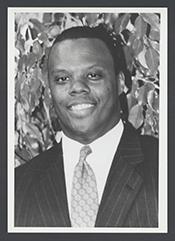
Historical · U.S. House · Oklahoma · District 4
J.c. Watts
Former U.S. Representative · Oklahoma District 4 · 1995–2003 · Republican
J.c. Watts represented Oklahoma's District 4 in the United States House of Representatives (1995–2003) for the Republican party. The page below collects sourced biographical facts, term history, committee roles, and provenance for Watts.
Bioguide ID: W000210
Key facts
- Full name
- J.c. Watts
- State
- Oklahoma
- District
- District 4
- Party
- Republican
- House service
- 1995–2003
- First House term
- 1995
- Status
- Left office
- Current term ends
- —
- Born
- 1957
- Bioguide ID
- W000210
- Committee assignments
- —
- Dataset version
- 1.20260605
Biographical narrative
1,014 words · sourced from the Wikipedia REST extract
J. C. Watts Jr. is a former U.S. Representative who served Oklahoma's 4th congressional district from 1995 to 2003. A member of the Republican Party, Watts is notable for being the first African-American Republican elected to the U.S. Congress from Oklahoma. Prior to his political career, he was a professional football player and a Baptist minister. His diverse background includes significant achievements in athletics, ministry, and public service, reflecting a multifaceted career that has influenced his political perspectives and legislative priorities.
Early life and career
J. C. Watts Jr. was born on November 18, 1957, in Eufaula, Oklahoma, to J. C. "Buddy" Watts Sr. and Helen Watts. His father was a Baptist minister and a prominent figure in the community, serving as the first black police officer in Eufaula and holding a position on the city council. His mother was a homemaker. Growing up in a rural, impoverished neighborhood, Watts experienced the challenges of racial integration early in his life. He was one of only two black children to attend Jefferson Davis Elementary School in Eufaula, and he later became the first black quarterback at Eufaula High School.
Watts faced personal challenges during his teenage years, including becoming a father at a young age, which led to a significant family decision regarding the child's adoption. Despite these challenges, he graduated from high school in 1976 and earned a football scholarship to the University of Oklahoma. He married Frankie Jones in 1977, with whom he had a daughter during high school.
At the University of Oklahoma, Watts initially struggled to secure a starting position on the football team but eventually became the starting quarterback in 1979. Under his leadership, the Oklahoma Sooners achieved consecutive victories in the Orange Bowl. He graduated in 1981 with a Bachelor of Arts degree in journalism. Following college, Watts was selected by the New York Jets in the NFL Draft but opted to pursue a career in the Canadian Football League (CFL) after the Jets could not guarantee him a position as a quarterback. He played for the Ottawa Rough Riders and the Toronto Argonauts, earning recognition as the Most Valuable Player of the 69th Grey Cup before retiring from professional football in 1986.
After his football career, Watts returned to Oklahoma and became involved in ministry, serving as a youth minister in Del City. He was ordained as a Baptist minister in 1993. In addition to his religious work, Watts established a highway construction company, which led him to become discontent with government regulations. This dissatisfaction motivated him to enter public office. Although his family had historical ties to the Democratic Party, Watts switched his political affiliation to the Republican Party in 1989, shortly before his first statewide campaign. His political career began in earnest when he was elected to the Oklahoma Corporation Commission in 1990, becoming the first African-American to win statewide office in Oklahoma. He served on the commission until 1995, including a term as chairman from 1993 to 1995.
House tenure
Watts entered the U.S. House of Representatives after winning the 1994 congressional election to succeed retiring Congressman Dave McCurdy. His campaign emphasized both fiscal and social conservatism, advocating for policies such as the death penalty, school prayer, a balanced budget amendment, and welfare reform, while opposing abortion and reduced defense spending. In a competitive primary election against state representative Ed Apple, Watts secured his position by winning a narrow margin in the initial vote and subsequently prevailing in a runoff election.
In the general election, Watts faced Democratic nominee David Perryman. His campaign was bolstered by significant name recognition and support from prominent Republican figures, including former President George H. W. Bush and U.S. Senator Bob Dole. On November 8, 1994, Watts was elected to the House with a majority of the vote, marking a historic moment as the first African-American Republican representative from Oklahoma.
During his time in Congress, Watts was re-elected three times, reflecting a growing support base within his district. His tenure included notable moments, such as delivering the Republican response to President Bill Clinton's State of the Union address in 1997. In 1998, he was elected Chair of the House Republican Conference, a leadership position that further established his influence within the party.
Watts' congressional career was characterized by a focus on issues pertinent to his constituents and the broader Republican agenda. He was involved in various legislative initiatives and contributed to discussions on welfare reform, tax policy, and defense spending. His background as a former athlete and minister often informed his perspectives on social issues and community development.
Legislative focus and committees
Throughout his tenure in the House, J. C. Watts served on several committees that aligned with his legislative interests and the needs of his constituents. His work often reflected a commitment to conservative principles, particularly in fiscal matters and social policy. He advocated for a balanced budget amendment and was a proponent of welfare reform, emphasizing the importance of personal responsibility and economic opportunity.
Watts' experience as a businessman also influenced his legislative priorities. He was vocal about the challenges faced by small businesses and sought to promote policies that would foster economic growth and job creation. His background in construction and entrepreneurship provided him with insights into the regulatory environment affecting businesses, which he often addressed in his legislative work.
In addition to his focus on economic issues, Watts was an advocate for education and community development. His experiences as a youth minister and a product of the Oklahoma education system informed his views on the importance of educational opportunities for children, particularly in underserved communities. He supported initiatives aimed at improving educational outcomes and ensuring access to quality schooling.
After serving four terms in the House, Watts chose not to seek re-election in 2002, and his final term concluded on January 3, 2003. Following his departure from Congress, he transitioned into lobbying and business ventures, while also engaging in political commentary. His career reflects a blend of public service, advocacy, and business acumen, contributing to his ongoing influence in political and civic circles.
Notable legislation
Sponsored and co-sponsored legislation for J.c. Watts is pending operator curation. The biographical narrative above carries the same provenance trail until per-bill rows are written.
Sources
- [1]https://en.wikipedia.org/wiki/J._C._WattsWikipedia · retrieved 2026-06-05
Notable quotes
Sourced quotes for J.c. Watts are pending operator curation. Narrative-scope provenance remains attached below.
Sources
- [1]https://en.wikipedia.org/wiki/J._C._WattsWikipedia · retrieved 2026-06-05
Key positions
Curated policy positions for J.c. Watts are pending operator review. The biographical narrative above carries the same provenance trail until per-topic positions are written.
Sources
- [1]https://en.wikipedia.org/wiki/J._C._WattsWikipedia · retrieved 2026-06-05
Terms served
- 1995–1997U.S. House · Term 1 · Republican
- 1997–1999U.S. House · Term 2 · Republican
- 1999–2001U.S. House · Term 3 · Republican
- 2001–2003U.S. House · Term 4 · Republican
Sources & provenance
Every attributable claim above carries a per-section [N] marker that resolves to the corresponding URL below. Each entry records the upstream provider, the canonical URL, and the timestamp at which the source was retrieved by the ingest pipeline.
Key facts
- https://bioguide.congress.gov/search/bio/W000210bioguide · retrieved 2026-06-05
- https://www.govtrack.us/congress/members/400541govtrack · retrieved 2026-06-05
Biographical narrative
- https://en.wikipedia.org/wiki/J._C._Wattswikipedia · retrieved 2026-06-05
Find your representative
Every U.S. state elects representatives by district. Browse Oklahoma’s delegation, the full former-representative roster, or explore the role and term length.
Related on The Candidate
- Preceded by David McCurdyEarlier holder of the Oklahoma District 4 House seat · Democratic.Open
- Bird McGuireFormer U.S. Representative · Oklahoma District 1 · RepublicanOpen
- Charles O’ConnorFormer U.S. Representative · Oklahoma District 1 · RepublicanOpen
- Dixie GilmerFormer U.S. Representative · Oklahoma District 1 · DemocraticOpen
- Everette HowardFormer U.S. Representative · Oklahoma District 1 · DemocraticOpen
- Republican PartyFederal candidates and office holders on the Republican line.Open