
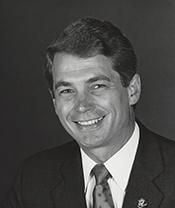
Historical · U.S. House · Oklahoma · District 4
David McCurdy
Former U.S. Representative · Oklahoma District 4 · 1981–1995 · Democratic
David McCurdy represented Oklahoma's District 4 in the United States House of Representatives (1981–1995) for the Democratic party. The page below collects sourced biographical facts, term history, committee roles, and provenance for McCurdy.
Bioguide ID: M000398
Key facts
- Full name
- David McCurdy
- State
- Oklahoma
- District
- District 4
- Party
- Democratic
- House service
- 1981–1995
- First House term
- 1981
- Status
- Left office
- Current term ends
- —
- Born
- 1950
- Bioguide ID
- M000398
- Committee assignments
- —
- Dataset version
- 1.20260605
Biographical narrative
913 words · sourced from the Wikipedia REST extract
David Keith McCurdy is a former U.S. Representative who served Oklahoma's 4th congressional district from 1981 until 1995. A member of the Democratic Party, McCurdy is recognized for his moderate to conservative stance within the party and for his leadership roles in various congressional committees. After leaving Congress, he transitioned into a career as a lobbyist and held several prominent positions in various organizations, including the American Gas Association.
Early life and career
Dave McCurdy was born on March 30, 1950, in Canadian, Texas. He pursued higher education at the University of Oklahoma, where he earned a bachelor's degree in 1972, followed by a Juris Doctor (JD) in 1975. Additionally, he expanded his academic experience internationally by studying international economics at the University of Edinburgh in Scotland as a Rotary International Graduate Fellow.
Before entering politics, McCurdy served in the United States Air Force Reserve, where he achieved the rank of major and worked as a judge advocate general (JAG). His legal career began in earnest when he served as an assistant attorney general for the state of Oklahoma from 1975 to 1977. This combination of military service and legal expertise laid the foundation for his future political career.
House tenure
McCurdy's political career in the U.S. House of Representatives began when he successfully ran for Oklahoma's 4th congressional district seat in 1980. He succeeded Tom Steed, a long-serving congressman who had held the position for sixteen terms. In the Democratic primary, McCurdy initially trailed James B. Townsend, the Oklahoma House Majority Leader, but ultimately won the runoff election. His campaign strategy included appealing to voters on issues such as public prayer and support for a statue of Jesus Christ in the Wichita Mountains.
During his time in Congress, McCurdy was re-elected multiple times, serving a total of seven terms. His electoral success included defeating Republican candidates in both the general and primary elections, often with significant margins. For instance, in his first general election, he won against Howard Rutledge, and in subsequent elections, he consistently garnered a substantial percentage of the vote. His ability to maintain a strong voter base was evident, as he faced no Republican opponent in one election cycle and achieved high percentages of the vote in others.
Throughout his congressional career, McCurdy held various leadership positions, specializing in areas related to national security and intelligence. He chaired the House Intelligence Committee and the Military Installations and Facilities Subcommittee of the House Armed Services Committee. Additionally, he led the Transportation Aviation and Materials Subcommittee of the Science and Space Committee. His leadership roles reflected his commitment to addressing critical national issues during his tenure.
In addition to his committee work, McCurdy was instrumental in founding and chairing the Mainstreet Forum, a coalition of moderate and conservative House Democrats. At its peak, the group included seventy-two members and sought to promote centrist policies within the Democratic Party.
Legislative focus and committees
McCurdy's legislative focus included significant contributions to various pieces of legislation during his time in Congress. He played a key role in the passage of the National Superconductivity Competitiveness Act in 1988, which aimed to enhance the United States' competitiveness in superconductivity research and development. Another notable achievement was his involvement in the Goldwater-Nichols Act of 1985, which reorganized the U.S. Department of Defense to improve military efficiency and effectiveness.
He was also responsible for the Nunn-McCurdy Amendment of 1982, which mandated congressional notification of defense cost overruns exceeding 15%. This amendment aimed to enhance accountability in defense spending. Furthermore, McCurdy was a proponent of the 1993 National Service Legislation, which originated from a bill he introduced in collaboration with former Georgia Senator Sam Nunn.
In the 1990s, McCurdy emerged as a national figure within the Democratic Party, serving as the national chairman of the Democratic Leadership Council (DLC). This organization sought to moderate the Democratic Party's platform and appeal to a broader electorate. McCurdy was regarded as a rising star in the party and was considered for various high-profile positions in the Clinton administration, including the role of Secretary of Defense and Director of Central Intelligence, both of which he ultimately declined.
In 1994, McCurdy decided not to seek re-election to the House and instead ran for the U.S. Senate seat vacated by David L. Boren. His campaign focused on military preparedness and family values; however, he lost the general election to fellow Congressman Jim Inhofe, receiving a lower percentage of the vote than anticipated, even in his own congressional district.
After concluding his congressional career, McCurdy transitioned into the private sector, where he took on various leadership roles. He became the chairman and chief executive officer of the McCurdy Group LLC and later served as president of the Electronic Industries Alliance. He also held positions on several boards, including the Center for Strategic and Budgetary Assessments and the Defense Policy Board under multiple presidential administrations.
In February 2007, he was appointed president of the Alliance of Automobile Manufacturers, where he advocated for environmental initiatives, including support for federal regulations aimed at reducing carbon emissions and increasing fuel economy standards. In 2011, he became president and CEO of the American Gas Association, further solidifying his influence in the energy sector.
McCurdy's career reflects a blend of public service and private sector leadership, characterized by his commitment to national security, economic competitiveness, and responsible governance. His contributions to legislation and his roles in various organizations demonstrate his ongoing engagement with critical issues affecting the United States.
Notable legislation
Sponsored and co-sponsored legislation for David McCurdy is pending operator curation. The biographical narrative above carries the same provenance trail until per-bill rows are written.
Sources
- [1]https://en.wikipedia.org/wiki/Dave_McCurdyWikipedia · retrieved 2026-06-05
Notable quotes
Sourced quotes for David McCurdy are pending operator curation. Narrative-scope provenance remains attached below.
Sources
- [1]https://en.wikipedia.org/wiki/Dave_McCurdyWikipedia · retrieved 2026-06-05
Key positions
Curated policy positions for David McCurdy are pending operator review. The biographical narrative above carries the same provenance trail until per-topic positions are written.
Sources
- [1]https://en.wikipedia.org/wiki/Dave_McCurdyWikipedia · retrieved 2026-06-05
Terms served
- 1981–1983U.S. House · Term 1 · Democratic
- 1983–1985U.S. House · Term 2 · Democratic
- 1985–1987U.S. House · Term 3 · Democratic
- 1987–1989U.S. House · Term 4 · Democratic
- 1989–1991U.S. House · Term 5 · Democratic
- 1991–1993U.S. House · Term 6 · Democratic
- 1993–1995U.S. House · Term 7 · Democratic
Sources & provenance
Every attributable claim above carries a per-section [N] marker that resolves to the corresponding URL below. Each entry records the upstream provider, the canonical URL, and the timestamp at which the source was retrieved by the ingest pipeline.
Key facts
- https://bioguide.congress.gov/search/bio/M000398bioguide · retrieved 2026-06-05
- https://www.govtrack.us/congress/members/407399govtrack · retrieved 2026-06-05
Biographical narrative
- https://en.wikipedia.org/wiki/Dave_McCurdywikipedia · retrieved 2026-06-05
Find your representative
Every U.S. state elects representatives by district. Browse Oklahoma’s delegation, the full former-representative roster, or explore the role and term length.
Related on The Candidate
- Preceded by Thomas SteedEarlier holder of the Oklahoma District 4 House seat · Democratic.Open
- Succeeded by J.c. WattsLater holder of the Oklahoma District 4 House seat · Republican.Open
- Bird McGuireFormer U.S. Representative · Oklahoma District 1 · RepublicanOpen
- Charles O’ConnorFormer U.S. Representative · Oklahoma District 1 · RepublicanOpen
- Dixie GilmerFormer U.S. Representative · Oklahoma District 1 · DemocraticOpen
- Everette HowardFormer U.S. Representative · Oklahoma District 1 · DemocraticOpen