
Historical · U.S. House · Oklahoma · District 5
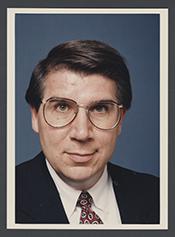
Ernest Istook Jr.
Former U.S. Representative · Oklahoma District 5 · 1993–2007 · Republican
Ernest Istook Jr. represented Oklahoma's District 5 in the United States House of Representatives (1993–2007) for the Republican party. The page below collects sourced biographical facts, term history, committee roles, and provenance for Jr..
Bioguide ID: I000047
Key facts
- Full name
- Ernest Istook Jr.
- State
- Oklahoma
- District
- District 5
- Party
- Republican
- House service
- 1993–2007
- First House term
- 1993
- Status
- Left office
- Current term ends
- —
- Born
- 1950
- Bioguide ID
- I000047
- Committee assignments
- —
- Dataset version
- 1.20260605
Biographical narrative
906 words · sourced from the Wikipedia REST extract
Ernest J. Istook Jr. is a retired American politician and lawyer who served as a Republican member of the United States House of Representatives, representing Oklahoma's 5th congressional district from 1993 until 2007. Over his 14 years in office, he completed seven terms in the House. Following his congressional career, Istook has held various roles, including a Distinguished Fellow at The Heritage Foundation and a talk radio host. He was also a candidate for governor of Oklahoma in 2006, though he was unsuccessful in that election.
Early life and career
Ernest James Istook Jr. was born on February 11, 1950. His family background is rooted in immigration; his grandparents arrived in the United States from Hungary, passing on their heritage by speaking Hungarian at home. Istook completed his secondary education at Castleberry High School in Fort Worth, Texas, graduating in 1967. He pursued higher education at Baylor University in Waco, Texas, where he earned a Bachelor of Arts degree in 1971. Eventually, he relocated to Warr Acres, a suburb of Oklahoma City, where he would later establish his political career.
While attending law school, Istook worked as a full-time radio news reporter, first at KOMA (now known as KOKC) and later at WKY in Oklahoma City. He obtained his Juris Doctor degree from Oklahoma City University School of Law in 1976. Following his graduation, he founded his own law firm and practiced law for 15 years. In addition to his legal career, Istook held various positions in public service. He served as the director of the Oklahoma State Alcoholic and Beverage Control Board from 1977 to 1978 and was legal counsel to Governor David L. Boren in 1978. He was also active in local governance, serving on the board of the Metropolitan Library System from 1982 to 1986 and as the chairman of the Warr Acres city council during the same period. Furthermore, he was involved with the Warr Acres Chamber of Commerce and served as an Oklahoma state representative from 1987 to 1993.
House tenure
Ernest Istook entered the U.S. House of Representatives after winning the Republican primary in 1992 against incumbent Deputy House Minority Whip Mickey Edwards, as well as former federal prosecutor Bill Price. His campaign focused on the House banking scandal, which had affected Edwards' reputation. In the general election, Istook narrowly defeated his Democratic opponent, Laurie Williams, securing his seat by a margin of six points. This initial victory marked the beginning of his congressional career, during which he was re-elected six additional times, representing a district that has historically leaned Republican. Notably, in the 1994 election, no Democratic candidate opposed him.
Throughout his tenure in the House, Istook was known for his focus on a variety of issues, including national defense, homeland security, transportation, education, labor, social services, and religious liberty. He consistently advocated for conservative positions, including opposition to abortion, same-sex marriage, and federal funding for embryonic stem cell research. His legislative efforts included introducing amendments aimed at reinforcing religious freedoms, such as the Religious Freedom Amendment, which sought to permit school prayer. Although this amendment garnered some support, it ultimately failed to achieve the necessary two-thirds majority for constitutional amendments.
Istook's economic policies were characterized by a preference for welfare and Social Security reform, advocating for personal accounts within Social Security. He supported tax cuts proposed by the Bush administration and sought to make these cuts permanent. His legislative initiatives included the Marriage Tax Penalty Relief Act of 2000, which aimed to alleviate the tax burden on married couples. He also expressed support for free trade, voting in favor of the Central America Free Trade Agreement (CAFTA), while simultaneously advocating for the withdrawal of the U.S. from the World Trade Organization.
In matters of national security, Istook voted to make the USA PATRIOT Act permanent and supported military intelligence gathering. He endorsed military recruitment efforts on college campuses that received federal funding and was a proponent of increased funding for the Department of Defense, particularly in relation to the War in Iraq.
Legislative focus and committees
During his time in the House, Istook served on several important congressional committees. He was a member of the Appropriations Committee, where he played a significant role in shaping federal funding priorities. He chaired various subcommittees, including those focused on Treasury, Transportation, and Special Agencies. His leadership in these areas allowed him to influence transportation funding, although he faced criticism for his stance on Amtrak funding. In 2004, he denied special transportation funding requests from 21 Republican House members who had supported a significant funding proposal for Amtrak.
In addition to his work on the Appropriations Committee, Istook was a member of the Homeland Security Committee and was involved in the founding of the Republican Study Committee, which aimed to promote conservative policies within the House. His legislative career was marked by a commitment to conservative principles and a focus on issues that resonated with his constituents in Oklahoma's 5th congressional district.
Ernest Istook's congressional career came to an end when he did not seek re-election in 2006 after running for governor of Oklahoma. He lost the gubernatorial race to the incumbent Democratic governor, Brad Henry, receiving a significant minority of the vote. Following his departure from Congress, Istook continued to engage in public discourse as a talk radio host and as a Distinguished Fellow at The Heritage Foundation, where he has remained active in political and policy discussions.
Notable legislation
Sponsored and co-sponsored legislation for Ernest Istook Jr. is pending operator curation. The biographical narrative above carries the same provenance trail until per-bill rows are written.
Sources
- [1]https://en.wikipedia.org/wiki/Ernest_IstookWikipedia · retrieved 2026-06-05
Notable quotes
Sourced quotes for Ernest Istook Jr. are pending operator curation. Narrative-scope provenance remains attached below.
Sources
- [1]https://en.wikipedia.org/wiki/Ernest_IstookWikipedia · retrieved 2026-06-05
Key positions
Curated policy positions for Ernest Istook Jr. are pending operator review. The biographical narrative above carries the same provenance trail until per-topic positions are written.
Sources
- [1]https://en.wikipedia.org/wiki/Ernest_IstookWikipedia · retrieved 2026-06-05
Terms served
- 1993–1995U.S. House · Term 1 · Republican
- 1995–1997U.S. House · Term 2 · Republican
- 1997–1999U.S. House · Term 3 · Republican
- 1999–2001U.S. House · Term 4 · Republican
- 2001–2003U.S. House · Term 5 · Republican
- 2003–2005U.S. House · Term 6 · Republican
- 2005–2007U.S. House · Term 7 · Republican
Sources & provenance
Every attributable claim above carries a per-section [N] marker that resolves to the corresponding URL below. Each entry records the upstream provider, the canonical URL, and the timestamp at which the source was retrieved by the ingest pipeline.
Key facts
- https://bioguide.congress.gov/search/bio/I000047bioguide · retrieved 2026-06-05
- http://www.house.gov/istookhouse.gov · retrieved 2026-06-05
Biographical narrative
- https://en.wikipedia.org/wiki/Ernest_Istookwikipedia · retrieved 2026-06-05
Find your representative
Every U.S. state elects representatives by district. Browse Oklahoma’s delegation, the full former-representative roster, or explore the role and term length.
Related on The Candidate
- Preceded by Mickey EdwardsEarlier holder of the Oklahoma District 5 House seat · Republican.Open
- Succeeded by Mary FallinLater holder of the Oklahoma District 5 House seat · Republican.Open
- Bird McGuireFormer U.S. Representative · Oklahoma District 1 · RepublicanOpen
- Charles O’ConnorFormer U.S. Representative · Oklahoma District 1 · RepublicanOpen
- Dixie GilmerFormer U.S. Representative · Oklahoma District 1 · DemocraticOpen
- Everette HowardFormer U.S. Representative · Oklahoma District 1 · DemocraticOpen