
Historical · U.S. House · Oklahoma · District 5
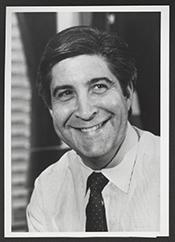
Mickey Edwards
Former U.S. Representative · Oklahoma District 5 · 1977–1993 · Republican
Mickey Edwards represented Oklahoma's District 5 in the United States House of Representatives (1977–1993) for the Republican party. The page below collects sourced biographical facts, term history, committee roles, and provenance for Edwards.
Bioguide ID: E000077
Key facts
- Full name
- Mickey Edwards
- State
- Oklahoma
- District
- District 5
- Party
- Republican
- House service
- 1977–1993
- First House term
- 1977
- Status
- Left office
- Current term ends
- —
- Born
- 1937
- Bioguide ID
- E000077
- Committee assignments
- —
- Dataset version
- 1.20260605
Biographical narrative
906 words · sourced from the Wikipedia REST extract
Marvin Henry "Mickey" Edwards is a former American politician who served as a Republican member of the U.S. House of Representatives, representing Oklahoma's 5th congressional district from 1977 until 1993. Edwards is recognized for his significant contributions to conservative political thought and his involvement in various political organizations. After leaving Congress, he transitioned into academia and commentary, becoming a vocal critic of the Republican Party's direction in the years following his tenure.
Early life and career
Mickey Edwards was born on July 12, 1937, in Cleveland, Ohio. He pursued higher education at the University of Oklahoma, where he earned a Bachelor of Arts degree in Journalism in 1958. Edwards later attended Oklahoma City University School of Law, receiving his Juris Doctor degree in 1969, and he was admitted to the Oklahoma bar in 1970. His early career in journalism began at the Oklahoma City Times, where he worked as a reporter and editor from 1958 to 1963. Following his time in journalism, he engaged in advertising and public relations from 1963 to 1968 and served as a magazine editor from 1968 to 1973.
In the early 1970s, Edwards transitioned into political work, serving as a legislative assistant for the Republican Steering Committee in Washington, D.C., from 1973 to 1974. He also took on an instructional role at Oklahoma City University, teaching law and journalism in 1976. His political involvement began during his college years when he joined the Young Republicans at the University of Oklahoma. At that time, the Republican Party was not well-established in Oklahoma, and he faced challenges in his early political activism. Despite this, he became actively involved in building the party at both the state and national levels, eventually serving as chairman of the Oklahoma City Young Republicans and later as chairman of the Oklahoma Young Republicans. His national engagement included a position as vice chairman of the Young Republicans and a seat on the national board of the American Conservative Union.
House tenure
Edwards's political career in Congress began when he ran for a seat in the U.S. House of Representatives in 1974. He challenged the long-serving Democratic incumbent, John Jarman, who had held the position for 24 years. Despite limited financial resources, Edwards managed to secure a significant portion of the vote, holding Jarman to 51 percent in a challenging political climate marked by the Watergate scandal. Following Jarman's switch to the Republican Party in early 1975, he opted not to seek reelection in 1976. Edwards won the Republican nomination that year and narrowly defeated Democratic candidate Tom Dunlap in the general election, marking a significant political shift as he became the first Republican to represent the district in over fifty years.
During his sixteen years in Congress, Edwards served on several key committees, including the House Budget and Appropriations Committees. He held the position of ranking member on the Appropriations Subcommittee on Foreign Operations and was part of the House Republican leadership as chairman of the House Republican Policy Committee, which is the fourth-ranking leadership position within the party. His tenure was marked by active participation in legislative processes and a focus on budgetary and foreign operations issues.
In 1992, Edwards faced a challenging primary election, which was increasingly becoming the decisive contest in his district. He was defeated by State Representative Ernest Istook and former federal prosecutor Bill Price, finishing third and failing to advance to the runoff. This loss was attributed in part to his involvement in the House banking scandal, which included writing numerous overdrafts. His defeat marked the end of his congressional career, concluding a notable period of service that spanned eight terms.
Legislative focus and committees
Throughout his time in Congress, Mickey Edwards was involved in various legislative initiatives and committee activities that reflected his conservative principles and priorities. His work on the House Budget and Appropriations Committees allowed him to influence federal spending and budgetary policies, particularly in the context of foreign operations. As a member of the House Republican leadership, he played a role in shaping party strategy and policy direction during a time of significant political change in the United States.
In addition to his legislative responsibilities, Edwards was active in several political organizations and initiatives. He was one of the founding trustees of The Heritage Foundation, a prominent conservative think tank, and served as the national chairman of the American Conservative Union. His commitment to judicial independence and constitutional issues led him to co-chair organizations focused on these areas, including Citizens for Independent Courts and Citizens for the Constitution. He also contributed to discussions on international affairs and campaign finance reform through his involvement with various task forces and working groups.
After leaving Congress, Edwards continued to engage in political discourse and analysis, teaching at prestigious institutions such as Harvard Kennedy School and Harvard Law School. He also became a commentator for National Public Radio's "All Things Considered." Over the years, he has expressed concerns about the direction of the Republican Party, particularly its shift toward more extreme positions. In 2021, he left the Republican Party and has since supported Democratic presidential candidates in the 2020 and 2024 elections.
Edwards's career reflects a blend of journalism, political activism, and legislative service, with a focus on conservative principles and a commitment to public service. His contributions to political thought and discourse continue to resonate in discussions about the evolution of the Republican Party and American politics more broadly.
Notable legislation
Sponsored and co-sponsored legislation for Mickey Edwards is pending operator curation. The biographical narrative above carries the same provenance trail until per-bill rows are written.
Sources
- [1]https://en.wikipedia.org/wiki/Mickey_EdwardsWikipedia · retrieved 2026-06-05
Notable quotes
Sourced quotes for Mickey Edwards are pending operator curation. Narrative-scope provenance remains attached below.
Sources
- [1]https://en.wikipedia.org/wiki/Mickey_EdwardsWikipedia · retrieved 2026-06-05
Key positions
Curated policy positions for Mickey Edwards are pending operator review. The biographical narrative above carries the same provenance trail until per-topic positions are written.
Sources
- [1]https://en.wikipedia.org/wiki/Mickey_EdwardsWikipedia · retrieved 2026-06-05
Terms served
- 1977–1979U.S. House · Term 1 · Republican
- 1979–1981U.S. House · Term 2 · Republican
- 1981–1983U.S. House · Term 3 · Republican
- 1983–1985U.S. House · Term 4 · Republican
- 1985–1987U.S. House · Term 5 · Republican
- 1987–1989U.S. House · Term 6 · Republican
- 1989–1991U.S. House · Term 7 · Republican
- 1991–1993U.S. House · Term 8 · Republican
Sources & provenance
Every attributable claim above carries a per-section [N] marker that resolves to the corresponding URL below. Each entry records the upstream provider, the canonical URL, and the timestamp at which the source was retrieved by the ingest pipeline.
Key facts
- https://bioguide.congress.gov/search/bio/E000077bioguide · retrieved 2026-06-05
- https://www.govtrack.us/congress/members/403769govtrack · retrieved 2026-06-05
Biographical narrative
- https://en.wikipedia.org/wiki/Mickey_Edwardswikipedia · retrieved 2026-06-05
Find your representative
Every U.S. state elects representatives by district. Browse Oklahoma’s delegation, the full former-representative roster, or explore the role and term length.
Related on The Candidate
- Preceded by John JarmanEarlier holder of the Oklahoma District 5 House seat · Republican.Open
- Succeeded by Ernest Istook Jr.Later holder of the Oklahoma District 5 House seat · Republican.Open
- Bird McGuireFormer U.S. Representative · Oklahoma District 1 · RepublicanOpen
- Charles O’ConnorFormer U.S. Representative · Oklahoma District 1 · RepublicanOpen
- Dixie GilmerFormer U.S. Representative · Oklahoma District 1 · DemocraticOpen
- Everette HowardFormer U.S. Representative · Oklahoma District 1 · DemocraticOpen