
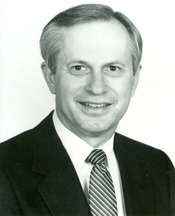
Historical · U.S. House · Oklahoma · District 6
Glenn English Jr.
Former U.S. Representative · Oklahoma District 6 · 1975–1994 · Democratic
Glenn English Jr. represented Oklahoma's District 6 in the United States House of Representatives (1975–1994) for the Democratic party. The page below collects sourced biographical facts, term history, committee roles, and provenance for Jr..
Bioguide ID: E000184
Key facts
- Full name
- Glenn English Jr.
- State
- Oklahoma
- District
- District 6
- Party
- Democratic
- House service
- 1975–1994
- First House term
- 1975
- Status
- Left office
- Current term ends
- —
- Born
- 1940
- Bioguide ID
- E000184
- Committee assignments
- —
- Dataset version
- 1.20260605
Biographical narrative
898 words · sourced from the Wikipedia REST extract
Glenn English is a former U.S. Representative who served Oklahoma's 6th congressional district as a member of the Democratic Party for ten consecutive terms from 1975 until 1994. Born in 1940, English's career encompasses military service, business, and a significant tenure in Congress, where he focused on issues pertinent to agriculture and rural electrification. Following his departure from the House, he transitioned into a leadership role within the National Rural Electric Cooperative Association, furthering his commitment to rural communities.
Early life and career
Glenn Lee English Jr. was born on November 30, 1940, in Cordell, Oklahoma, situated in Washita County. He pursued higher education at Southwestern Oklahoma State University, where he earned a Bachelor of Arts degree in 1964. Following his academic pursuits, English joined the United States Army Reserves, where he advanced to the rank of staff sergeant. His military service concluded in 1971, after which he entered the business sector. English's professional background includes work in the oil and natural gas leasing industry, real estate, insurance sales, and mortgage lending.
In his personal life, English married Jan Pangle Barnett, and the couple had two children, John Lee and Tyler Janine. During his congressional tenure, the family resided in McLean, Virginia. English's initial foray into politics began with a position as a staff member for the majority caucus of the California State Assembly. He later gained experience as a legislative staffer in the U.S. House of Representatives. His political involvement deepened when he served as the executive director of the Oklahoma Democratic Party from 1969 to 1973. This experience laid the groundwork for his subsequent election to Congress.
In November 1974, English was elected as a Democrat to represent Oklahoma's 6th Congressional District. His election marked the beginning of a long congressional career, during which he would be re-elected nine times, reflecting his sustained support within his district.
House tenure
English's congressional career spanned two decades, during which he was known for his conservative stance, aligning with the political leanings of his district, which included both rural areas and parts of northeastern Oklahoma City. Throughout his time in the House, he served on several key committees, including the Committee on Agriculture and the Committee on Government Operations. His leadership extended to the role of Chairman of the Select Committee on Narcotics Abuse and Control, where he played a significant part in addressing drug-related issues.
One of English's notable contributions was his chairmanship of the Government Information, Justice and Agriculture Subcommittee. In this capacity, he facilitated the use of military resources, such as aircraft and radar, to assist Customs agents in combating drug smuggling. His efforts during the 1985–86 term were particularly impactful, as he secured funding for a federal hub in Oklahoma City aimed at supporting anti-drug initiatives. This hub, located at Will Rogers Airport, was a strategic asset in the ongoing war on drugs.
In addition to his work on narcotics control, English was a strong advocate for rural electrification. In 1993, he successfully intervened in a plan that sought to diminish the role of the Rural Electrification Administration (REA). Through a series of discussions between the Committee on Agriculture and the White House, he worked to elevate the status of the REA, thereby enhancing the quality of life for rural residents. His commitment to rural issues was a defining aspect of his legislative focus.
English's congressional career concluded when he resigned from the House on January 7, 1994. He was succeeded by Frank Lucas, a Republican, marking a shift in representation for the district.
Legislative focus and committees
During his time in Congress, Glenn English's legislative focus was primarily centered on agriculture, rural development, and drug policy. His role on the Committee on Agriculture allowed him to advocate for the interests of farmers and rural communities, which were vital to the economy of Oklahoma. English's conservative Democratic stance was reflective of the values and priorities of his constituents, who often prioritized agricultural and rural issues.
As Chairman of the Select Committee on Narcotics Abuse and Control, English's leadership was instrumental in shaping drug policy during a critical period in American history. His initiatives aimed at combating drug abuse and trafficking were significant, particularly in light of the increasing challenges posed by narcotics in the 1980s and early 1990s. The establishment of the federal hub in Oklahoma City exemplified his proactive approach to addressing these pressing issues.
In addition to his work on narcotics and agriculture, English's involvement in the Government Information, Justice and Agriculture Subcommittee underscored his commitment to enhancing governmental efficiency and accountability. His efforts to integrate military resources into drug interdiction strategies demonstrated a willingness to explore innovative solutions to complex problems.
After leaving Congress, English continued to influence rural policy as the chief executive officer of the National Rural Electric Cooperative Association (NRECA). His leadership in this role allowed him to advocate for the interests of electric cooperatives, which serve millions of Americans in rural areas. His induction into the Cooperative Hall of Fame in 2010 recognized his contributions to the cooperative movement and his ongoing commitment to improving the lives of rural residents.
In summary, Glenn English's career reflects a dedication to public service, with a particular emphasis on the needs of rural communities and agricultural interests. His legislative achievements and subsequent leadership in the NRECA highlight his enduring impact on the sectors he championed throughout his career.
Notable legislation
Sponsored and co-sponsored legislation for Glenn English Jr. is pending operator curation. The biographical narrative above carries the same provenance trail until per-bill rows are written.
Sources
- [1]https://en.wikipedia.org/wiki/Glenn_EnglishWikipedia · retrieved 2026-06-05
Notable quotes
Sourced quotes for Glenn English Jr. are pending operator curation. Narrative-scope provenance remains attached below.
Sources
- [1]https://en.wikipedia.org/wiki/Glenn_EnglishWikipedia · retrieved 2026-06-05
Key positions
Curated policy positions for Glenn English Jr. are pending operator review. The biographical narrative above carries the same provenance trail until per-topic positions are written.
Sources
- [1]https://en.wikipedia.org/wiki/Glenn_EnglishWikipedia · retrieved 2026-06-05
Terms served
- 1975–1977U.S. House · Term 1 · Democratic
- 1977–1979U.S. House · Term 2 · Democratic
- 1979–1981U.S. House · Term 3 · Democratic
- 1981–1983U.S. House · Term 4 · Democratic
- 1983–1985U.S. House · Term 5 · Democratic
- 1985–1987U.S. House · Term 6 · Democratic
- 1987–1989U.S. House · Term 7 · Democratic
- 1989–1991U.S. House · Term 8 · Democratic
- 1991–1993U.S. House · Term 9 · Democratic
- 1993–1994U.S. House · Term 10 · Democratic
Sources & provenance
Every attributable claim above carries a per-section [N] marker that resolves to the corresponding URL below. Each entry records the upstream provider, the canonical URL, and the timestamp at which the source was retrieved by the ingest pipeline.
Key facts
- https://bioguide.congress.gov/search/bio/E000184bioguide · retrieved 2026-06-05
- https://www.govtrack.us/congress/members/403873govtrack · retrieved 2026-06-05
Biographical narrative
- https://en.wikipedia.org/wiki/Glenn_Englishwikipedia · retrieved 2026-06-05
Find your representative
Every U.S. state elects representatives by district. Browse Oklahoma’s delegation, the full former-representative roster, or explore the role and term length.
Related on The Candidate
- Preceded by John CampEarlier holder of the Oklahoma District 6 House seat · Republican.Open
- Bird McGuireFormer U.S. Representative · Oklahoma District 1 · RepublicanOpen
- Charles O’ConnorFormer U.S. Representative · Oklahoma District 1 · RepublicanOpen
- Dixie GilmerFormer U.S. Representative · Oklahoma District 1 · DemocraticOpen
- Everette HowardFormer U.S. Representative · Oklahoma District 1 · DemocraticOpen
- Democratic PartyFederal candidates and office holders on the Democratic line.Open