
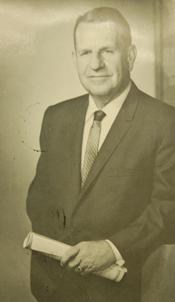
Historical · U.S. House · Oklahoma · District 6
John Camp
Former U.S. Representative · Oklahoma District 6 · 1969–1975 · Republican
John Camp represented Oklahoma's District 6 in the United States House of Representatives (1969–1975) for the Republican party. The page below collects sourced biographical facts, term history, committee roles, and provenance for Camp.
Bioguide ID: C000073
Key facts
- Full name
- John Camp
- State
- Oklahoma
- District
- District 6
- Party
- Republican
- House service
- 1969–1975
- First House term
- 1969
- Status
- Left office
- Current term ends
- —
- Born
- 1908
- Bioguide ID
- C000073
- Committee assignments
- —
- Dataset version
- 1.20260605
Biographical narrative
929 words · sourced from the Wikipedia REST extract
John N. Happy Camp was an American businessman and politician who served as a U.S. Representative for Oklahoma's 6th congressional district from 1969 until 1975. A member of the Republican Party, Camp's political career was marked by his commitment to public service and his active involvement in local and state governance prior to his election to Congress. His tenure in the House of Representatives coincided with a tumultuous period in American politics, including the Watergate scandal, which ultimately affected his re-election bid. Camp's legacy is characterized by his dedication to his constituents and his contributions to the political landscape of Oklahoma.
Early life and career
John Newbold Camp was born on May 11, 1908, in Enid, Oklahoma. He was the son of Minnie C. Newbold and John R. Camp. His early life was shaped by a supportive family environment, and he was given the nickname "Happy" by his father due to his cheerful disposition as an infant. This nickname would later become a significant part of his identity, leading him to legally change his name to John N. Happy Camp to ensure that it would appear on ballots during his political campaigns.
Camp's education began in local schools, where he attended elementary and high school in various towns, including Blackwell, Douglas, and Waukomis. He furthered his education at Phillips University in Enid, where he likely developed the foundational skills and knowledge that would aid him in his future endeavors.
Before entering politics, Camp built a successful career in banking and business. He became the president of Waukomis State Bank, where he honed his leadership and financial management skills. His experience in the banking sector provided him with a strong understanding of economic issues, which would later inform his legislative priorities.
Camp's political career began in earnest when he was elected to the Oklahoma House of Representatives, where he served from 1943 to 1963. During his time in the state legislature, he gained valuable experience in governance and public policy, which would serve him well in his subsequent congressional career. His leadership roles included serving as chairman of the Oklahoma State Board of Public Affairs from 1967 to 1968. Additionally, he was active in the Republican Party at the local level, serving as the GOP precinct chairman and as the chairman of the Garfield County Young Republicans.
House tenure
In 1968, Camp was elected to the U.S. House of Representatives, marking the beginning of his congressional career. He officially took office on January 3, 1969, and served three consecutive terms until January 3, 1975. Throughout his tenure, he was a member of the Ninety-First Congress and the two succeeding Congresses. His election came during a period of significant political change in the United States, as the nation grappled with social upheaval and shifting political allegiances.
During his time in Congress, Camp represented the interests of his constituents in Oklahoma's 6th congressional district. His legislative work focused on various issues pertinent to his district and the broader national landscape. Camp's approach to governance was characterized by his commitment to the principles of the Republican Party, which emphasized limited government, fiscal responsibility, and individual liberties.
Despite his active engagement in legislative matters, Camp faced challenges during his time in office. The political climate of the early 1970s was heavily influenced by the Watergate scandal, which ultimately had repercussions for many Republican candidates across the country. In 1974, Camp sought re-election but was defeated amid the fallout from the scandal, which contributed to a broader decline in support for Republican candidates during that election cycle. Although he was not directly involved in the Watergate affair, the political environment significantly impacted his campaign and subsequent electoral defeat.
Legislative focus and committees
Throughout his congressional career, John N. Happy Camp focused on a range of issues that were important to his constituents and aligned with his party's platform. His legislative priorities included economic development, fiscal responsibility, and support for local businesses. As a businessman himself, Camp understood the challenges faced by entrepreneurs and worked to create an environment conducive to economic growth.
In addition to his focus on economic issues, Camp was involved in various committees during his time in the House. These committees played a crucial role in shaping legislation and addressing the needs of the American public. While specific committee assignments are not detailed in the available information, it is common for representatives to serve on committees that align with their interests and the needs of their constituents. Camp's experience in banking and public service likely informed his contributions to discussions on financial regulation, economic policy, and public affairs.
Camp's legislative efforts were also influenced by the political landscape of the time. The early 1970s were marked by significant social and political changes, including movements advocating for civil rights, environmental protection, and government accountability. As a Republican representative, Camp navigated these complex issues while striving to maintain the support of his constituents.
After leaving Congress in 1975, Camp continued to be involved in his community and remained a respected figure in Oklahoma politics. His contributions to public service and his commitment to the principles of the Republican Party left a lasting impact on the political landscape of the state.
John N. Happy Camp passed away on September 27, 1987, in Enid, Oklahoma, at the age of 79. He died from a heart attack and was interred at Waukomis Cemetery in Waukomis, Oklahoma. His legacy as a businessman, banker, and politician continues to be remembered by those who knew him and by the constituents he served during his time in office.
Notable legislation
Sponsored and co-sponsored legislation for John Camp is pending operator curation. The biographical narrative above carries the same provenance trail until per-bill rows are written.
Sources
- [1]https://en.wikipedia.org/wiki/John_Newbold_CampWikipedia · retrieved 2026-06-05
Notable quotes
Sourced quotes for John Camp are pending operator curation. Narrative-scope provenance remains attached below.
Sources
- [1]https://en.wikipedia.org/wiki/John_Newbold_CampWikipedia · retrieved 2026-06-05
Key positions
Curated policy positions for John Camp are pending operator review. The biographical narrative above carries the same provenance trail until per-topic positions are written.
Sources
- [1]https://en.wikipedia.org/wiki/John_Newbold_CampWikipedia · retrieved 2026-06-05
Terms served
- 1969–1971U.S. House · Term 1 · Republican
- 1971–1973U.S. House · Term 2 · Republican
- 1973–1975U.S. House · Term 3 · Republican
Sources & provenance
Every attributable claim above carries a per-section [N] marker that resolves to the corresponding URL below. Each entry records the upstream provider, the canonical URL, and the timestamp at which the source was retrieved by the ingest pipeline.
Key facts
- https://bioguide.congress.gov/search/bio/C000073bioguide · retrieved 2026-06-05
- https://www.govtrack.us/congress/members/402230govtrack · retrieved 2026-06-05
Biographical narrative
- https://en.wikipedia.org/wiki/John_Newbold_Campwikipedia · retrieved 2026-06-05
Find your representative
Every U.S. state elects representatives by district. Browse Oklahoma’s delegation, the full former-representative roster, or explore the role and term length.
Related on The Candidate
- Preceded by James SmithEarlier holder of the Oklahoma District 6 House seat · Republican.Open
- Succeeded by Glenn English Jr.Later holder of the Oklahoma District 6 House seat · Democratic.Open
- Bird McGuireFormer U.S. Representative · Oklahoma District 1 · RepublicanOpen
- Charles O’ConnorFormer U.S. Representative · Oklahoma District 1 · RepublicanOpen
- Dixie GilmerFormer U.S. Representative · Oklahoma District 1 · DemocraticOpen
- Everette HowardFormer U.S. Representative · Oklahoma District 1 · DemocraticOpen