
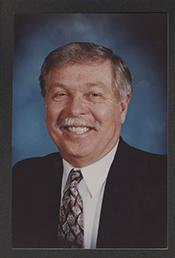
Historical · U.S. House · Oregon · District 2
Wes Cooley
Former U.S. Representative · Oregon District 2 · 1995–1997 · Republican
Wes Cooley represented Oregon's District 2 in the United States House of Representatives (1995–1997) for the Republican party. The page below collects sourced biographical facts, term history, committee roles, and provenance for Cooley.
Bioguide ID: C000737
Key facts
- Full name
- Wes Cooley
- State
- Oregon
- District
- District 2
- Party
- Republican
- House service
- 1995–1997
- First House term
- 1995
- Status
- Left office
- Current term ends
- —
- Born
- 1932
- Bioguide ID
- C000737
- Committee assignments
- —
- Dataset version
- 1.20260605
Biographical narrative
856 words · sourced from the Wikipedia REST extract
Wes Cooley was an American politician and rancher who served as a Republican U.S. Representative for Oregon's 2nd congressional district from 1995 to 1997. His political career was marked by a focus on property rights and military issues, but it was also marred by controversies regarding his military service claims and subsequent legal troubles. Cooley's tenure in Congress was brief, and he faced significant challenges that ultimately led to his departure from the political arena.
Early life and career
Wes Cooley was born on March 28, 1932, in Los Angeles, California. He completed his secondary education at Leuzinger High School before enlisting in the United States Army, where he served from 1952 to 1954. Following his military service, Cooley pursued higher education and graduated from the University of Southern California in 1958 with a Bachelor of Science degree. In addition to his political career, he was involved in the business sector as a rancher and owned a vitamin supplements company named Rose Laboratories.
Cooley's early professional life included various roles that contributed to his understanding of both agriculture and business. His experience as a rancher informed his political views, particularly regarding land use and property rights. This background laid the groundwork for his later political ambitions, as he sought to represent the interests of constituents in rural Oregon.
In 1992, Cooley entered the political arena by winning a seat in the Oregon State Senate. His tenure in the state legislature was relatively short, as he transitioned to national politics just two years later. In 1994, he successfully ran for the U.S. House of Representatives, representing Oregon's 2nd congressional district. His election to Congress was part of a broader Republican wave during that election cycle, which saw the party gain significant ground in both state and federal offices.
House tenure
Wes Cooley's term in the U.S. House of Representatives began in January 1995, during the 104th Congress. As a member of the Republican Party, Cooley aligned himself with the party's platform, which included a focus on private property rights, military strength, and tort reform. He was an advocate for the principles outlined in the "Contract with America," a campaign initiative that aimed to promote a conservative legislative agenda.
Throughout his time in office, Cooley participated in various legislative discussions and initiatives that reflected his commitment to these principles. He worked on issues that resonated with his constituents, particularly those related to land use and property rights, which were significant concerns for many residents in rural Oregon. His background as a rancher provided him with a unique perspective on these matters, allowing him to engage with constituents on issues that directly affected their livelihoods.
However, Cooley's congressional career was not without controversy. In April 1996, questions arose regarding his claims about his military service. A local newspaper, the Medford Mail Tribune, reported discrepancies in his statements about serving in the Army Special Forces during the Korean War. This scrutiny intensified when allegations surfaced that Cooley and his wife had concealed their marriage to allow her to continue receiving veteran's benefits from a previous marriage. Despite being unopposed for renomination in the May primary, the mounting pressure from within the Republican Party, including calls from prominent figures like House Speaker Newt Gingrich, led to significant challenges for Cooley's political future.
In August 1996, facing increasing scrutiny and pressure, Cooley withdrew from the race for re-election. A special nominating convention subsequently selected former Congressman Bob Smith to replace him on the ballot. Smith went on to win the election against his Democratic opponent in November 1996.
Legislative focus and committees
During his time in the House, Wes Cooley was involved in various legislative efforts that aligned with the Republican Party's broader goals. His focus on private property rights was a hallmark of his political stance, reflecting the interests of his constituents in Oregon's 2nd congressional district. Cooley's advocacy for military superiority also resonated with many voters, particularly in the context of national security and defense issues.
Cooley's participation in committees and legislative discussions was characterized by his alignment with the Republican agenda, which sought to limit government intervention in private affairs and promote individual rights. His support for tort reform aimed to address concerns regarding litigation and liability, which were significant issues for many business owners and landowners in his district.
Despite his efforts to champion these causes, Cooley's tenure was overshadowed by the controversies that emerged during his time in office. The allegations regarding his military service and the subsequent legal challenges he faced after leaving Congress significantly impacted his legacy. Following his departure from the House, Cooley's involvement in politics diminished, and he faced legal repercussions related to his business dealings and personal conduct.
In summary, Wes Cooley's career as a U.S. Representative was marked by a commitment to conservative principles and advocacy for rural interests. However, his time in office was ultimately cut short by controversies that led to his withdrawal from the political landscape. Cooley passed away on February 4, 2015, in Bend, Oregon, leaving behind a complex legacy shaped by both his political ambitions and the challenges he faced during his career.
Notable legislation
Sponsored and co-sponsored legislation for Wes Cooley is pending operator curation. The biographical narrative above carries the same provenance trail until per-bill rows are written.
Sources
- [1]https://en.wikipedia.org/wiki/Wes_Cooley_(politician)Wikipedia · retrieved 2026-06-05
Notable quotes
Sourced quotes for Wes Cooley are pending operator curation. Narrative-scope provenance remains attached below.
Sources
- [1]https://en.wikipedia.org/wiki/Wes_Cooley_(politician)Wikipedia · retrieved 2026-06-05
Key positions
Curated policy positions for Wes Cooley are pending operator review. The biographical narrative above carries the same provenance trail until per-topic positions are written.
Sources
- [1]https://en.wikipedia.org/wiki/Wes_Cooley_(politician)Wikipedia · retrieved 2026-06-05
Terms served
- 1995–1997U.S. House · Term 1 · Republican
Sources & provenance
Every attributable claim above carries a per-section [N] marker that resolves to the corresponding URL below. Each entry records the upstream provider, the canonical URL, and the timestamp at which the source was retrieved by the ingest pipeline.
Key facts
- https://bioguide.congress.gov/search/bio/C000737bioguide · retrieved 2026-06-05
- https://www.govtrack.us/congress/members/402858govtrack · retrieved 2026-06-05
Biographical narrative
- https://en.wikipedia.org/wiki/Wes_Cooley_(politician)wikipedia · retrieved 2026-06-05
Find your representative
Every U.S. state elects representatives by district. Browse Oregon’s delegation, the full former-representative roster, or explore the role and term length.
Related on The Candidate
- Preceded by Albert UllmanEarlier holder of the Oregon District 2 House seat · Democratic.Open
- Succeeded by Greg WaldenLater holder of the Oregon District 2 House seat · Republican.Open
- Albin Norblad Jr.Former U.S. Representative · Oregon District 1 · RepublicanOpen
- Andrew ThayerFormer U.S. Representative · Oregon District 1 · DemocraticOpen
- Binger HermannFormer U.S. Representative · Oregon District 1 · RepublicanOpen
- David WuFormer U.S. Representative · Oregon District 1 · DemocraticOpen