
Historical · U.S. House · Pennsylvania · District 1
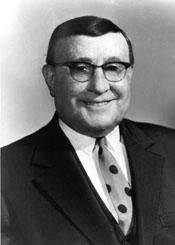
William Barrett
Former U.S. Representative · Pennsylvania District 1 · 1945–1977 · Democratic
William Barrett represented Pennsylvania's District 1 in the United States House of Representatives (1945–1977) for the Democratic party. The page below collects sourced biographical facts, term history, committee roles, and provenance for Barrett.
Bioguide ID: B000178
Key facts
- Full name
- William Barrett
- State
- Pennsylvania
- District
- District 1
- Party
- Democratic
- House service
- 1945–1977
- First House term
- 1945
- Status
- Left office
- Current term ends
- —
- Born
- 1896
- Bioguide ID
- B000178
- Committee assignments
- —
- Dataset version
- 1.20260605
Biographical narrative
1,166 words · sourced from the Wikipedia REST extract
William A. Barrett was a prominent American lawyer and politician who served as a U.S. Representative for Pennsylvania's 1st congressional district. A member of the Democratic Party, Barrett's congressional career spanned over three decades, during which he was known for his commitment to housing legislation, civil rights, and dedicated constituent service. His tenure in the House of Representatives began in 1945 and continued until his death in 1976, marking him as a significant figure in Pennsylvania politics and national legislative affairs.
Early life and career
William Aloysius Barrett was born on August 14, 1896, in Philadelphia, Pennsylvania, to Irish immigrant parents. He was the second youngest of fourteen children, and his early life was marked by hardship. His father passed away when Barrett was just two years old, leaving his mother to support the family through various means, including scrubbing floors. This challenging upbringing instilled in Barrett a strong work ethic from a young age. He began his education at Thomas Parochial School but left to help support his family, taking on work as an apprentice boilermaker and welder at the Atlantic Refining Company's plant in Point Breeze. Barrett maintained his affiliation with the Boilermakers' Union throughout his life.
Despite the early interruption to his formal education, Barrett later returned to school, attending Brown Preparatory School in Philadelphia and St. Joseph's College. He pursued a legal education at South Jersey Law School in Camden, New Jersey. After completing his studies, Barrett initially ventured into the real estate business but found greater success operating a taproom.
In his personal life, Barrett married Rose Timmins, who was four years younger than him. The couple had three children: Rosemary, Gertrude, and Margaret. Barrett's wife passed away in 1964, and by the time of his death in 1976, he had fifteen grandchildren. His early political involvement included serving on the Philadelphia Board of Mercantile Appraisers and participating in the Democratic City Committee. Although he faced setbacks in his initial attempts to secure a position on the Philadelphia City Council in 1935 and 1939, Barrett remained determined to make a mark in politics. He worked as a legislative aide to Congressman James P. McGranery until McGranery's resignation in 1943, after which Barrett ran for Congress in a special election but was defeated.
House tenure
Barrett's congressional career began in earnest when he successfully ran for the House of Representatives in November 1944, defeating incumbent Republican James A. Gallagher. His first term lasted until 1947, after which he lost his seat in a rematch during a Republican sweep of Congress. Undeterred, Barrett returned to the political arena and won re-election in November 1948, serving continuously until his death in 1976. Over the course of his career, he was elected to a total of fifteen congressional terms.
During his time in the House, Barrett established himself as a mainstream liberal Democrat. His legislative influence grew significantly when he became the chairman of the Housing Subcommittee of the Banking, Currency, and Housing Committee in 1965. This role allowed him to leverage his background in real estate and housing to advocate for significant legislative measures. Barrett played a pivotal role in the passage of numerous housing-related acts, including the Housing and Urban Development Acts of 1965, 1968, 1969, and 1970, as well as the Emergency Home Finance Act of 1970 and the Housing and Community Development Act of 1974. His efforts also contributed to the enactment of the Lead-Based Paint Poisoning Prevention Act of 1970 and the Federal Disaster Prevention Act of 1973.
Barrett's commitment to civil rights was evident throughout his congressional career. He voted in favor of key civil rights legislation, including the Civil Rights Acts of 1957, 1960, 1964, and 1968. In 1973, he introduced legislation to establish Martin Luther King Jr.'s birthday as a legal public holiday, a measure that would not be officially recognized until 1986. His strong Catholic faith influenced his stance on various social issues, including his opposition to abortion, which led him to propose a constitutional amendment to outlaw the practice in 1975.
Barrett was known for his exceptional dedication to his constituents. He made a point of returning to Philadelphia most evenings after working in Washington, D.C., to meet with voters and address their concerns. This commitment earned him a reputation as a congressman who genuinely cared for the people he represented. His efforts to assist constituents were widely recognized, with some colleagues noting that he had built a network of support among voters who had benefited from his assistance. However, this close relationship with his constituents also drew criticism from some quarters, as he was sometimes characterized as overly focused on local issues at the expense of broader state or national concerns.
Despite facing challenges from local Republicans, Barrett maintained a strong political presence in Philadelphia, with rivals often struggling to find candidates willing to challenge him. His influence in local politics was significant, and his ability to build a political organization contributed to his long-standing success in Congress. Barrett's legacy was further solidified when he was nominated as a potential vice-presidential candidate during the 1972 Democratic National Convention, reflecting his standing within the party.
Legislative focus and committees
Throughout his extensive congressional career, Barrett's legislative focus was primarily centered on housing and urban development, civil rights, and social welfare issues. As the chairman of the Housing Subcommittee, he was instrumental in shaping policies that aimed to improve housing conditions and access to affordable housing for Americans. His work in this area was characterized by a commitment to addressing the needs of urban communities and ensuring that housing legislation reflected the realities faced by constituents.
Barrett's role on the Banking, Currency, and Housing Committee allowed him to influence a wide range of economic and financial legislation. His leadership in housing policy was marked by a series of significant legislative achievements that aimed to enhance the quality of life for residents in his district and across the nation. His ability to navigate complex legislative processes and build coalitions with fellow lawmakers contributed to the successful passage of numerous bills.
In addition to his housing initiatives, Barrett's advocacy for civil rights demonstrated his commitment to social justice and equality. His support for landmark civil rights legislation underscored his belief in the importance of protecting the rights of all Americans, regardless of race or background. Barrett's efforts to promote civil rights were part of a broader movement within the Democratic Party during the mid-20th century, as lawmakers sought to address systemic inequalities and promote social change.
Barrett's tenure in Congress was marked by a dedication to public service and a deep understanding of the needs of his constituents. His legislative achievements, particularly in housing and civil rights, left a lasting impact on the communities he represented. By the time of his death in 1976, Barrett had established himself as a significant figure in American politics, known for his unwavering commitment to the people of Pennsylvania's 1st congressional district and his contributions to national legislative efforts.
Notable legislation
Sponsored and co-sponsored legislation for William Barrett is pending operator curation. The biographical narrative above carries the same provenance trail until per-bill rows are written.
Sources
- [1]https://en.wikipedia.org/wiki/William_A._BarrettWikipedia · retrieved 2026-06-05
Notable quotes
Sourced quotes for William Barrett are pending operator curation. Narrative-scope provenance remains attached below.
Sources
- [1]https://en.wikipedia.org/wiki/William_A._BarrettWikipedia · retrieved 2026-06-05
Key positions
Curated policy positions for William Barrett are pending operator review. The biographical narrative above carries the same provenance trail until per-topic positions are written.
Sources
- [1]https://en.wikipedia.org/wiki/William_A._BarrettWikipedia · retrieved 2026-06-05
Terms served
- 1945–1947U.S. House · Term 1 · Democratic
- 1949–1951U.S. House · Term 2 · Democratic
- 1951–1953U.S. House · Term 3 · Democratic
- 1953–1955U.S. House · Term 4 · Democratic
- 1955–1957U.S. House · Term 5 · Democratic
- 1957–1959U.S. House · Term 6 · Democratic
- 1959–1961U.S. House · Term 7 · Democratic
- 1961–1963U.S. House · Term 8 · Democratic
- 1963–1965U.S. House · Term 9 · Democratic
- 1965–1967U.S. House · Term 10 · Democratic
- 1967–1969U.S. House · Term 11 · Democratic
- 1969–1971U.S. House · Term 12 · Democratic
- 1971–1973U.S. House · Term 13 · Democratic
- 1973–1975U.S. House · Term 14 · Democratic
- 1975–1977U.S. House · Term 15 · Democratic
Sources & provenance
Every attributable claim above carries a per-section [N] marker that resolves to the corresponding URL below. Each entry records the upstream provider, the canonical URL, and the timestamp at which the source was retrieved by the ingest pipeline.
Key facts
- https://bioguide.congress.gov/search/bio/B000178bioguide · retrieved 2026-06-05
- https://www.govtrack.us/congress/members/401178govtrack · retrieved 2026-06-05
Biographical narrative
- https://en.wikipedia.org/wiki/William_A._Barrettwikipedia · retrieved 2026-06-05
Find your representative
Every U.S. state elects representatives by district. Browse Pennsylvania’s delegation, the full former-representative roster, or explore the role and term length.
Related on The Candidate
- Preceded by Leon SacksEarlier holder of the Pennsylvania District 1 House seat · Democratic.Open
- Succeeded by Thomas FogliettaLater holder of the Pennsylvania District 1 House seat · Democratic.Open
- Adam SeybertFormer U.S. Representative · Pennsylvania District 1 · RepublicanOpen
- Benjamin SayFormer U.S. Representative · Pennsylvania District 1 · RepublicanOpen
- Chapman FreemanFormer U.S. Representative · Pennsylvania District 1 · RepublicanOpen
- Harry RansleyFormer U.S. Representative · Pennsylvania District 1 · RepublicanOpen