
Historical · U.S. House · Pennsylvania · District 3
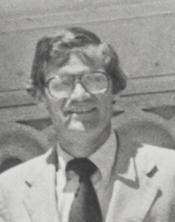
Raymond Lederer
Former U.S. Representative · Pennsylvania District 3 · 1977–1983 · Democratic
Raymond Lederer represented Pennsylvania's District 3 in the United States House of Representatives (1977–1983) for the Democratic party. The page below collects sourced biographical facts, term history, committee roles, and provenance for Lederer.
Bioguide ID: L000187
Key facts
- Full name
- Raymond Lederer
- State
- Pennsylvania
- District
- District 3
- Party
- Democratic
- House service
- 1977–1983
- First House term
- 1977
- Status
- Left office
- Current term ends
- —
- Born
- 1938
- Bioguide ID
- L000187
- Committee assignments
- —
- Dataset version
- 1.20260605
Biographical narrative
842 words · sourced from the Wikipedia REST extract
Raymond F. Lederer was an American politician who served as a Democratic member of the United States House of Representatives, representing Pennsylvania's 3rd congressional district from 1977 until 1981. His political career was marked by both significant electoral success and a notable scandal that ultimately led to his conviction for bribery. Before his tenure in Congress, Lederer held various positions in public service, including roles in the Pennsylvania House of Representatives and the Philadelphia Probation Department.
Early life and career
Raymond Francis Lederer was born on May 19, 1938, in Philadelphia, Pennsylvania. He received his early education in local Catholic schools, culminating in his graduation from Roman Catholic High School for Boys in 1956. Following high school, Lederer pursued higher education at several institutions. He attended Saint Joseph's College of Philadelphia from 1960 to 1965, then continued his studies at the Community College of Philadelphia from 1967 to 1969. He furthered his education at Pennsylvania State University in University Park, Pennsylvania, in 1972.
Lederer's professional career began in 1957 when he worked as an assistant engineer for the Pennsylvania Department of Highways. His career in public service continued as he became a probation officer and eventually served as the director of the Philadelphia Probation Department from 1967 to 1974. His involvement in the probation system extended to his role as a board member of the Pennsylvania Committee on Probation, where he contributed to the oversight and improvement of the probation system in the state.
Lederer's political career began in earnest when he was elected to the Pennsylvania House of Representatives, where he served from 1974 to 1977. He represented a district in Philadelphia that had historical significance for his family, as both his father, Miles Lederer, and his older brother, William Lederer, had previously held similar positions. His sister-in-law, Marie, would also later serve in the Pennsylvania State House, further entrenching the Lederer family in local politics.
House tenure
Raymond Lederer was elected to the United States Congress in 1976, successfully representing Pennsylvania's 3rd congressional district. In the election, he garnered a significant majority, receiving approximately 73% of the vote against his Republican opponent, Terence J. Schade. He officially took office on January 3, 1977. During his time in Congress, Lederer served on the House Ways and Means Committee, a key committee responsible for taxation and revenue-related legislation. His position on this committee allowed him to influence important economic policies, including the facilitation of fruit imports from Chile through the Port of Philadelphia.
Lederer was re-elected in 1978, achieving nearly 72% of the vote against Republican candidate Raymond S. Kauffman. His ability to secure a second term demonstrated his continued support among constituents in his district, as well as his effectiveness in addressing local issues.
However, his congressional career faced a significant turning point due to his involvement in the Abscam scandal, a major political corruption investigation that emerged in the late 1970s. The scandal involved undercover FBI agents posing as representatives of a fictitious Arab sheik in order to expose bribery and corruption among public officials.
Legislative focus and committees
Lederer's legislative focus during his time in Congress included economic issues, particularly those affecting his constituents in Pennsylvania. His role on the House Ways and Means Committee allowed him to engage with a range of fiscal policies, including trade and import regulations. His efforts to facilitate the importation of Chilean fruit through Philadelphia's port exemplified his commitment to local economic interests and the promotion of trade that would benefit his district.
Despite his initial successes, Lederer's career was overshadowed by the Abscam scandal, which culminated in his conviction for bribery. In September 1979, he was recorded accepting $50,000 in cash from undercover agents, which led to his indictment. He was convicted on January 9, 1981, and received a sentence of three years in prison along with a fine of $20,000. Notably, despite the scandal and his legal troubles, Lederer managed to win re-election in 1980, securing approximately 54.5% of the vote against multiple opponents, including Republican William J. Phillips.
However, the repercussions of the scandal continued to unfold. On April 28, 1981, the United States House Committee on Standards of Official Conduct voted to expel him from Congress. Lederer resigned the following day, citing personal legal issues that hindered his ability to effectively serve his constituents. His departure from Congress marked a significant end to his political career.
After serving ten months in Allenwood Federal Prison, Lederer transitioned to a different line of work, becoming a roofer. He lived out the remainder of his life away from the political spotlight until his passing on December 1, 2008, due to lung cancer. He was 70 years old at the time of his death and was interred at Holy Sepulchre Cemetery in Cheltenham, Pennsylvania.
Raymond Lederer's political journey reflects both the complexities of public service and the potential for personal and professional challenges that can arise within the political arena. His legacy is marked by his contributions to local governance and the significant controversies that ultimately defined his congressional tenure.
Notable legislation
Sponsored and co-sponsored legislation for Raymond Lederer is pending operator curation. The biographical narrative above carries the same provenance trail until per-bill rows are written.
Sources
- [1]https://en.wikipedia.org/wiki/Raymond_LedererWikipedia · retrieved 2026-06-05
Notable quotes
Sourced quotes for Raymond Lederer are pending operator curation. Narrative-scope provenance remains attached below.
Sources
- [1]https://en.wikipedia.org/wiki/Raymond_LedererWikipedia · retrieved 2026-06-05
Key positions
Curated policy positions for Raymond Lederer are pending operator review. The biographical narrative above carries the same provenance trail until per-topic positions are written.
Sources
- [1]https://en.wikipedia.org/wiki/Raymond_LedererWikipedia · retrieved 2026-06-05
Terms served
- 1977–1979U.S. House · Term 1 · Democratic
- 1979–1981U.S. House · Term 2 · Democratic
- 1981–1983U.S. House · Term 3 · Democratic
Sources & provenance
Every attributable claim above carries a per-section [N] marker that resolves to the corresponding URL below. Each entry records the upstream provider, the canonical URL, and the timestamp at which the source was retrieved by the ingest pipeline.
Key facts
- https://bioguide.congress.gov/search/bio/L000187bioguide · retrieved 2026-06-05
- https://www.govtrack.us/congress/members/406690govtrack · retrieved 2026-06-05
Biographical narrative
- https://en.wikipedia.org/wiki/Raymond_Ledererwikipedia · retrieved 2026-06-05
Find your representative
Every U.S. state elects representatives by district. Browse Pennsylvania’s delegation, the full former-representative roster, or explore the role and term length.
Related on The Candidate
- Preceded by William GreenEarlier holder of the Pennsylvania District 3 House seat · Democratic.Open
- Succeeded by Robert BorskiLater holder of the Pennsylvania District 3 House seat · Democratic.Open
- Adam SeybertFormer U.S. Representative · Pennsylvania District 1 · RepublicanOpen
- Benjamin SayFormer U.S. Representative · Pennsylvania District 1 · RepublicanOpen
- Chapman FreemanFormer U.S. Representative · Pennsylvania District 1 · RepublicanOpen
- Harry RansleyFormer U.S. Representative · Pennsylvania District 1 · RepublicanOpen