
Historical · U.S. House · Pennsylvania · District 9
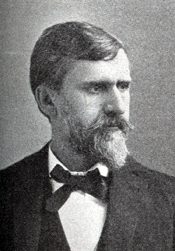
Constantine Erdman
Former U.S. Representative · Pennsylvania District 9 · 1893–1897 · Democratic
Constantine Erdman represented Pennsylvania's District 9 in the United States House of Representatives (1893–1897) for the Democratic party. The page below collects sourced biographical facts, term history, committee roles, and provenance for Erdman.
Bioguide ID: E000199
Key facts
- Full name
- Constantine Erdman
- State
- Pennsylvania
- District
- District 9
- Party
- Democratic
- House service
- 1893–1897
- First House term
- 1893
- Status
- Left office
- Current term ends
- —
- Born
- 1846
- Bioguide ID
- E000199
- Committee assignments
- —
- Dataset version
- 1.20260606
Biographical narrative
897 words · sourced from the Wikipedia REST extract
Constantine Erdman was a Democratic politician who served as a U.S. Representative for Pennsylvania's 9th congressional district. His political career spanned two terms in the U.S. House of Representatives, where he contributed to legislative discussions and decisions during the 1890s. Erdman was also a prominent figure in his local community, engaging in various professional and civic activities beyond his congressional service. He was born in 1846 and passed away in 1911, leaving behind a legacy that reflects his involvement in both law and public service.
Early life and career
Constantine Jacob Erdman was born on September 4, 1846, in Upper Saucon Township, Pennsylvania, a region located near Allentown. His early education took place in the common schools of his district, where he received foundational knowledge that would serve him throughout his life. To further his education, Erdman attended a classical school in Quakertown, Pennsylvania, which provided him with a more rigorous academic background. This educational journey culminated in his graduation from Pennsylvania College in Gettysburg in 1865, an institution known for its commitment to liberal arts education.
Following his graduation, Erdman pursued a career in law. He studied diligently and was admitted to the bar in 1867, marking the beginning of his legal career in Allentown. His legal practice allowed him to gain valuable experience in the field, and he quickly established himself as a competent attorney. In 1874, he was elected as the district attorney, a significant position that underscored his growing influence in the legal and political landscape of his community. This role involved overseeing the prosecution of criminal cases and managing legal affairs within the district, further solidifying his reputation as a dedicated public servant.
In addition to his legal career, Erdman served in a military capacity as well. He held the position of adjutant in the Fourth Regiment of the Pennsylvania National Guard during a period of civil unrest known as the Reading riots in 1877. This experience not only showcased his commitment to public safety but also provided him with leadership experience in a challenging environment.
House tenure
Erdman's political career took a significant turn when he was elected to the U.S. House of Representatives. He served during the Fifty-third and Fifty-fourth Congresses, beginning his first term in 1893. As a member of the Democratic Party, Erdman participated in legislative discussions and contributed to the development of policies that affected his constituents and the nation as a whole. His tenure in Congress coincided with a time of considerable change and development in the United States, as the country was grappling with issues related to industrialization, labor rights, and economic reform.
During his time in the House, Erdman was involved in various legislative initiatives and debates. While specific details of his voting record and the bills he supported are not provided, it is known that he was an active participant in the legislative process. Erdman's commitment to his role as a representative was evident in his engagement with the issues of the day, as he sought to advocate for the interests of his constituents in Pennsylvania.
Erdman's congressional service came to an end when he chose not to seek re-election in 1896. After completing his terms in the House, he returned to Allentown, where he resumed his legal practice. His decision to step away from congressional politics marked a transition back to his professional roots, allowing him to focus on his law career and other local endeavors.
Legislative focus and committees
While specific details regarding Erdman's legislative focus and committee assignments during his time in Congress are not available, it can be inferred that, as a member of the Democratic Party during the late 19th century, he likely engaged with issues pertinent to his constituents in Pennsylvania. This period was marked by significant social and economic changes, including the rise of labor movements, debates over tariffs, and discussions surrounding infrastructure development.
Erdman's legal background may have influenced his approach to legislative matters, as he would have brought his understanding of the law and legal principles to his work in Congress. His experience as district attorney would have provided him with insights into the legal challenges faced by his constituents, potentially guiding his legislative priorities.
In addition to his congressional duties, Erdman was actively involved in various civic and professional organizations after his time in the House. He served as a trustee of Muhlenberg College in Allentown, reflecting his commitment to education and community development. His leadership extended to the business sector as well; he held positions as president of several companies, including the Coplay Cement Manufacturing Company, the Allentown & Coopersburg Turnpike Company, and the Allen Fire Insurance Company. These roles demonstrated his engagement with the economic landscape of his community and his dedication to fostering local industry and infrastructure.
Erdman's contributions to both public service and the private sector highlight a multifaceted career that encompassed law, politics, and community involvement. His legacy is characterized by his commitment to his constituents and his active participation in the civic life of Allentown and the surrounding areas.
Constantine Erdman passed away on January 15, 1911, in Allentown, Pennsylvania. He was interred at Fairview Cemetery, where he rests alongside other notable figures from the region. His life and career reflect the complexities of American political life in the late 19th century, as well as the enduring impact of local leaders on their communities.
Notable legislation
Sponsored and co-sponsored legislation for Constantine Erdman is pending operator curation. The biographical narrative above carries the same provenance trail until per-bill rows are written.
Sources
- [1]https://en.wikipedia.org/wiki/Constantine_J._ErdmanWikipedia · retrieved 2026-06-06
Notable quotes
Sourced quotes for Constantine Erdman are pending operator curation. Narrative-scope provenance remains attached below.
Sources
- [1]https://en.wikipedia.org/wiki/Constantine_J._ErdmanWikipedia · retrieved 2026-06-06
Key positions
Curated policy positions for Constantine Erdman are pending operator review. The biographical narrative above carries the same provenance trail until per-topic positions are written.
Sources
- [1]https://en.wikipedia.org/wiki/Constantine_J._ErdmanWikipedia · retrieved 2026-06-06
Terms served
- 1893–1895U.S. House · Term 1 · Democratic
- 1895–1897U.S. House · Term 2 · Democratic
Sources & provenance
Every attributable claim above carries a per-section [N] marker that resolves to the corresponding URL below. Each entry records the upstream provider, the canonical URL, and the timestamp at which the source was retrieved by the ingest pipeline.
Key facts
- https://bioguide.congress.gov/search/bio/E000199bioguide · retrieved 2026-06-06
- https://www.govtrack.us/congress/members/403886govtrack · retrieved 2026-06-06
Biographical narrative
- https://en.wikipedia.org/wiki/Constantine_J._Erdmanwikipedia · retrieved 2026-06-06
Find your representative
Every U.S. state elects representatives by district. Browse Pennsylvania’s delegation, the full former-representative roster, or explore the role and term length.
Related on The Candidate
- Preceded by David BrunnerEarlier holder of the Pennsylvania District 9 House seat · Democratic.Open
- Succeeded by Henry GreenLater holder of the Pennsylvania District 9 House seat · Democratic.Open
- Adam SeybertFormer U.S. Representative · Pennsylvania District 1 · RepublicanOpen
- Benjamin SayFormer U.S. Representative · Pennsylvania District 1 · RepublicanOpen
- Chapman FreemanFormer U.S. Representative · Pennsylvania District 1 · RepublicanOpen
- Harry RansleyFormer U.S. Representative · Pennsylvania District 1 · RepublicanOpen